Food safety and quality in c-stores: turning standards into daily execution
Foodservice was 11.9% of c-store in-store sales in 2005. It's 28.5% today, and 38.9% of gross profit. The trend line is accelerating, and the chains with the resources to move first already are. What separates the winners from here is execution, not menu breadth.
TransAct Technologies
The opportunity is real, and it's accelerating
Convenience stores have spent two decades building toward this moment. Foodservice made up just 11.9% of in-store sales in 2005; today it's 28.5%, and 38.9% of in-store gross profit, according to NACS State of the Industry data. The frequency numbers are moving the same direction: 51% of c-store shoppers now buy hot food once a week or more, up from 45% two years ago, according to Acosta Group's 2025 shopper research, and more than half of them now say that food is comparable to what they'd get from a quick-service restaurant.
That's not a snapshot. It's a trend line, and large operators are already building around it. 7-Eleven is opening more than 1,000 large-format stores anchored by restaurant concepts like Laredo Taco Company. RaceTrac bought the QSR chain Potbelly outright. QuikTrip redesigned its newest stores around a full kitchen. The chains with the resources to move first are moving first.
What decides who claims the rest of that opportunity comes down to execution, not menu breadth. A store that serves the same sandwich the same way on a Tuesday morning and a Saturday night is building something a competitor cannot copy from a menu board. Getting there means treating food safety and quality as an operating system rather than a set of policies.
Where food safety ends and brand consistency begins
Customers assume food safety. They notice it only when it fails, and the cost of failure is steep. Research from the Johns Hopkins Bloomberg School of Public Health estimated that a single foodborne illness outbreak can cost a fast-food restaurant up to $1.9 million and a fine-dining restaurant up to $2.6 million, with lost revenue, lawsuits, legal fees and fines driving the upper end of that range.
That makes food safety compliance table stakes: mandatory, but it doesn't by itself bring anyone back. A location can pass every inspection and still send out a sandwich built the wrong way, produce past its best, or an item held well beyond the point where it tastes like the brand intended. Those gaps rarely trigger a regulatory flag, and customers register them anyway.
The gaps operators actually have are execution gaps
Steritech, which conducts third-party food safety and brand standards assessments across the channel, analyzed 180,000 assessments at QSRs and convenience stores over 2023 and 2024. The pattern it found says a lot: most of what turned up were operational consistency problems, not food safety violations. The three most common problem areas were food preparation procedures, food appearance, and time labeling for quality, with recurring issues around recipe adherence, assembly consistency, produce freshness and holding time management.
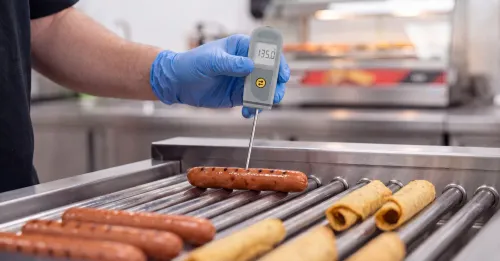
Regulators see a version of the same thing. The FDA's Retail Food Risk Factor Study has repeatedly identified improper holding time and temperature as one of the most commonly occurring foodborne illness risk factors in restaurants, and the agency's 2017 to 2018 report found that a well-developed and documented food safety management system helps reduce how often those risk factors occur. Worth noting that the FDA publishes this as research and as a model; state and local jurisdictions are the ones that inspect and enforce.
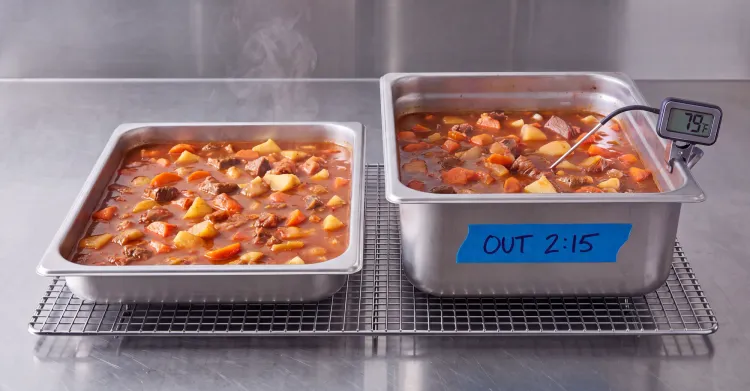
Holding time sits on both lists. It is a safety risk factor and a quality problem at the same time, which makes it the most useful place for a c-store operator to start. For a refresher on the underlying rules, see our guides to the temperature danger zone and which foods count as TCS foods.
Three disciplines that separate locations that improve
Look at operators who sustain their gains instead of bouncing back after every audit, and the same three habits show up.
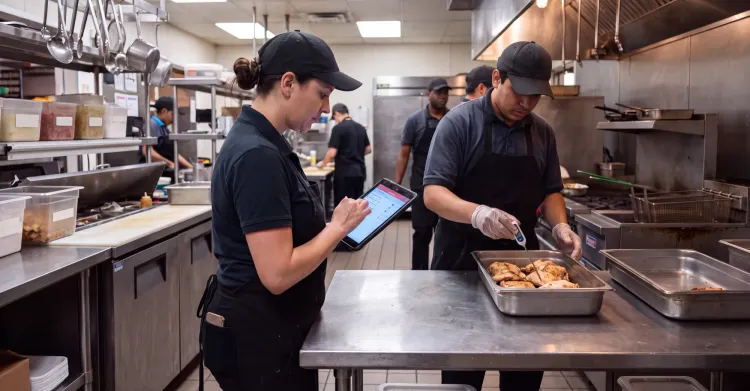
First, training that gets reinforced, not just completed. Modules establish awareness. Consistency comes from shift leaders who model and correct in the moment, which means the standard has to be visible at the station, not filed in a binder, especially when that shift leader is also running the register and watching the pumps.
Second, follow-up that closes the loop. Finding a problem is half the work. Locations that hold their gains verify that the correction was made, confirm it held, and watch for recurrence instead of applying a quick fix and moving on.
Third, accountability with a name on it. "Maintain standards" produces drift across shifts. Assigning a specific check to a specific person at a specific time produces far less variability than policy language alone.
None of that is conceptually hard. The difficulty is infrastructure: sustaining it across every location, every shift and every daypart, which is exactly where paper checklists and verbal handoffs give out.
The QSR playbook, applied to the c-store kitchen
QSR chains built operational systems specifically to make execution repeatable at scale, embedding food safety and quality steps into routine workflows with defined procedures and focused training. C-stores face a structural disadvantage here, because the same team is often covering checkout, fuel and the broader store alongside food. When prep is one task among many, consistency is the first thing to slip.
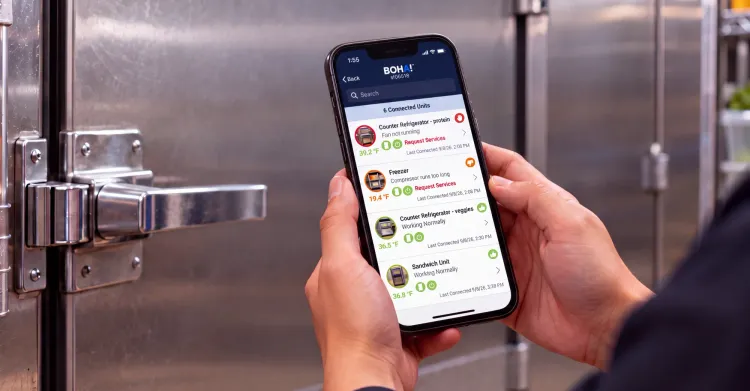
The model still transfers. Embedding standards into daily workflows, building training around execution, and creating accountability that survives between inspections are all things a c-store operator can put in place with the right back-of-house operations platform. BOHA! by TransAct runs those workflows on one system, with digital HACCP records and brand standard checks rolling up through food program management so regional teams can see which locations are holding the line and which need coaching. See how BOHA! fits convenience store operations.
This piece is a companion to our look at how c-store operators are using technology to solve back-of-house pain points, which covers the tools side of the same problem.
Food safety gets you in the game. Consistent execution is what earns the repeat trip. Get a demo to see how BOHA! standardizes prep, labeling and food safety checks across every location, or run the numbers with the ROI Calculator.
Frequently asked questions
What is the difference between food safety and food quality?
Food safety refers to practices that keep food from making someone sick, such as holding temperatures, cooling procedures and personal hygiene, and it is governed by regulatory requirements. Food quality refers to whether food is prepared and presented to brand standard: the right recipe, the right build, the right hold time and consistent appearance. A location can be fully compliant on safety and still be inconsistent on quality, which is why operators track both.
What is a food safety management system?
A food safety management system is the documented set of procedures, monitoring steps, corrective actions and records an operator uses to control foodborne illness risk factors day to day. The FDA's Retail Food Risk Factor Study found that a well-developed and documented system is associated with fewer occurrences of those risk factors. In practice it covers temperature monitoring, holding times, cooling logs, corrective actions and the records that prove each step happened.
How do convenience stores keep food quality consistent across shifts and locations?
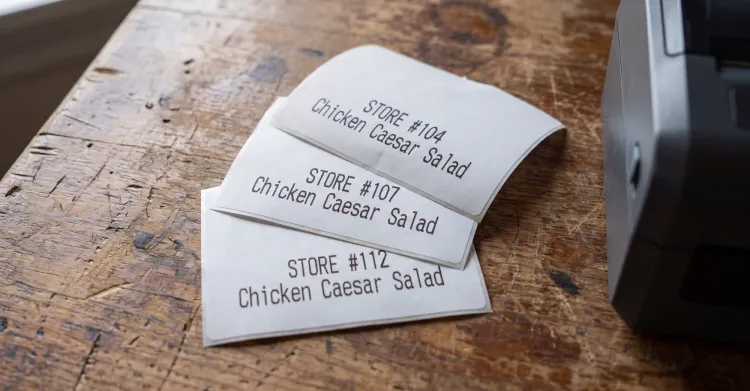
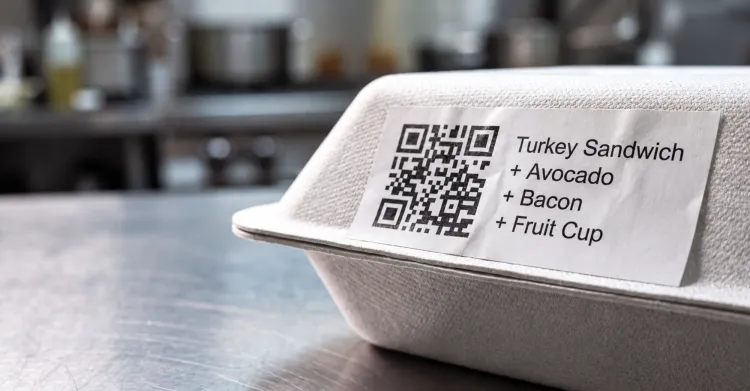
Consistency comes from putting the standard where the work happens and recording whether it was met. That usually means digital prep and recipe guidance at the station, automatically calculated hold and discard labels, assigned task checklists with named completion, and reporting that lets regional managers compare locations without visiting each one.
What are the most common food quality issues in c-store foodservice?
Third-party assessment data across QSRs and convenience stores points to three recurring areas: food preparation procedures, food appearance, and time labeling for quality. Underneath those, the frequent specifics are recipe adherence, assembly consistency, produce freshness and holding time management.