Stay in the loop!
Get the latest industry insights delivered straight to your inbox
Cooked rice is a TCS food. So are cut tomatoes, sliced melon, and bagged salad greens. The obvious ones, meat and dairy and seafood, rarely cause problems, because everyone treats them carefully. It’s the foods that look harmless that get missed. Here is the complete list, the science that decides…
TransAct Technologies
TCS foods are Time/Temperature Control for Safety foods: items that require time and temperature control to stay safe, because they support the rapid growth of bacteria or the production of toxins. If a food is moist, protein-rich, and low in acid, bacteria thrive in it, and it almost certainly lands on the TCS list.
You may also hear these called “potentially hazardous foods.” That is the older term. The FDA Food Code replaced it with TCS to make the meaning precise: the food is not inherently dangerous. It simply needs time and temperature control in order to stay safe.
This is not an arbitrary list. Three measurable properties decide it, and they map directly to what bacteria need to grow.
Water activity (aw): Not total moisture, but available water. Bacteria can only use water that is not chemically bound to sugar, salt, or other solids. Foods with a water activity above roughly 0.85 support bacterial growth. This is why beef jerky is safe at room temperature and a fresh steak is not, despite both being meat.
Acidity (pH): Bacteria struggle in acidic conditions. Foods with a pH above roughly 4.6 are hospitable. This is why pickles, most jams, and citrus are not TCS, and why acidifying sushi rice below 4.6 is a recognized method of making it shelf-stable, though it requires an approved variance to do so.
Nutrients: Protein-rich, nutrient-dense foods feed bacterial growth.
When a food is moist, low-acid, and nutritious, pathogens like Salmonella, Listeria, and E. coli multiply rapidly if the temperature cooperates. Under FDA Food Code interaction tables, water activity and pH are evaluated together, because a food can be safe on one measure and unsafe on the other.
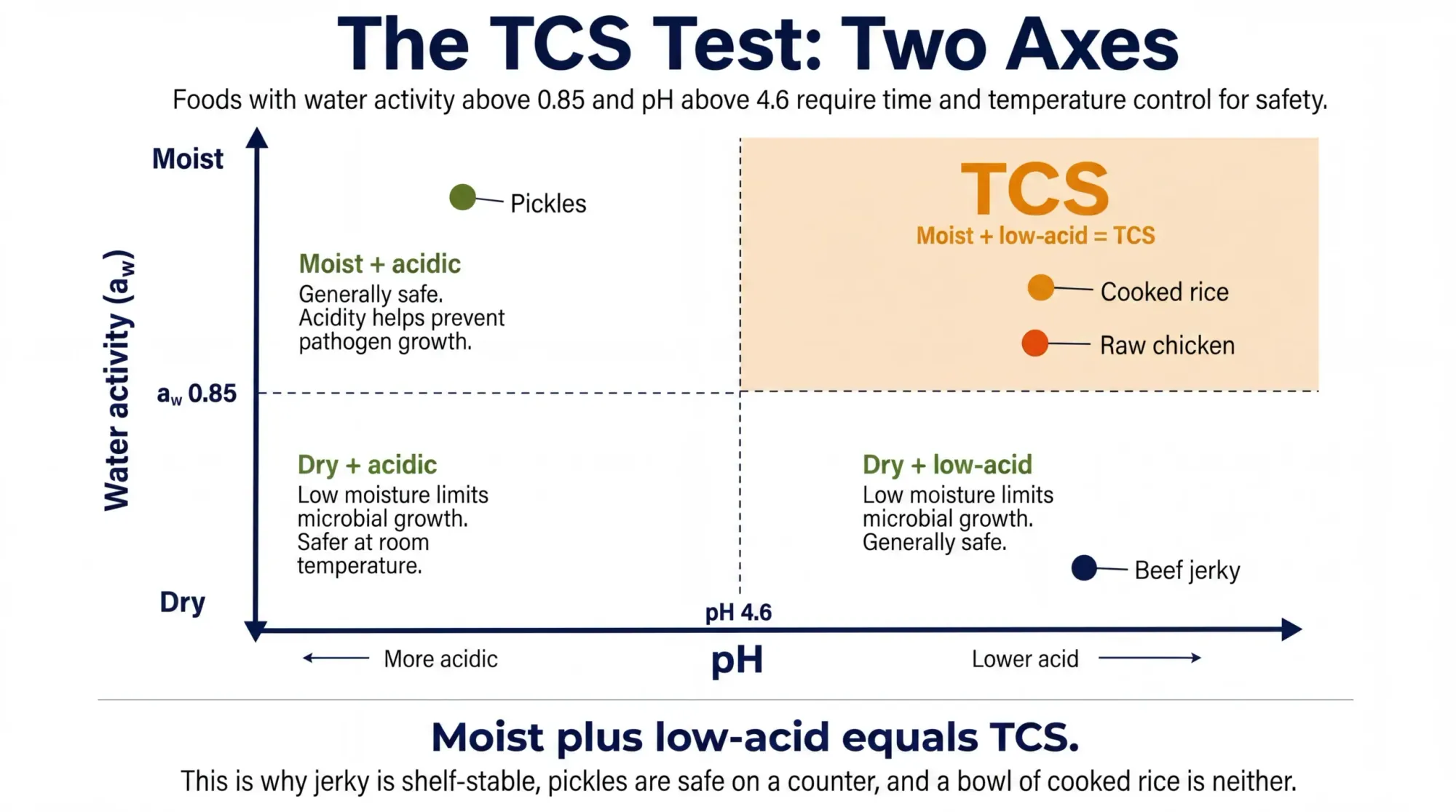
If yes to all three, treat the item as TCS until you have specific evidence proving otherwise. Kitchens do not need a pH meter, they need a default method such as this that’s safe to rely on.
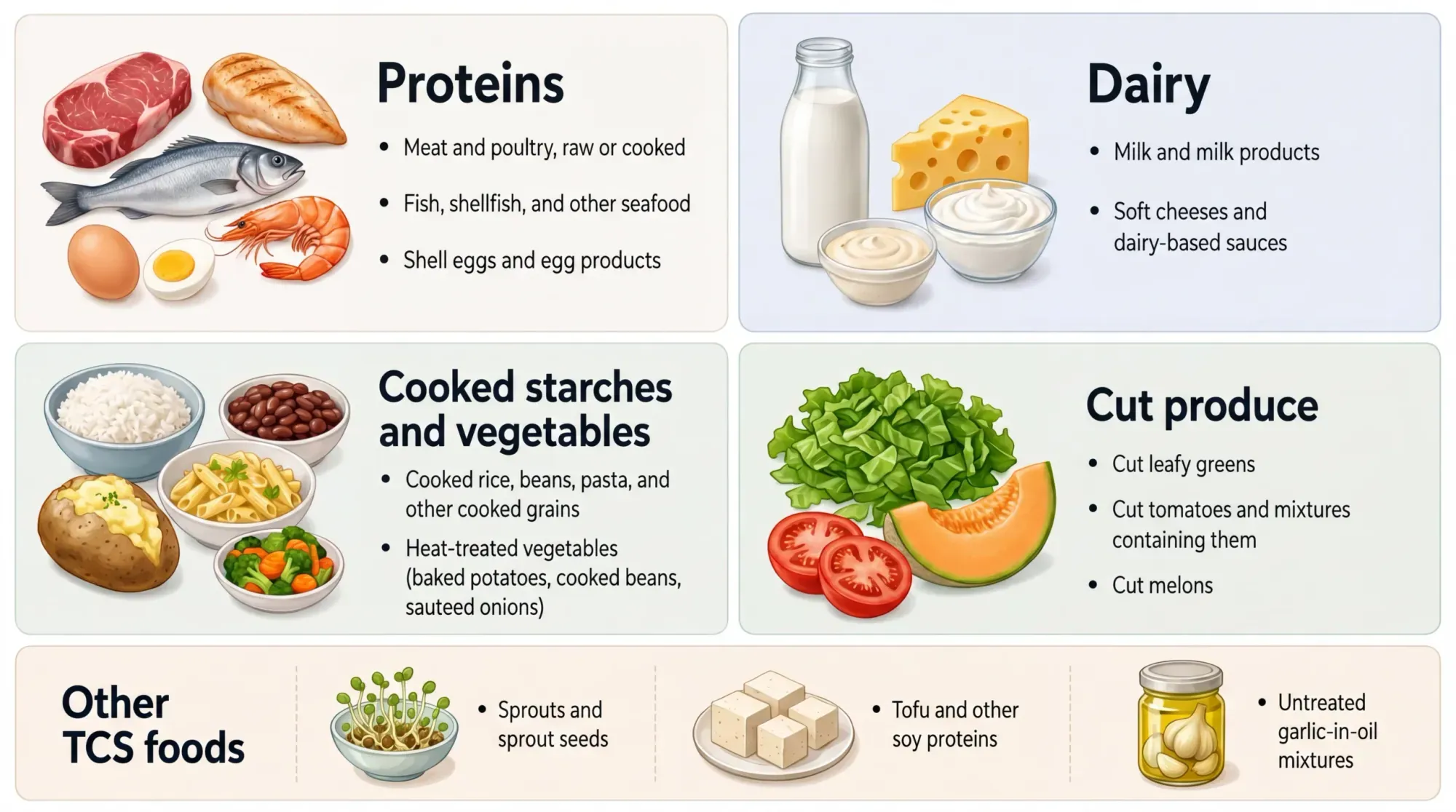
The FDA Food Code identifies the foods that commonly require time and temperature control:
Teams handle raw chicken carefully because it looks dangerous. The foods that cause problems are the ones that look innocent.
Cooked rice: Bacillus cereus spores survive cooking and germinate as rice cools. Rice left at room temperature is a classic cause of foodborne illness, and it is the single most under-appreciated TCS food in foodservice.
Cut leafy greens: Whole heads are not TCS. Cutting ruptures cells, releases nutrients and moisture, and creates surfaces bacteria can colonize. Bagged, chopped, or shredded greens are fully TCS.
Cut tomatoes: Whole tomatoes are acidic enough to be safe on the counter. Cutting exposes the low-acid interior flesh, and cut tomatoes become TCS immediately.
Cut melons: The rind protects the interior. Once cut, melon is moist, low-acid, nutrient-rich, and among the highest-risk items in a kitchen.
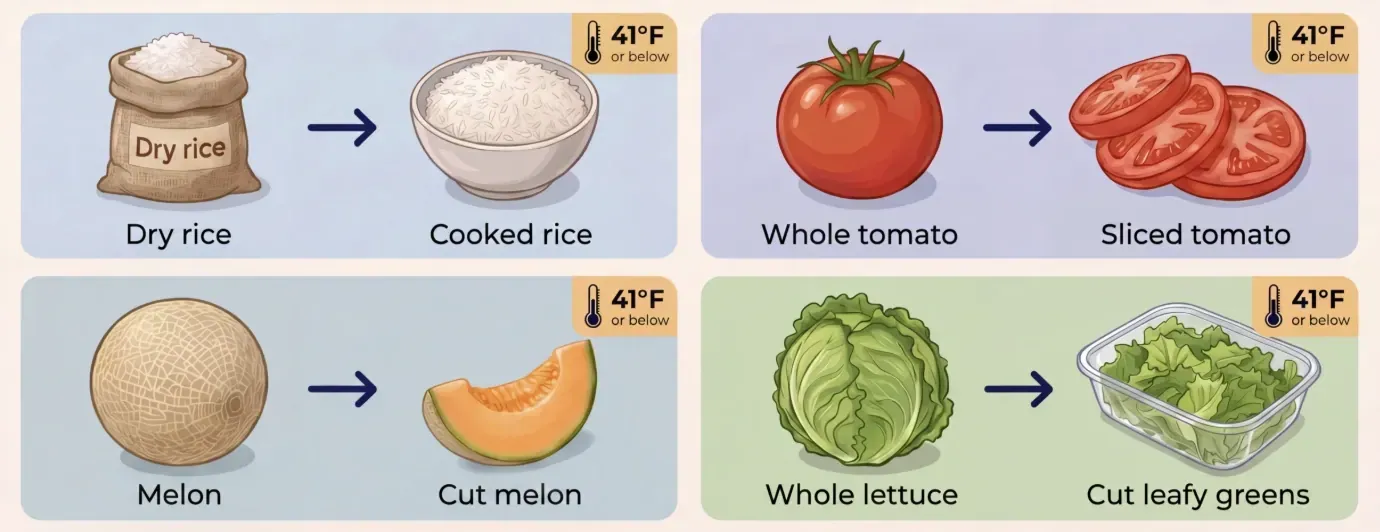
A whole tomato is perfectly safe on the counter, but a sliced one is instantly a TCS food.
A bag of rice is harmless, but a pan of cooked rice requires strict monitoring.
Remember: What’s been done to the food counts as much as what the food is.
Just as valuable for training is knowing what falls off the list:
The moment a shelf-stable TCS item is opened, it becomes TCS. An unopened carton of shelf-stable milk sits on a dry shelf safely. An opened one belongs in the cooler, and it follows exactly the same rules as anything made from scratch.
TCS foods are the reason the temperature danger zone exists as a concept. The danger zone is 41°F to 135°F, the range where bacteria multiply fastest, and three rules govern how TCS foods move through it.
| Control | The rule |
|---|---|
| Receiving | Cold TCS food at 41°F or below; hot TCS food at 135°F or above |
| Holding | Cold at 41°F or below; hot at 135°F or above |
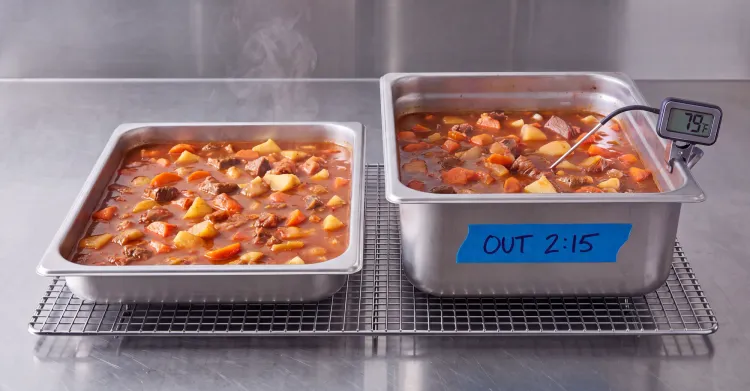
| Time as a control | Up to 4 hours without temperature control, then serve or discard (6 hours for cold food that starts at 41°F or below and never goes above 70°F) |
The time limit in that last row covers every stretch the food spends out of temperature control across prep, transport, and service, not just one uninterrupted sitting, so short gaps add up.
Our full guide to the temperature danger zone covers the time limits, reheating and the six-hour cold option in more detail. Cooked TCS foods also have to cool on a deadline, from 135°F to 70°F within 2 hours and down to 41°F within the next 4, which our guide to cooling foods safely walks through step by step.
Here is a requirement inspectors check constantly and teams routinely miss, and it applies specifically to TCS foods.
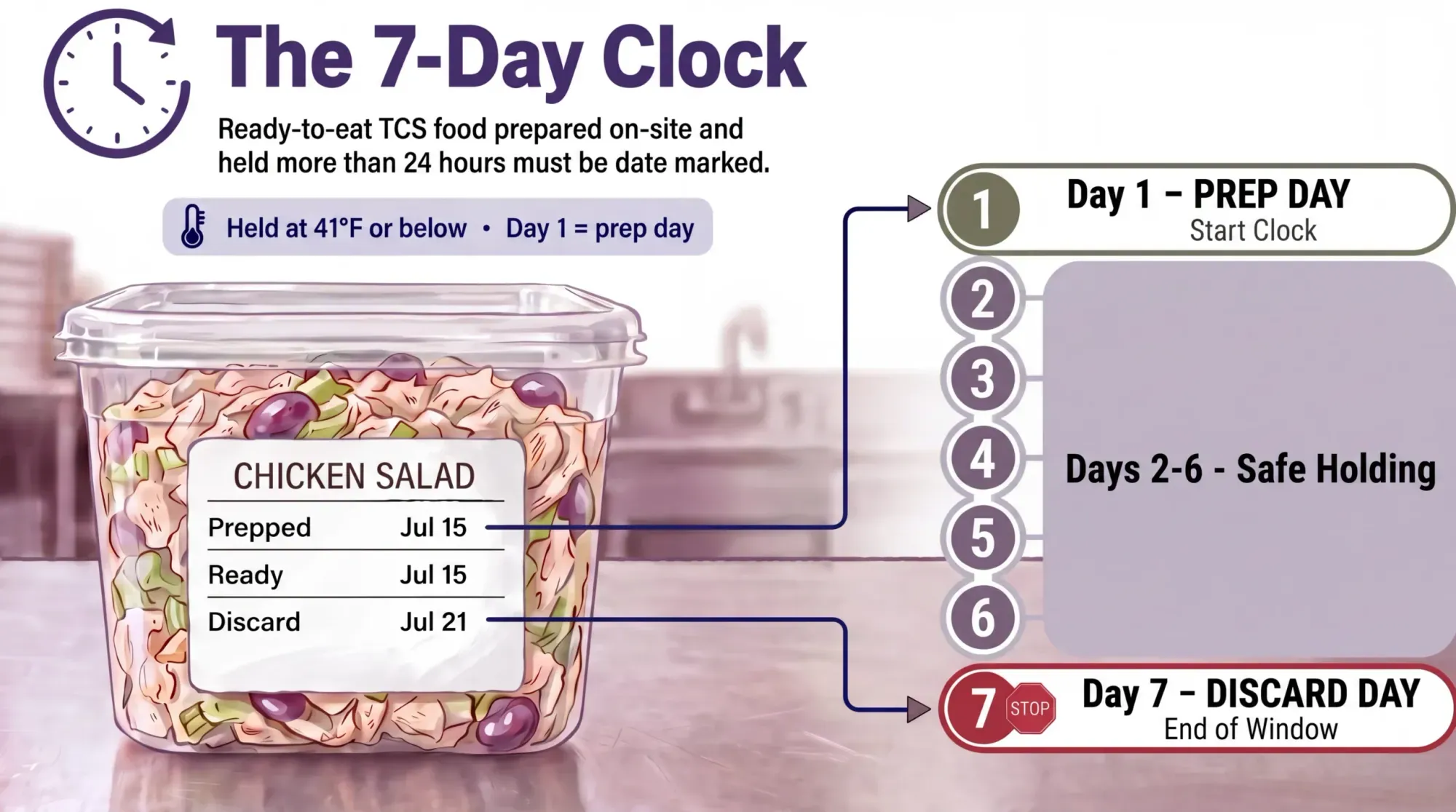
Under FDA Food Code 3-501.17, ready-to-eat TCS food prepared on-site and held for more than 24 hours must be date marked with a discard date, and it may be held for a maximum of 7 days at 41°F or below, counting the day of preparation as day 1.
That 7-day clock is completely invisible unless someone writes it on the container. A kitchen with flawless holding temperatures and no date marking still fails this check, and the guest is still at risk. This is where TCS control and labeling stop being separate topics.
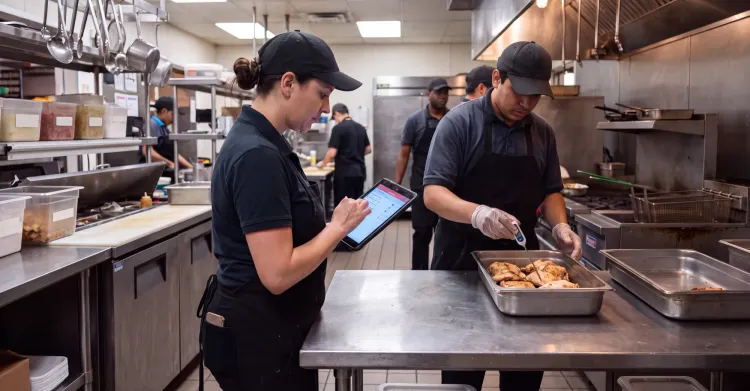
Identifying TCS foods is the easy part. The hard part is proving, at every location, that those foods stayed controlled all day.
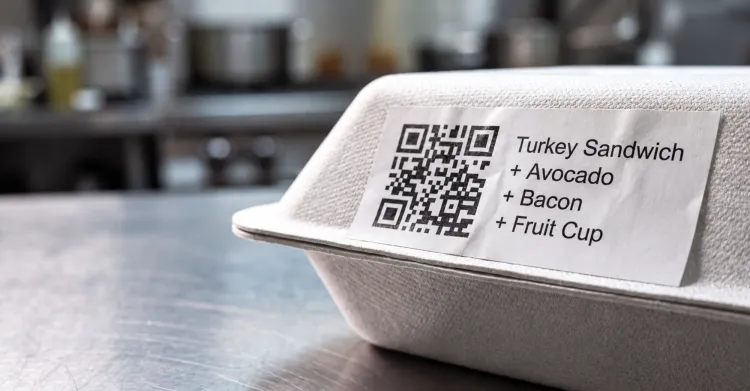
That takes two disciplines running together: date and time labels applied when TCS items are prepped or opened, so the discard clock is visible to whoever picks up the container next, and reliable temperature records for every cooler and hot-holding unit, so safe holding can be shown rather than asserted.
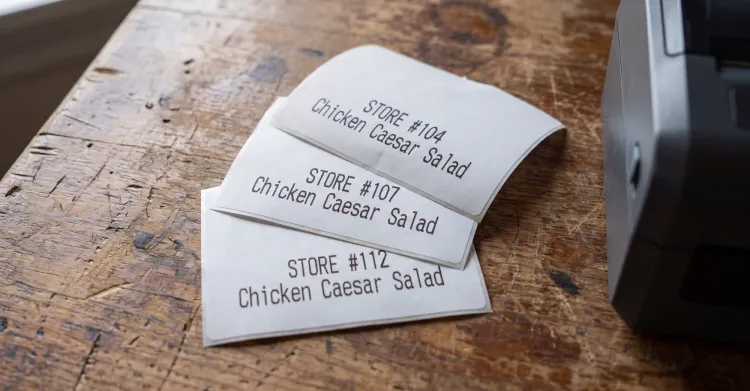
Labeling is where most kitchens slip, because the date math happens at the prep table, often during a rush. Counting the day of prep as day 1, carrying the earliest date forward when components are combined, and applying a brand’s shorter shelf life on top of the Food Code maximum are all easy to get wrong by hand. BOHA! Labeling prints prep labels with prep and use-by dates automatically, so the discard date doesn’t depend on hand math at every location.
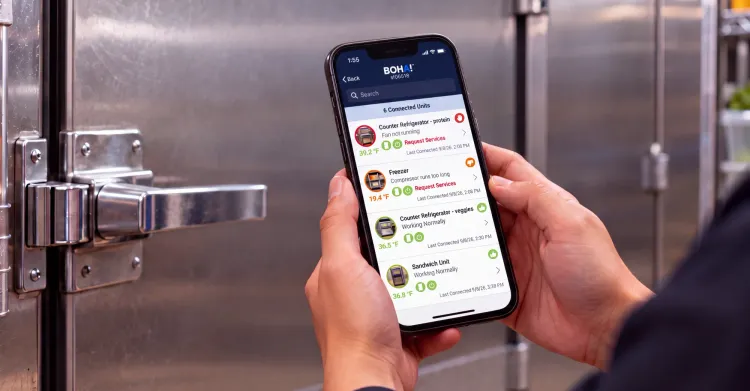
Continuous temperature monitoring, such as BOHA! Sense, confirms that cold holding actually held all shift, including overnight, without depending on someone remembering to grab a clipboard. Together they turn “we control our TCS foods” from a claim into a record.
Keep this summary handy to ensure your team understands the critical requirements for maintaining food safety.
Cutting or cooking can turn a food into a TCS food. Whole tomatoes, melons, and leafy greens generally do not require temperature control, but once cut, they do. Dry rice is shelf-stable; cooked rice is TCS.
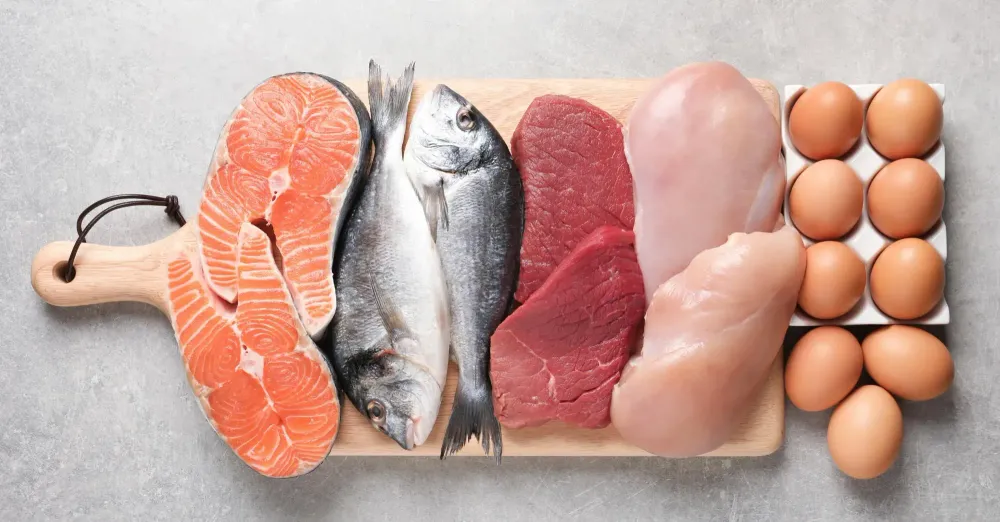
The obvious: Meat, poultry, seafood, dairy, and eggs
The easily missed: Cooked rice and other grains, cut leafy greens, cut tomatoes, and cut melons
TCS foods are generally moist, low in acid, and nutrient-rich:
Label containers with the information teams need to identify and discard food correctly.
Log temperatures and required checks consistently across every shift and location.
Bottom line: Recognize when a food becomes TCS, control its time and temperature, and document the process consistently.
Download the free Safe Temperatures Wall Card to keep these numbers in view on every prep line, or see how BOHA! handles date marking and temperature records across every location. For how labeling, monitoring and checklists support daily compliance, see our food safety and compliance overview.
TCS stands for Time/Temperature Control for Safety. TCS foods require time and temperature control to limit bacterial growth and toxin formation.
Meat, poultry, seafood, milk and dairy, shell eggs, cooked rice and beans, cooked vegetables, cut leafy greens, cut tomatoes, cut melons, sprouts, and tofu.
Yes. Once cooked, rice is a TCS food. Bacillus cereus spores survive cooking and germinate as the rice cools, which is why cooked rice left at room temperature is a common cause of foodborne illness.
Yes. A whole tomato is acidic enough to be safe, and a melon rind protects its interior. Cutting exposes the moist, low-acid flesh, so cut tomatoes, cut melons, and cut leafy greens all require temperature control.
Water activity above roughly 0.85, pH above roughly 4.6, and nutrient content. Moist, low-acid, nutrient-rich foods support rapid bacterial growth.
They mean the same thing. “Potentially hazardous food” is the older term, and the FDA Food Code now uses “Time/Temperature Control for Safety (TCS) food.”
Dry goods, unopened canned goods, most breads, high-acid foods like pickles and jams, whole uncut produce, and low-water-activity items like jerky. Once opened, cut, or cooked, many of these become TCS.
Cold TCS food must be held at 41°F (5°C) or below under the FDA Food Code. Many operators set coolers to 38°F or lower so door openings and equipment drift don’t push product above the limit.
A maximum of 4 hours. Under the Food Code’s time as a public health control provision, hot food must start at 135°F or above, be marked with the time it was removed from temperature control, and be served or discarded within 4 hours, and the operation needs written procedures for the practice.
A maximum of 7 days at 41°F or below, counting the preparation day as day 1, and it must be date marked if held longer than 24 hours.
Get the latest industry insights delivered straight to your inbox
Browse