Stay in the loop!
Get the latest industry insights delivered straight to your inbox
A commissary kitchen concentrates production and risk in one place. One contamination event doesn't stay local, it reaches every location the batch feeds. Here's how to build food safety and traceability that scales with a central kitchen model.
TransAct
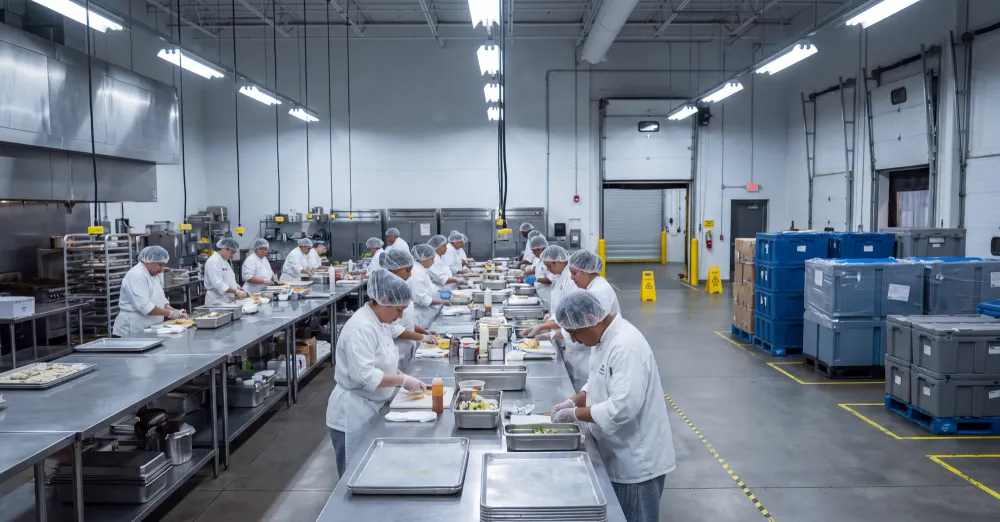
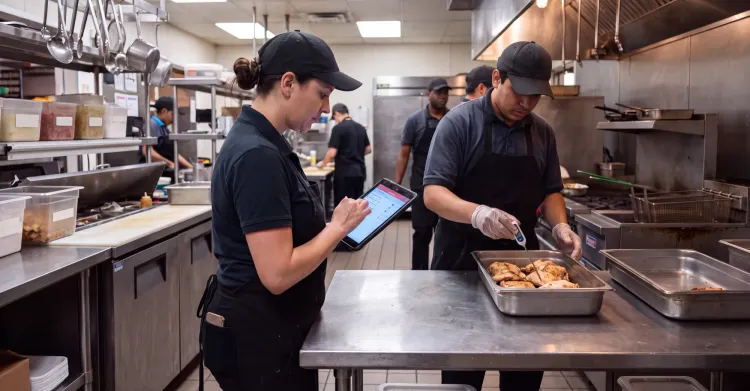
A commissary kitchen (also called a central kitchen or central production kitchen) is a single, centralized facility that prepares food, sauces, proteins, or fully assembled menu items for distribution to multiple restaurant locations, rather than each site producing everything independently. For multi-location operators, the appeal is straightforward: consistency, labor efficiency, and tighter cost control on high-labor menu items that would otherwise be prepared, with wide variation, in dozens or hundreds of individual kitchens.
But centralizing production doesn't just centralize the benefits. It centralizes the risk. When a single kitchen produces the base sauce, marinade, or par-cooked protein feeding forty locations instead of one, a food safety failure at that single point doesn't stay local. It travels with the batch, to every location that batch touches, on the same day, often before anyone downstream knows there's a problem.
A commissary or central kitchen model is one of the most effective ways to standardize quality and control cost at scale. It's also one of the highest-consequence single points of failure in a multi-location food safety program if it isn't built with traceability and containment in mind from the start. That's the core tension operators need to design around.
In a traditional, fully decentralized kitchen model, a cross-contamination event or a temperature abuse incident is usually contained to the location where it happened. It's a real problem, but it's a bounded one.
A commissary kitchen inverts that. A single lapse in cook temperature, an undetected allergen cross-contact, or a batch held too long in the temperature danger zone before chilling doesn't just affect the commissary itself. It rides along in every case, tote, or delivery that leaves the facility that day, reaching every location on the distribution route before the problem is caught. If it isn't caught until a customer complaint or an inspection flags it, the operator is left asking a much harder question than "what happened at this one restaurant": which locations received this batch, on which dates, and has any of it already been served.
Without a reliable answer to that question, the only safe response is often the most expensive one: a broad, conservative recall or hold across every location that could plausibly have received the affected product, rather than a precise, contained one.
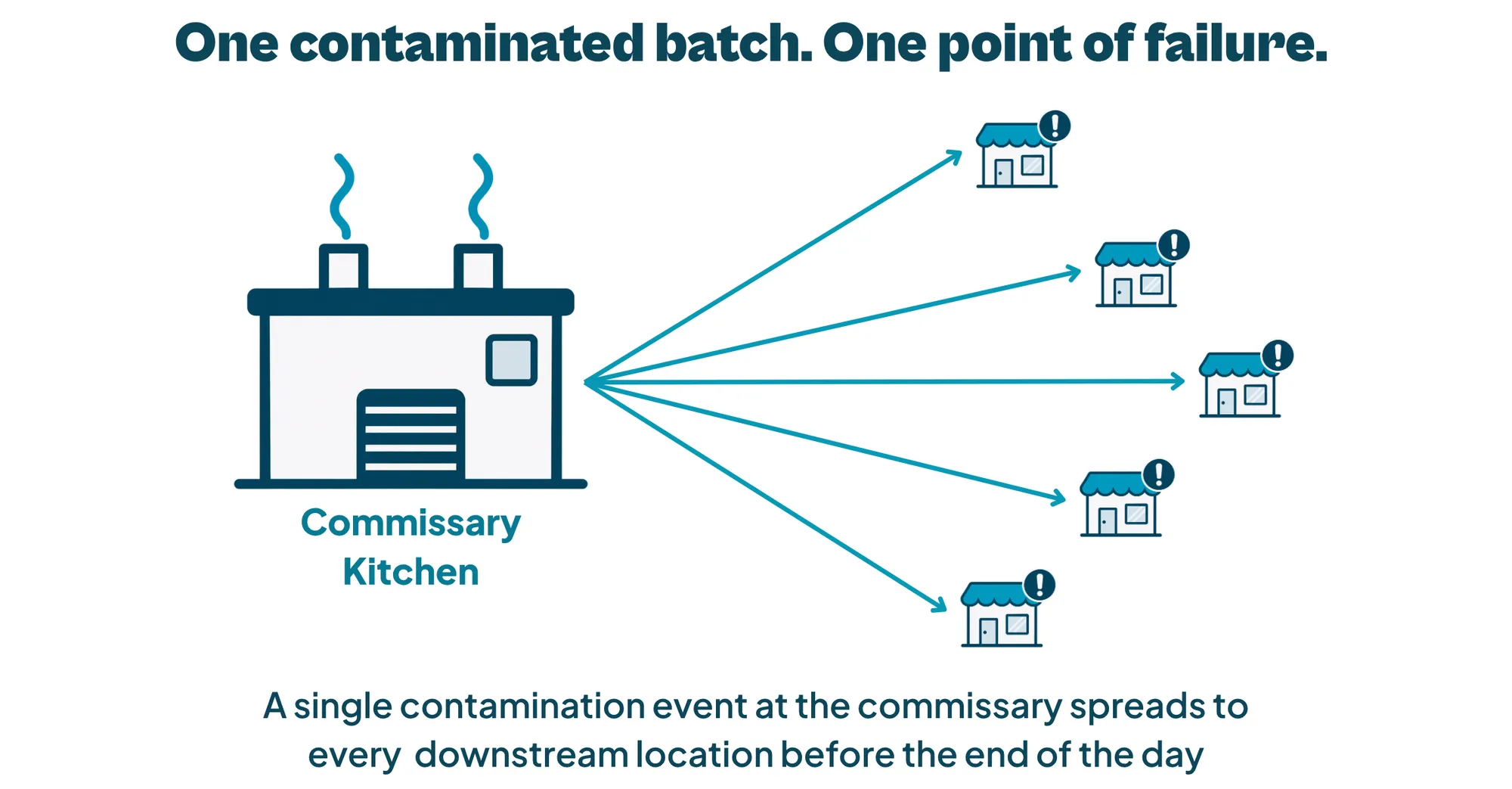
This isn't a hypothetical scenario. TransAct covered a live version of exactly this problem in the Cyclospora outbreak tied to Taylor Farms de Mexico iceberg lettuce: a single production source fed multiple restaurant chains across nine states, and separating the locations that received affected product from the ones that didn't came down entirely to how complete the supply records were. The same math plays out inside a commissary kitchen, just at a scale an individual operator can actually control.
This is where a lot of commissary operations are more exposed than they realize. Standard kitchen-level food safety practices (correct cook temperatures, proper cooling, clean-as-you-go sanitation) are necessary but not sufficient once production is centralized. The missing layer is traceability: the ability to answer, quickly and precisely, which locations received which batch, on which date, from which raw material lot.
That capability is about to matter even more. The FDA's Food Traceability Rule under FSMA Section 204 requires enhanced recordkeeping for a defined list of high-risk foods as they move through the supply chain, with the goal of dramatically shortening the time it takes to trace contaminated product back to its source during an outbreak investigation. The FDA extended the original compliance deadline by 30 months, from January 2026 to July 20, 2028, a date Congress has since directed the agency to hold to, specifically because it recognized how much coordination this requires across a supply chain, including operators running their own commissary and central kitchen operations.
That extension is a gift of time, not a reason to wait. The FDA has been explicit that it does not intend to change the underlying requirements, and retailers and distributors are already beginning to hold their own suppliers, including foodservice operators with commissary programs, to earlier timelines. The operators who use this window to build real traceability into their commissary workflow now will be ready well ahead of the deadline. The ones who wait will be racing a hard date with a system built under pressure.
The instinct when a gap like this shows up is often to shop for an entirely new food traceability software platform, a rip-and-replace system layered on top of everything else already running in the kitchen. In practice, that's usually the wrong first move, and it's often the reason traceability initiatives stall out before they're finished.
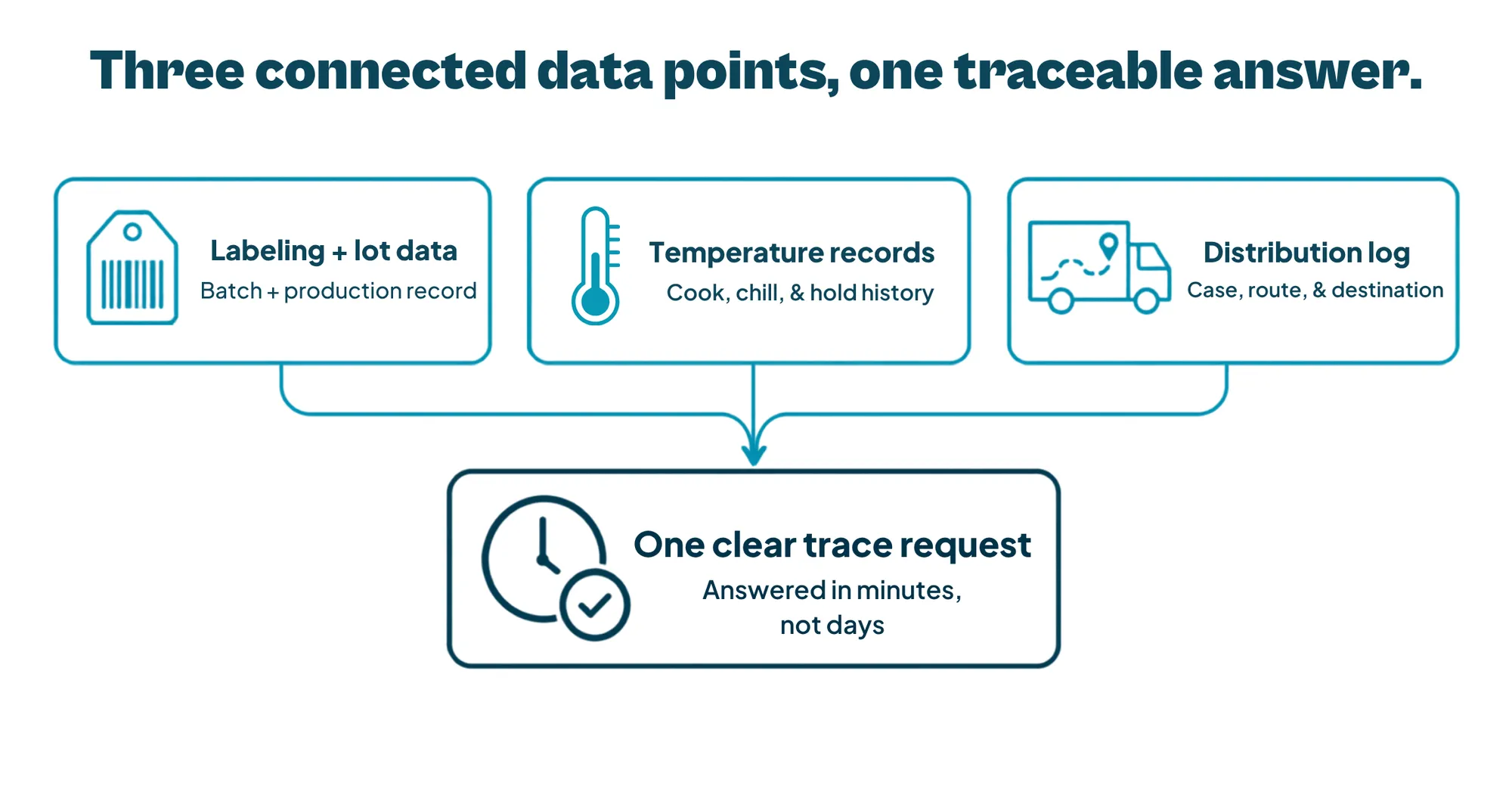
Most commissary operations already have several of the pieces: labeling and date-coding at the point of production, temperature monitoring on cook and chill steps, and some form of receiving log for raw materials coming in. The gap usually isn't a lack of data. More often, the data lives in disconnected systems, on disconnected paper logs, or in formats that can't be searched or cross-referenced quickly when a trace request comes in.
A more durable approach connects what's already there: labeling data that captures lot and production date, temperature records tied to the same batch, and a distribution record showing which locations received which case. Connected, those three data points answer the exact question a trace investigation asks. Disconnected, across separate systems and separate binders, they can take days to reconstruct manually, if they can be reconstructed at all.
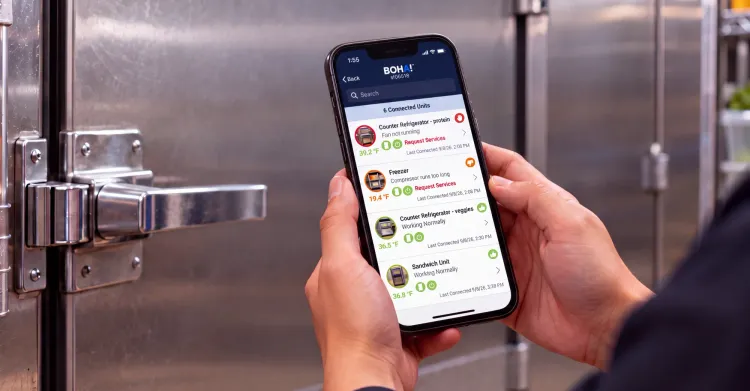
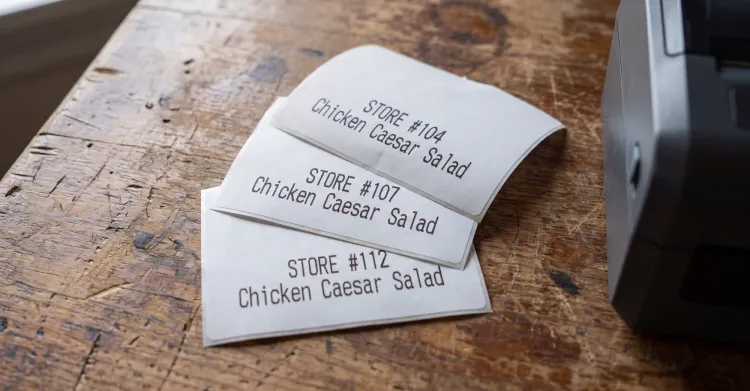
BOHA! Labeling tied to production date and lot, combined with connected temperature monitoring through BOHA! Temp, gives a commissary operation the two most important traceability anchors without requiring a separate system built from scratch. The goal isn't a brand-new traceability platform bolted onto the kitchen so much as making sure the systems already running there are capturing the right data, and connecting to each other, so a trace request can be answered in minutes rather than days. For the same reasoning applied to temperature recordkeeping specifically, see Temperature Logs That Survive an Audit: Paper vs. Digital.
A commissary or central kitchen food safety program needs to account for scale in a way a single-location program doesn't. A few practices matter disproportionately once one facility is feeding many:
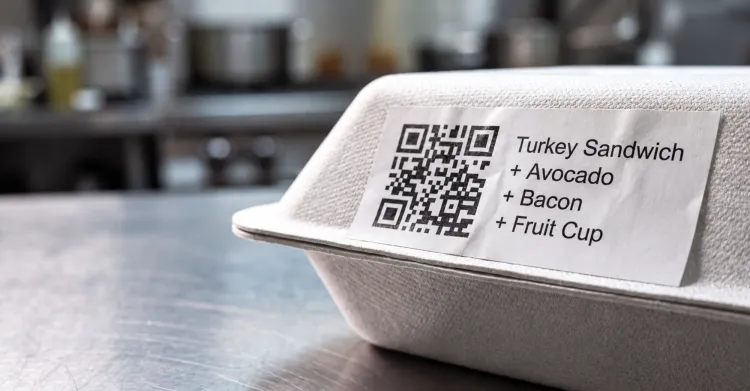
Lot-level labeling on everything that leaves the facility. Every case, tote, or delivery should carry a lot number tied to its production batch and date, not just a generic "made on" date.
A distribution log that ties batches to destinations. Knowing what was made isn't enough. The system needs to capture where each batch actually went, and on what date, so a trace request can move in one direction instead of requiring a manual reconstruction.
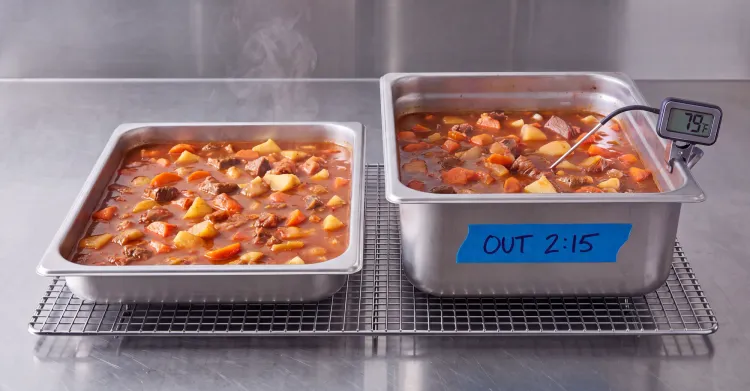
Temperature monitoring at every critical control point, not just the final product. Cook temperature, chill rate, and holding temperature during transport all need to be captured, since a failure at any one of those points can compromise an entire batch before it ever reaches a location.
A defined containment protocol, tested before it's needed. Operators should know, in advance, exactly how a hold or recall would be executed if a batch were flagged, including who has authority to issue it and how quickly locations can be notified.
Regular reconciliation between what the commissary produced and what locations report receiving. Gaps here are often the first sign of a labeling, distribution, or record-keeping problem, well before they become a food safety incident.
This is also where a connected system like BOHA! Control Center earns its place, giving a food safety or compliance team one place to see labeling, temperature, and distribution data across every location a commissary feeds, rather than reconstructing that picture from separate systems when a trace request is already on the clock.
It's worth naming the concept directly, because it's still an emerging one in a lot of operators' vocabulary. A commissary and central kitchen model is fundamentally a different food safety problem than a distributed kitchen model, not a bigger version of the same one. The risk isn't just "more food in one place." It's that a single failure point now has dozens of downstream consequences instead of one, and the systems that track and contain that risk need to be built for that reality, not adapted from single-location practices after the fact.
That's the same thinking behind BOHA! by TransAct's Food Safety & Compliance approach more broadly: connected records that hold up under pressure, not paperwork reconstructed once something's already gone wrong. Get the traceability foundation right, connected rather than bolted on, and a commissary kitchen does what it's meant to do: feed a growing multi-location operation efficiently and consistently, with the visibility to catch a problem in minutes instead of days.
The terms are largely used interchangeably in foodservice, both referring to a centralized facility that produces food, sauces, or components for distribution to multiple restaurant locations rather than each site producing everything independently. Some operators use "commissary" more specifically for shared or third-party facilities and "central kitchen" for a company-owned production site, but the food safety and traceability considerations are the same either way.
It's not necessarily riskier per batch, but the consequences of a failure are amplified. A single contamination or temperature-abuse event at a commissary can affect every location that received product from that batch, rather than being contained to one site, which makes fast, accurate traceability essential.
FSMA 204 is an FDA rule requiring enhanced traceability recordkeeping for a specific list of high-risk foods as they move through the supply chain. Whether it directly applies depends on the specific foods a commissary handles and its role in the supply chain; operators should review the FDA's Food Traceability List and consult their compliance team, but many are choosing to build traceability practices now regardless of exact applicability, given how fast supplier and retailer requirements are moving ahead of the regulation itself.
Not necessarily. Many operators already have labeling, temperature monitoring, and distribution records in place separately. The more effective and faster path is often connecting those existing systems so they share lot, date, and location data, rather than replacing them with an entirely new platform.
There's no single universal standard, but the direction of regulation and industry practice is toward minutes and hours, not days. The longer a trace takes, the longer potentially affected product stays in circulation and the broader a precautionary hold or recall typically needs to be.
Get the latest industry insights delivered straight to your inbox
Browse