Stay in the loop!
Get the latest industry insights delivered straight to your inbox
Safe hot-holding starts at 135°F, but during peak service, the bigger risk sits upstream of the thermometer, in the overproduction operators lean on to avoid running out. Here's how to hold food safely without cooking your margin away.
TransAct Technologies
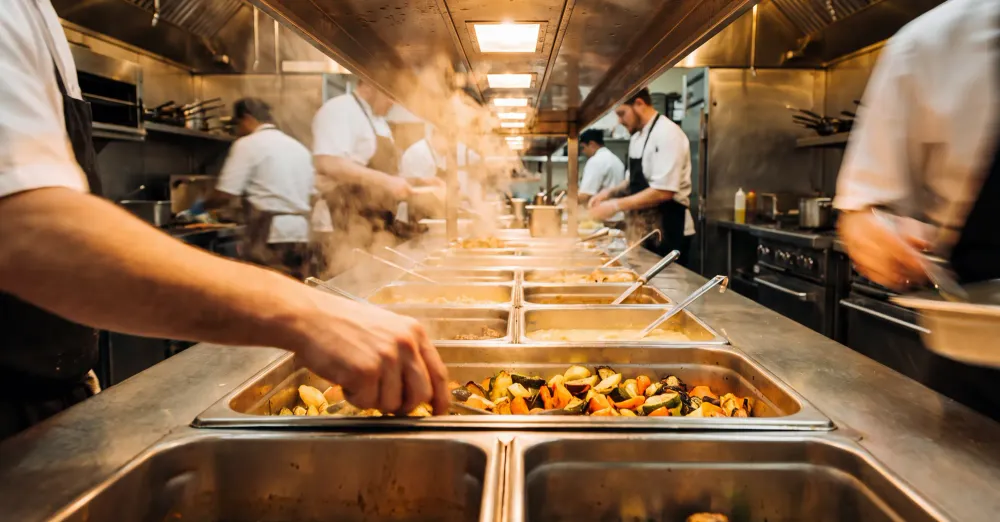
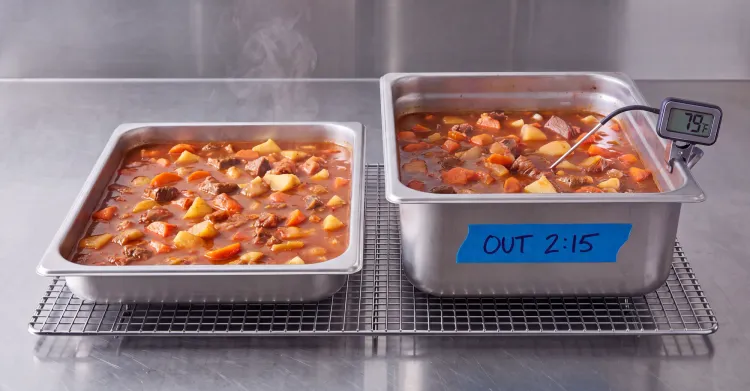
The FDA Food Code sets the minimum safe hot-holding temperature at 135°F. Below that threshold, food enters the temperature danger zone, the range between 41°F and 135°F where bacteria multiply fastest, and the clock starts running on how long it can safely stay there. Most jurisdictions require hot-held food to be checked at least every four hours, with any unit or item that drops below 135°F either reheated to 165°F within two hours or discarded.
That part is well understood by most kitchen teams. What's less understood, and far more expensive, is what happens upstream of the hot-holding line, in the decision about how much food to cook and hold in the first place.
Ask a kitchen manager why the steam table always seems to have more chicken tenders or more rice than the lunch rush actually needs, and the honest answer is rarely "we did the math." It's closer to this: running out during peak service feels worse than throwing food away afterward, so when in doubt, cook more.
That instinct isn't irrational. A stockout during a lunch rush means lost sales, frustrated customers, and a line cook getting yelled at by a shift lead who's getting yelled at by a district manager. Overproduction, by contrast, feels like a quiet, deferred cost. Nobody sees the pan of unsold food get scraped into the trash at 3 p.m. the way they see an empty steam table at 12:15.
But quiet doesn't mean small. The cost is just easy to underestimate, since it never shows up as a single dramatic event. It shows up as a slow leak, pan after pan, location after location, week after week.
The National Restaurant Association estimates that food costs already represent 28% to 35% of restaurant sales industry-wide, and food waste eats directly into that margin before a single plate is sold. Restaurants in the U.S. waste an estimated 11.4 million tons of food every year, and the association notes that operators who actively track and manage waste can cut food costs by 2% to 6%, with roughly an $8 return for every dollar invested in waste reduction.

For a single location, a few extra pans of over-produced hot-held food per week might not register as a crisis. For an operator running fifty, a hundred, or several hundred locations, that same daily overproduction pattern, repeated across every unit, compounds into a material line item on the P&L, and it's one that's almost entirely avoidable with better forecasting and better visibility into what's actually happening at the hot-holding line.
Overproduction rarely looks identical from one location to the next, which is exactly why a single, headquarters-wide production standard tends to fail in practice. A location near an office park might see a sharp, predictable lunch spike and near-silence by 2 p.m. A location in a residential area might run a longer, flatter curve through the afternoon. If both are given the same prep-and-hold guidance, one of them is almost guaranteed to be overproducing.
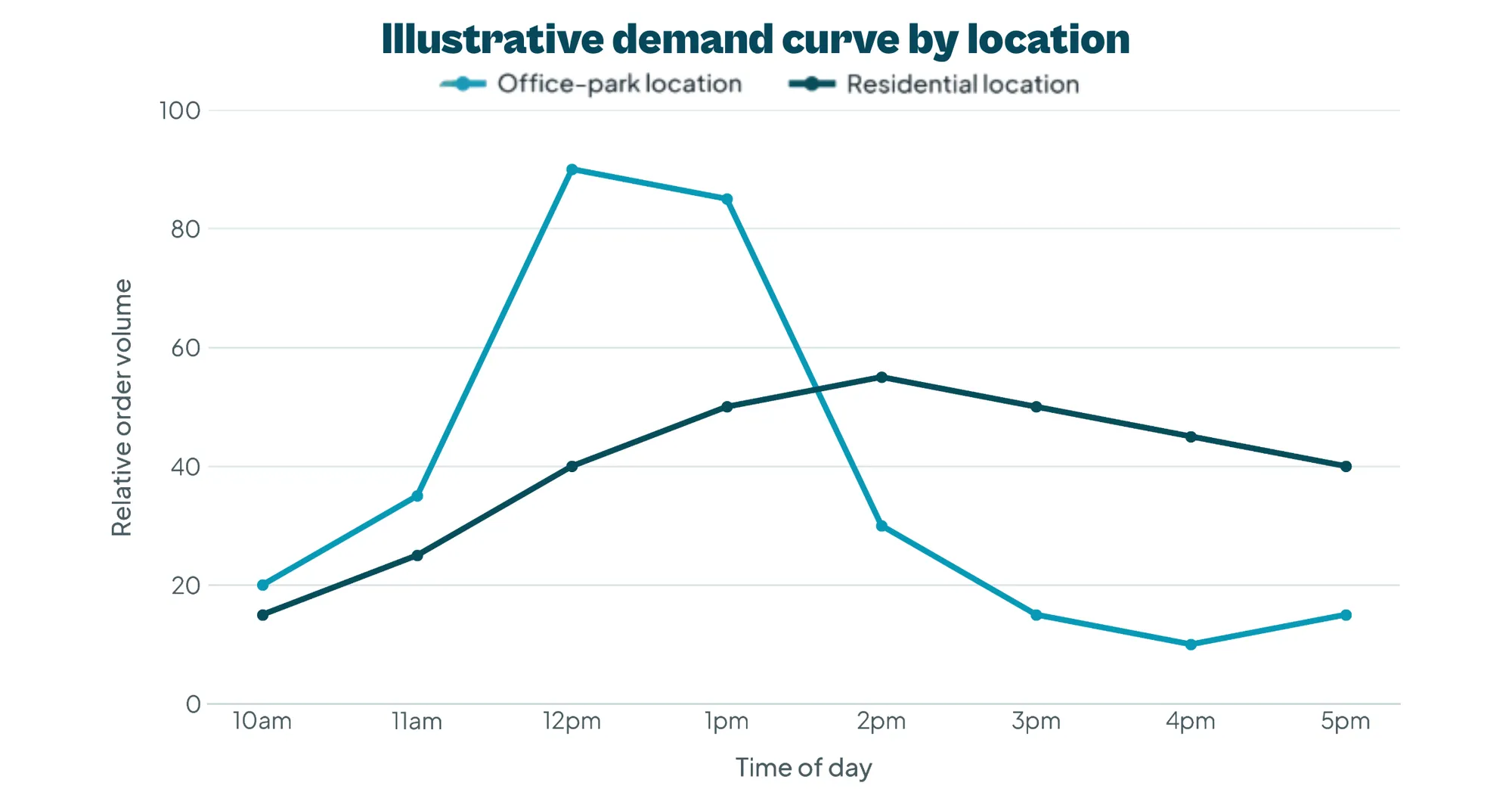
Consider a hypothetical hundred-and-twenty-location quick-serve chain where a regional team notices food cost creeping up over a quarter, without any single location standing out as an obvious outlier. Individually, each location's numbers look defensible. In aggregate, a pattern emerges. A specific fried-item SKU is being over-produced by roughly the same margin at nearly every location during the mid-afternoon lull, because the corporate production guide was built around the highest-volume location in the portfolio rather than each location's actual traffic pattern.
Training and discipline aren't the issue here. Visibility is, and it's nearly impossible to catch by reviewing individual locations one at a time. The pattern only becomes obvious once production and waste data are aggregated and compared across the portfolio, which is exactly what a regional field team or corporate ops team needs, not just a single kitchen manager.
There's a second cost to overproduction that has nothing to do with waste and everything to do with food safety. The longer food sits in hot-holding, the more its quality and safety margin erode, even above 135°F.
Hot-holding is meant to be a short-term bridge between cooking and service, not a storage strategy. Food held for extended periods, even at a compliant temperature, loses moisture, texture, and flavor, which pushes teams toward another bad habit: topping off a half-empty pan with a fresh batch instead of rotating it out entirely. That practice, sometimes called "topping off," effectively resets the clock on the older food while masking how long it's actually been sitting, which is a food safety problem auditors and health inspectors are specifically trained to look for.
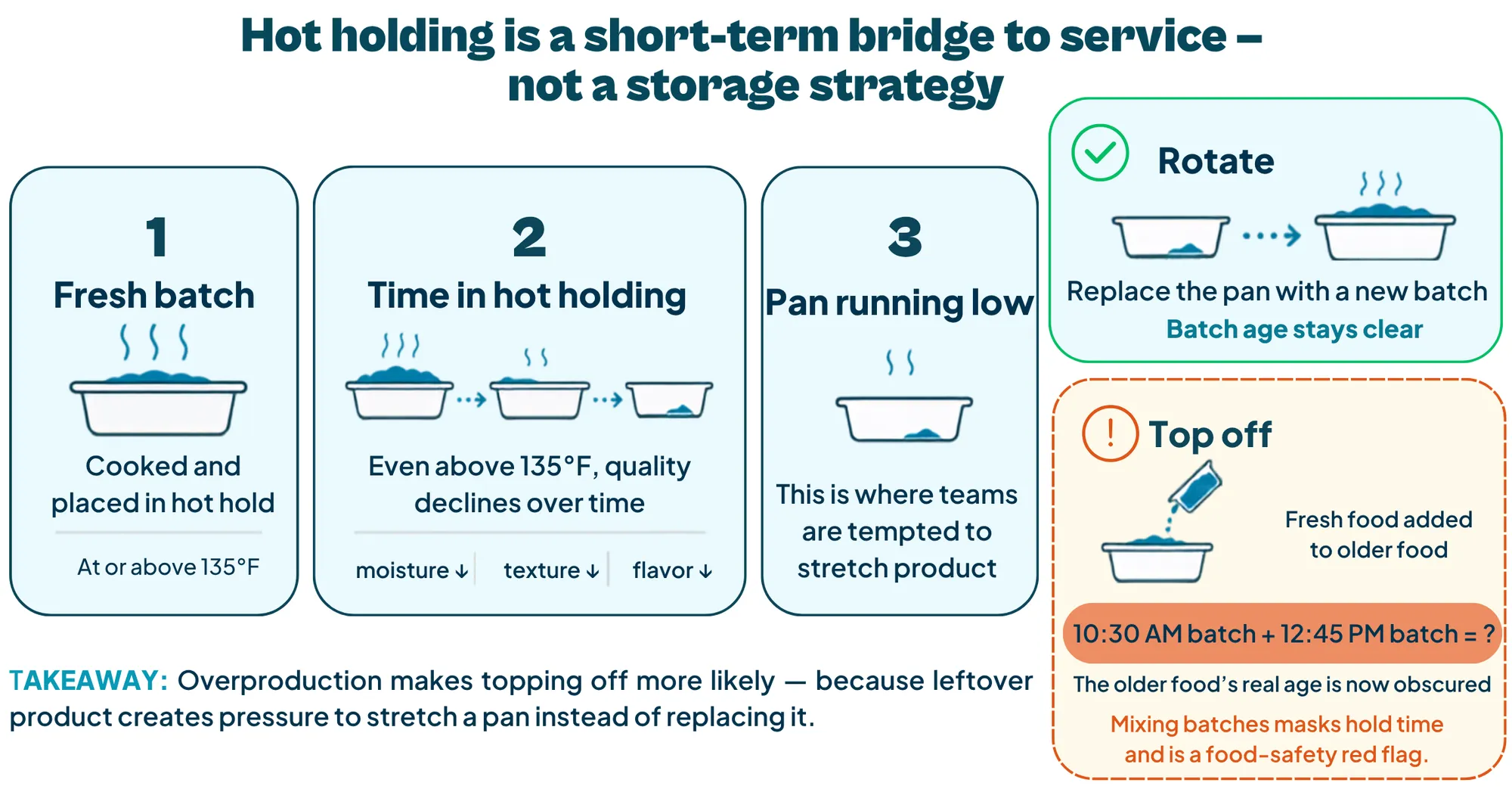
Overproducing at peak makes topping off more likely, not less, because a kitchen with three-quarters of a pan left over from a lull has every incentive to stretch it rather than waste it, even when it shouldn't.
The fix isn't a blanket "produce less" policy so much as a system that replaces gut-feel production with something that actually knows what a given daypart, day of week, and location typically needs.
A few practices consistently move the needle for multi-location operators:
Batch production tied to actual demand windows. Rather than cooking a full shift's worth of a hot-held item at once, batching in smaller, more frequent increments keeps hot-held food fresher and reduces the total volume exposed to waste if demand comes in lower than expected.
Location-level historical data, not headquarters averages. A downtown location with a lunch rush and a suburban location with steady all-day traffic shouldn't be running the same production plan. Historical sales data at the item and daypart level, tracked consistently across locations as part of a broader food waste tracking practice, is what makes right-sized production possible instead of a district-wide guess.
A standardized hold-and-discard discipline. Every location needs the same clear rule for when a hot-held item gets pulled and logged, not left to individual judgment about whether it "still looks fine."
Visibility that travels up, not just across. A shift lead adjusting production in real time is useful. A regional or corporate team seeing the pattern of overproduction and waste across dozens of locations, and catching a location that's consistently over-cooking a specific item, is what turns a local fix into a portfolio-wide one.
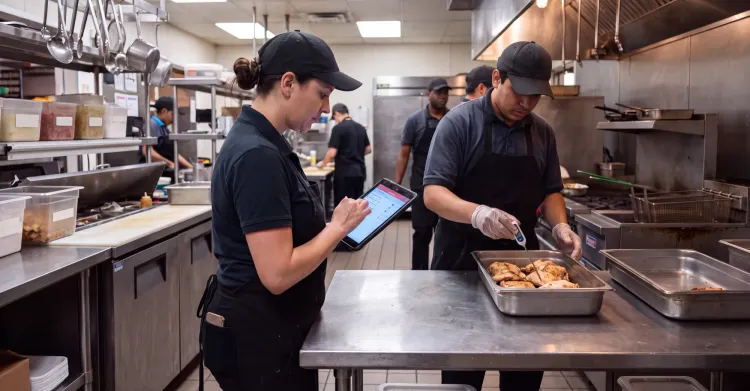
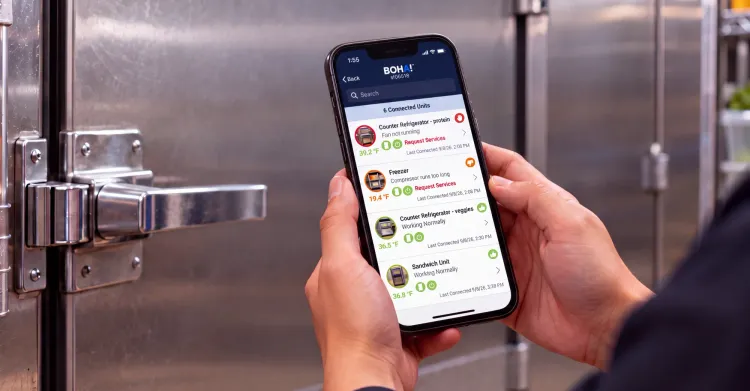
This is where the operational system carries as much weight as the culinary judgment. Digital checklists, like BOHA! Checklist, can build the four-hour hold-and-discard check directly into a shift's required tasks, so it isn't left to memory during a busy service window. Paired with connected temperature monitoring through BOHA! Temp, a location can confirm both that hot-held food is staying above 135°F and that it's being rotated out on schedule, with a record in BOHA! Control Center that a regional manager, food safety team, or headquarters can review without requesting it after the fact. Hot-holding is also typically one of the critical control points in a documented HACCP plan, so tightening this one workflow strengthens your broader food-safety recordkeeping at the same time it curbs waste.
The combination works because hot-holding safety and hot-holding waste are really the same operational question, asked two different ways. Is this food being managed on a defined, enforced schedule, or is it being managed by feel? Once a location has a defined schedule that's actually being followed and logged, both the safety risk and the waste risk come down together. For more on how digital temperature monitoring closes similar gaps in cold-holding and audit readiness, see Temperature Logs That Survive an Audit: Paper vs. Digital.
Pulling it together, an effective hot-holding program at scale tends to include:
1. A documented minimum hold temperature (135°F) with a defined check interval, enforced the same way across every location.
2. A hold-and-discard timer or checklist step that feeds a waste log, so food isn't held indefinitely on the assumption that it "still looks fine."
3. A no-topping-off policy, with fresh batches tracked and logged separately from what's already on the line.
4. Location-level production data, reviewed on a regular cadence to right-size batch sizes by daypart.
5. Corporate-level visibility into both temperature compliance and waste patterns, through a tool like BOHA! Control Center, so a systemic overproduction problem at one location, or across a region, gets caught before it becomes a permanent bad habit.
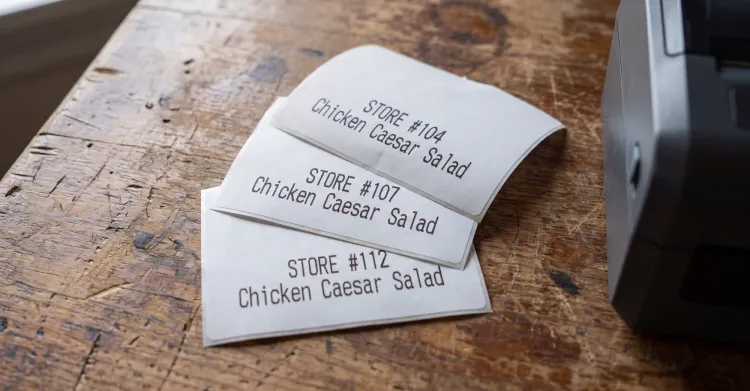
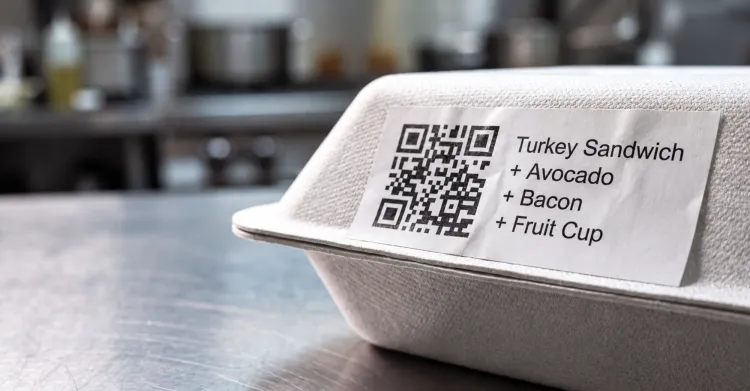
That's the same logic behind BOHA! by TransAct's broader Waste & Spoilage Reduction approach, which connects prep planning, labeling, rotation, and temperature data so a fix like this travels across an entire portfolio instead of staying stuck at one location.
Get the production side right, and the hot-holding line stops being a hidden cost center. It starts doing exactly what it's supposed to do, safely bridging the short gap between the kitchen and the customer without cooking margin away in the process.
The FDA Food Code sets 135°F as the minimum temperature for holding potentially hazardous (TCS) foods hot. Food that drops below that temperature must either be reheated to 165°F within two hours or discarded, depending on local health code requirements.
Most jurisdictions require checks at least every four hours, though local health departments may set stricter requirements. Confirm the specific interval with your local health authority, since adopted versions of the FDA Food Code vary by state.
Topping off is the practice of adding freshly cooked food to a partially full pan of hot-held food that's already been sitting for a while, instead of discarding the older batch and starting fresh. It's a risk because it obscures how long the oldest food in the pan has actually been held, making it harder to track whether it's within a safe holding window.
Estimates vary by operation, but industry data from the National Restaurant Association shows that operators who actively track and manage food waste, including overproduction, can reduce food costs by 2% to 6%, with roughly an $8 return for every $1 invested in reduction efforts. At scale across multiple locations, that adds up quickly.
Yes. Overproduction and extended hot-holding are closely linked. The more food a location cooks beyond actual demand, the more pressure there is to hold it longer or top off existing pans rather than discard it. Right-sizing production based on real demand data reduces both the volume of food at risk of being wasted and the temptation to stretch hot-holding beyond a safe window.
Get the latest industry insights delivered straight to your inbox
Browse