Stay in the loop!
Get the latest industry insights delivered straight to your inbox
Made-to-order items are built in seconds, but the label still has to carry every allergen, ingredient, and use-by date correctly. Here's how one barcode-driven workflow keeps speed and accuracy from competing.
TransAct Technologies
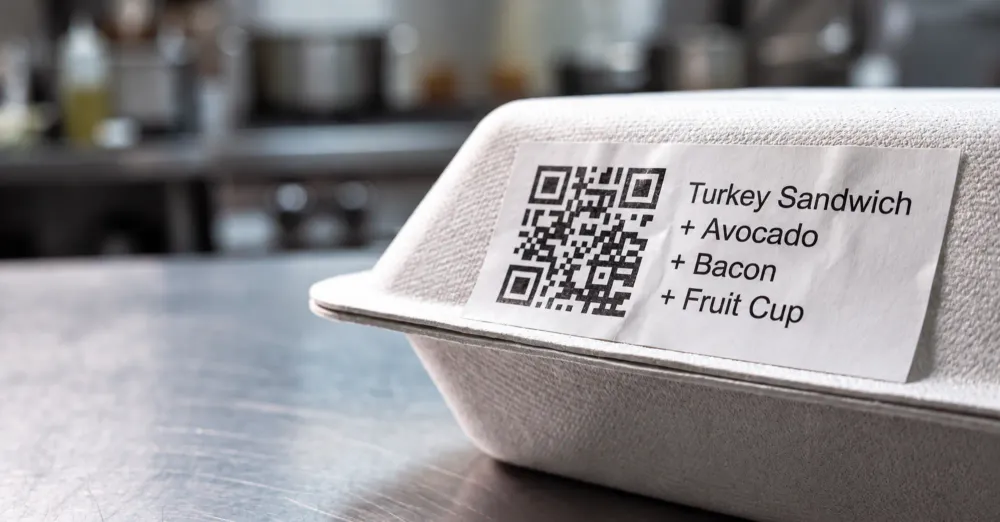
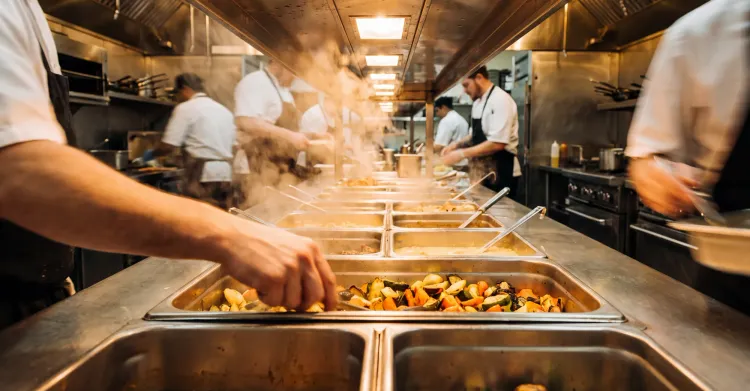
A build-to-order bowl, sandwich, or roll doesn't exist until a guest orders it. There's no case of finished product sitting in the walk-in with a label already applied hours in advance. The moment the ticket prints, a team member assembles a specific combination of ingredients, modifications, and allergen exposures that may not repeat exactly the same way again that shift, and the label has to catch up to all of it before the item leaves the line.
That's the tension underneath every made-to-order program, whether it's a fast casual bowl concept, a sushi case built fresh through the day, a made-to-order sandwich line, or a convenience store grab-and-go program assembled behind the counter. Speed and accuracy are supposed to happen at the same moment, on the same ticket, and neither one gets to wait for the other.
Made-to-order labeling is the process of generating a correct, item-specific label at the exact moment a customized order is assembled, pulled from data the kitchen is already using, rather than pre-printing a label in advance for a fixed batch.
The industry's own numbers show how often that tension loses. The 2025 QSR Drive-Thru Study put overall order accuracy at 87 percent, down from 89 percent the year before, and found that 62 percent of incorrect orders traced back to customization. Modifications are where accuracy breaks down first, and a label is a modification's last stop before it reaches a guest.
When the modification involves an allergen instead of a topping preference, the stakes change entirely. An estimated 33 million Americans live with at least one food allergy, and food allergy reactions send someone to a U.S. emergency room roughly every 10 seconds. CDC data from 2024 puts diagnosed food allergy prevalence among adults at 6.7 percent, and that's before accounting for undiagnosed sensitivities or the guests ordering on behalf of a child or family member with a known allergy. A made-to-order label isn't a convenience feature. For a meaningful share of the guests it reaches, it's the last checkpoint between a correct order and a medical event.
Risk concentrates at the moment of assembly because every made-to-order ticket is a one-time labeling decision, made in real time, with no second check before the item reaches the guest. Standard prep labeling has more built-in margin: a batch of soup gets one label, applied at one point in time, checked once, and it stays correct for the life of that batch. Made-to-order labeling doesn't get that margin. Every ticket is its own labeling decision, made under the same speed pressure as the assembly itself, by whichever team member happens to be on the line, not necessarily the most experienced person on the schedule.
That produces a specific kind of failure: the recipe is right, the ingredients are right, the food is assembled correctly, and the label is still wrong, because it was generated, written, or selected as a separate manual step layered on top of an already time-pressured task.
Since January 1, 2023, sesame has been the ninth major food allergen requiring disclosure under the FDA's FASTER Act, joining milk, eggs, fish, shellfish, tree nuts, peanuts, wheat, and soy. Nine allergens is a lot to track correctly, ingredient by ingredient and modification by modification, on an item built in real time rather than pulled from a pre-labeled case. The recall record shows how often that tracking fails even in controlled manufacturing environments. Allergens were the single largest cause of FDA food recalls in 2025, responsible for 39 percent of the total as FDA recall volume climbed to 571 events for the year, a 15.4 percent increase over 2024, according to Sedgwick's 2026 State of the Nation recall index. That figure describes packaged goods, but the underlying failure is the same one made-to-order kitchens face every shift: information about what's actually in an item not making it onto the label that travels with it.
Every manual step between "item assembled" and "label applied" is a step a busy line will eventually skip, abbreviate, or get wrong under volume. Looking up a modified spec, hand-selecting a base label, writing in a substitution, reprinting because the wrong template came up. Each is a point where a rushed team member trades a few seconds of accuracy for a few seconds of speed. None of those shortcuts show up as one dramatic failure. They show up as a slow accumulation of near-misses and inconsistent labels that eventually produces the kind of statistic cited above.
One barcode consolidates every modification, allergen, and prep-instruction detail for a customized item onto a single label, generated automatically from the same data that defines the order, so nothing has to be hand-selected or written in as a separate step. The instinct when a labeling process gets more complicated is often to go the other way and add more label types: a base label, a modification sticker, a separate allergen callout. That approach tends to fail for the same reason handwritten labels fail at scale. Every additional label is another manual decision, another spot for a mismatch between what's on the plate and what's on the label, and one more thing a rushed team has to remember to apply correctly.
In practice, the system tracks the specific combination being assembled (an added ingredient, a removed allergen-containing item, a fully custom build) and encodes that information into the label using a barcode format designed to hold more than a standard code can. BOHA! Labeling's made-to-order functionality uses a multi-layer QR code specifically so a fully customized item can carry complete modification, allergen, and prep-instruction data without needing an oversized label or a second sticker to catch what didn't fit. The label stays a standard, expected size, while the barcode underneath carries everything true about that specific build, not a generic approximation of it.
For the team assembling the order, that means one action instead of several: the label prints correctly because it's generated from the same order data the kitchen is already working from, not re-keyed or hand-selected as a second step. For anyone verifying or reviewing later, whether that's a shift lead doing a spot check or a regional food safety manager pulling records after a guest complaint, the barcode holds up as a single source of truth for what the item actually contained: scannable and traceable rather than dependent on someone's handwriting or memory of what they meant to write.
Made-to-order pressure doesn't look identical across segments, but the underlying problem (speed and accuracy competing for the same few seconds) shows up everywhere items are built to spec rather than pulled pre-made.
This segment feels it most in volume. A bowl, sandwich, or wrap line might run dozens of unique modification combinations in a single daypart, each one needing a label fast enough to keep pace with a line that doesn't stop moving. This is where the QSR Drive-Thru Study's customization-error data is most directly relevant: the same complexity that trips up order accuracy at the register is exactly what a barcode-driven label has to absorb correctly on the line.
This segment feels it differently. Modifications tend to be less about raw speed and more about precision: a substitution to accommodate a stated allergy, a plated item built to a specific dietary request, an off-menu build for a regular guest. Volume is lower, but the consequence of a missed allergen note on a single plate is exactly as serious as it is anywhere else, and there's often less redundancy in the kitchen to catch an error before it reaches the table.
Sushi sits closer to the edge of this problem than most made-to-order formats, because a build-fresh sushi case is often the one place where the label is the only communication channel between the kitchen and the guest. A counter order usually gets a verbal allergy check; a grab-and-go sushi case frequently doesn't. Rolls get built continuously through the day in small batches, with shellfish, sesame, and soy-based sauces present across most of the menu, and any of them can end up in or out of a given roll depending on that batch's build. When a barcode encodes the actual ingredients rather than a generic "spicy tuna roll" label, it's doing the job a counter conversation would otherwise be doing.
This segment sits in between the others. Grab-and-go and build-to-order programs behind the counter run at retail speed with retail staffing, frequently with less specialized food safety training than a dedicated restaurant kitchen, which makes a labeling workflow that removes manual judgment calls especially valuable rather than a nice-to-have.
Cafeteria-style and campus dining programs run made-to-order stations too: deli lines, salad bars, stir-fry counters, at high volume for a population that isn't self-selecting the way a walk-in restaurant guest is. A K-12 cafeteria or hospital tray line often has documented allergy and dietary restrictions on file for the people eating there, and staff turnover on these lines (frequently student workers or rotating contracted staff) tends to run higher than in a dedicated restaurant kitchen. That combination, known dietary restrictions plus less experienced staff plus high built-to-order volume, makes an automated label as much a compliance safeguard as an operational one.
Across all five, a high-volume assembly area benefits from a labeling setup built for the pace of the line rather than adapted to it after the fact. For locations running heavy made-to-order volume, a centralized kitchen hub like BOHA! WorkStation or Terminal 2 gives the team a dedicated point near assembly where the barcode-driven label prints as part of the workflow, with a detachable tablet available when a task needs to move elsewhere in the kitchen rather than staying fixed at one station.
Made-to-order labeling doesn't sit in isolation from the rest of a food prep labeling program. It's downstream of the same recipe, ingredient, and allergen data that governs every other label a location prints, which is exactly why it breaks when that data isn't centrally managed. If a recipe change happens at headquarters (an ingredient substitution due to a supply issue, an allergen reformulation, a new modifier added to the menu), every made-to-order label built from that recipe needs to reflect it immediately, not whenever someone remembers to update a printed reference sheet at each location.
It's worth being equally clear about what a made-to-order labeling workflow isn't solving on its own. It doesn't replace training on allergen protocols, and it doesn't eliminate the need for a team member to actually relay a disclosed allergy into the order. What it does is remove the manual, error-prone steps between "this item's build is known" and "the correct label is on it": precisely where the customization-driven errors and allergen mislabeling statistics cited above tend to originate.
For operators evaluating their own made-to-order labeling setup, [Download: Made-to-Order Labeling Basics Quick Reference Guide] walks through the core requirements to check for, from barcode capacity to allergen data sourcing, in a format built for a quick read rather than a full platform evaluation.
Made-to-order labeling connects most directly to TransAct's broader Food Prep & Labeling initiative, which covers the full range of prep-to-label workflows multi-location operators are standardizing, from batch date coding to grab-and-go labeling to the made-to-order use case covered here. Operators building out that broader strategy may also find it useful to read how labeling gets harder to manage as fresh food programs scale and what cheap prep labels actually cost once rework, waste, and compliance risk are factored in.
Standard prep labeling happens once, in advance, for a batch that doesn't change after the label is applied. Made-to-order labeling has to generate a correct, unique label at the moment of assembly, for a build that may never repeat exactly the same way, under the same speed pressure as the order itself.
A bigger label still depends on someone accurately writing or selecting what goes on it. A barcode generated directly from order data removes that manual step, and a multi-layer barcode format can hold full modification, allergen, and prep data without changing the label's physical size or adding a second sticker.
No. A labeling system can only encode the information it's given. Guests still need to disclose allergies, and staff still need training to relay that information into the order accurately. The barcode workflow prevents that information from getting lost or altered between order entry and the finished label.
No. It applies anywhere an item is assembled to a specific build rather than pulled pre-labeled, including casual and fine dining modifications, sushi built through the day, convenience store grab-and-go programs assembled behind the counter, and cafeteria-style contract foodservice lines.
It pulls from the same recipe, ingredient, and allergen data that governs the rest of a location's labeling program. The barcode format is only half the equation: that underlying data has to stay current across every location too.
Made-to-order labeling is one function within BOHA! Labeling alongside date-code, prep, and grab-and-go labeling, all pulling from the same centrally managed recipe and allergen data so every label type on a line stays consistent with the others.
Get the latest industry insights delivered straight to your inbox
Browse