Stay in the loop!
Get the latest industry insights delivered straight to your inbox
Companies can currently decide on their own that an ingredient is safe without ever telling FDA, and a proposed rule would change that. It's aimed at manufacturers, but the effects will reach restaurant and c-store kitchens. Here's what's changing, when, and how operators can prepare.
TransAct Technologies
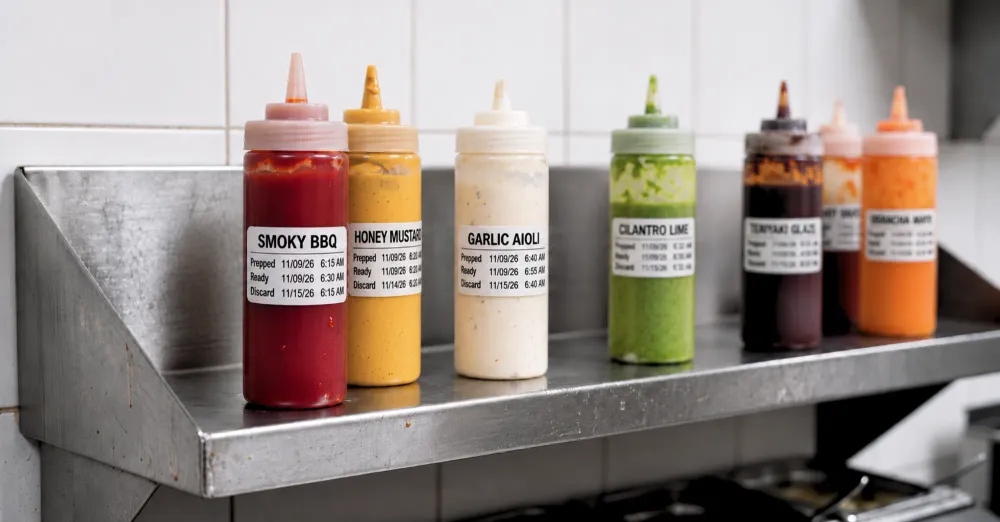
GRAS stands for “generally recognized as safe.” It’s a category that dates back to the 1958 Food Additives Amendment, which lets ingredients that qualified experts widely agree are safe for a specific use skip the FDA approval process that food additives go through. Salt, vinegar and baking soda all qualify, which is a good reminder that GRAS isn’t a list of mystery chemicals. It also covers thousands of newer ingredients, from fibers and proteins to flavor components and processing aids.
The sticking point has always been who makes that call, since a company can review the science, decide its ingredient is GRAS and start selling it without ever telling FDA. The agency has offered a voluntary notification program since the late 1990s, and plenty of companies use it, but nothing requires them to. Critics call that gap the “GRAS loophole,” and consumer advocates have pushed to close it since at least 2013. Speaking at Food Safety Magazine’s October webinar on GRAS reform, food regulatory attorney Kevin C. Kenny of FoodChain ID put the problem simply: some substances in the food supply are ones FDA doesn’t know are there, and it’s hard to keep an eye on something you don’t know exists.
FDA published the proposed rule on substances generally recognized as safe in the Federal Register on August 11, 2026. Its central change converts GRAS notification from voluntary to mandatory. Companies can still reach their own GRAS conclusions, but they would have to report them to FDA. The requirement covers direct food ingredients, food-contact substances and animal food.
| What would change | What stays the same |
|---|---|
| Companies must tell FDA about GRAS decisions they make on their own | The science behind what counts as GRAS |
| Self-affirmed ingredients already on the market get a shorter filing, with proof they were sold in the U.S. | Ingredients FDA has already reviewed or listed in its regulations |
| An exemption for tiny trace amounts, once limited to packaging, extends to food ingredients | No approval needed before launch, so products keep selling during FDA’s review |
| FDA publishes a public list of the shorter filings submissions |
According to Covington's analysis of the proposed GRAS rule, the rule runs on visibility more than penalties. Skipping a required notice wouldn’t automatically make a food illegal to sell, but it would move that ingredient up FDA’s list for a closer look. Lawyers are already arguing over whether FDA can require notices at all, since the 1958 law lets companies make GRAS calls without the agency. Venable’s review of FDA’s GRAS rulemaking raises significant doubts about FDA’s authority to do it on its own, and several bills in Congress could settle the question.
Self-affirmed ingredients already in use get a shortcut, a streamlined filing instead of a full safety dossier. The catch, Kenny said, is proving the ingredient was actually sold in the U.S. for the use its GRAS conclusion covers. An invoice proves a sale happened, not what the ingredient went into, so purchase orders, shipping records and formulation histories end up doing the heavy lifting. A supplier that can’t produce them loses the shortcut and is back to a full dossier or a food additive petition.
Comments on the proposed GRAS rule are open until December 9, 2026, and every later date depends on when FDA finalizes it. Kenny doesn't expect a final rule before the fourth quarter of 2027 and thinks 2028 is more likely. Once the final rule is published, the clock runs in three steps:
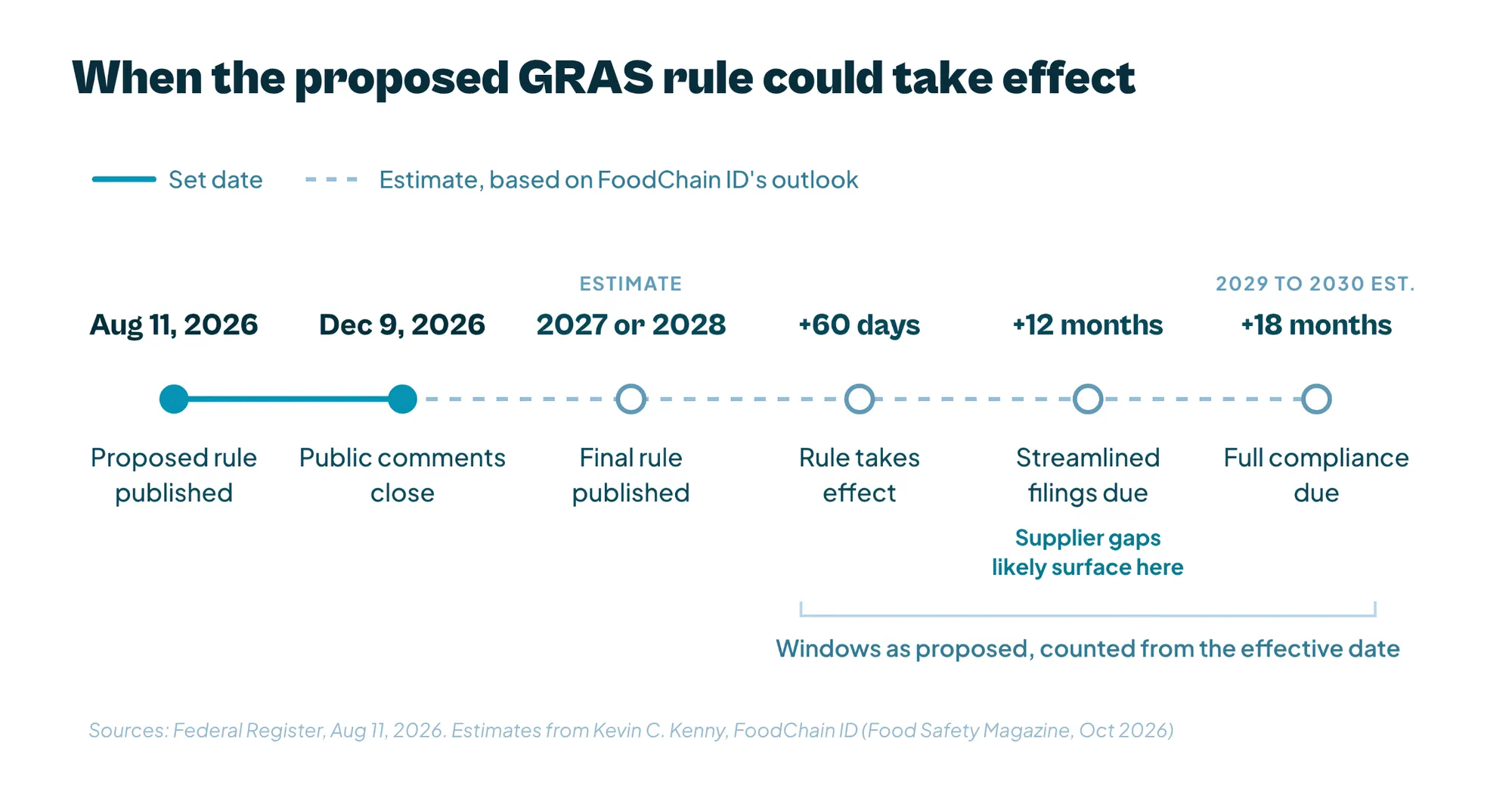
That would put full compliance in late 2029 or 2030. Kenny still urged companies to begin now, and told a story from the PFAS rollout to explain why. A friend of his had collected certifications from roughly 3,000 vendors stating their materials contained no PFAS. Within eight months, as state PFAS requirements took hold, about 1,000 of those vendors discovered they did, which is not the kind of update anyone wants to bring back to the CEO. He expects GRAS to produce the same kind of surprise, with suppliers learning late in the window that their documentation doesn't hold up.
He also expects a bottleneck at FDA, which has historically handled around 50 GRAS notices a year, had already received about 80 this year by late October, and could see thousands once the filing window opens. He thinks the 12-month window will need to stretch to 24 months or longer, partly because every company will be calling the same small pool of regulatory consultants and toxicologists at the same time.
The companies filing notices will be ingredient makers, flavor houses and packaging suppliers, so most foodservice operators will never send anything to FDA under this rule. They'll feel it through the supply chain in a few predictable ways.
Some suppliers will reformulate or be replaced if they can't document an ingredient's GRAS basis. Switching suppliers was one of the options FoodChain ID toxicologist Tom Jonaitis raised for that situation, which comes up again below. Either way, the sauce base, seasoning blend or dressing your locations rely on could change. Reformulation is already picking up for other reasons as well, since FDA's revocation of Red No. 3 in food reaches its compliance date on January 15, 2027.
International supply chains carry the most risk, according to Kenny, who called overseas suppliers his single biggest concern and said many people he met at a recent conference in Europe were unaware the rule was coming. Brands expanding into the U.S. with signature sauces or ingredients sourced from their home markets are especially exposed, because a supplier may sign a compliance statement without understanding what U.S. documentation requires.
Some operators are closer to manufacturing than they realize, including chains running commissaries, c-stores building fresh and private-label programs, and brands developing proprietary ingredients with a co-packer. These companies may own more of the paperwork than they assume, so it's worth asking regulatory counsel where yours falls.
While the federal rule works its way through comments, several states aren’t waiting. New York’s Food Safety and Chemical Disclosure Act (S1239) passed both chambers in April 2026. According to Davis Wright Tremaine’s summary of the New York GRAS bill, it would make it unlawful to sell or use a non-exempt GRAS substance in food unless a safety report is on file with the state and posted publicly, and it would ban Red No. 3, propylparaben and the dough conditioner potassium bromate. As of writing this, the governor hasn’t acted on it, and it would take effect 180 days after signing. Venable’s analysis of who the New York bill affects focuses on brands, ingredient suppliers and contract manufacturers, but whether it reaches foodservice is still an open question, so operators with New York locations should check with counsel.
Elsewhere, Louisiana pushed its additive disclosure law back to December 31, 2028, California’s version stalled in committee in May, and Pennsylvania and New Jersey had their own bills pending this summer. For a chain operating in a dozen states, that adds up to a patchwork of lists and deadlines. If that sounds familiar, it’s because state allergen labeling laws such as New York’s took the same route.
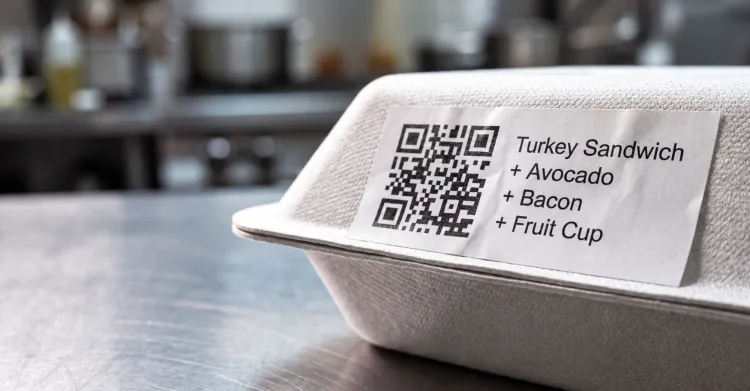
The rule also reaches food-contact materials when their safety status rests on a GRAS determination. “Everything in your kitchen is a food contact application,” Kenny told the audience, from packaging and coatings to adhesives and equipment. Most of it is already covered by specific FDA regulations and won’t need anything new, but it’s worth asking vendors which rule covers what, including the labels on your containers. Label adhesives, for example, are typically covered by 21 CFR 175.105, while the label paper and its coating need their own basis.
Two audience questions at the end of the webinar came close to what multi-unit operators are asking, and the speakers' answers translate well to a chain's headquarters.
Kenny's answer was to inventory everything first, then sort it into three tiers by risk. High priority covers ingredients with limited documentation, older safety assessments, significant exposure, manufacturing changes or emerging toxicology concerns. He called these the "problem children" and said he'd focus all of his energy on them right now. Medium priority covers ingredients with a plausible GRAS basis but gaps in the paperwork or changes to the specification. Well-documented ingredients with a clear regulatory status can be set aside for now. A large chain's menu easily runs to hundreds of ingredients, so the same triage works for deciding which supplier conversations to have first.
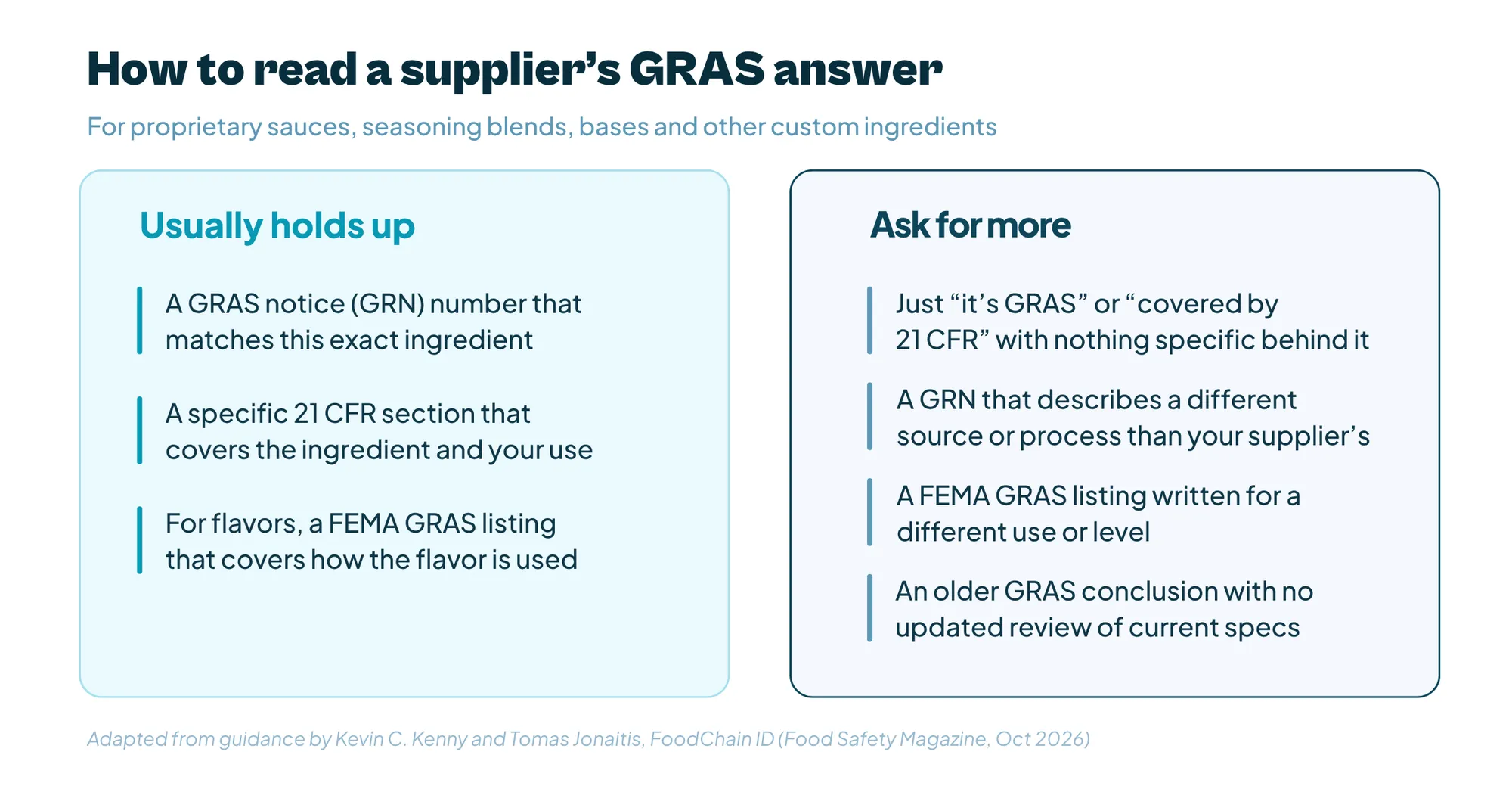
Jonaitis treated that as a red flag to escalate, with a third-party review where confidentiality is the obstacle, and said that if nothing is forthcoming the next step may be an alternate supplier. His reasoning is worth keeping in mind: "it's ultimately the company that puts it into the marketplace that is going to be at risk for additional scrutiny." For a restaurant or c-store brand, the name over the door carries that risk with guests, whoever turns out to be legally responsible.
Most of this work sits with headquarters, purchasing and food safety leadership rather than individual stores, and none of it has to wait for the final rule.
This article is general information, not legal advice. Talk with regulatory counsel about how the proposed rule and state laws apply to your operation.
While suppliers, consultants and counsel handle the filings, operators are left with the execution, which is usually where gaps between headquarters and stores show up. A supplier reformulates, culinary updates the recipe card, and three weeks later some locations are still printing the old ingredient list.
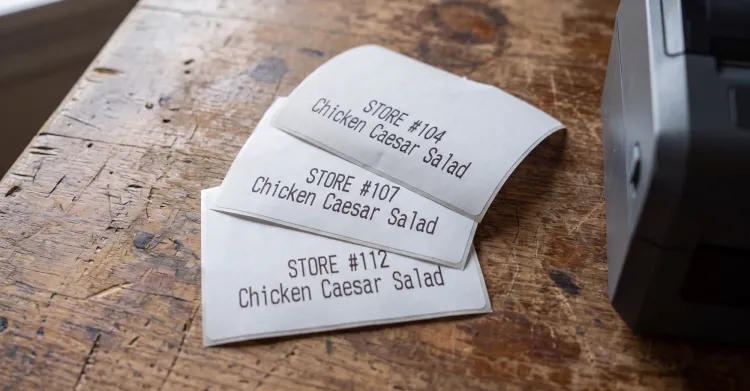
With BOHA! Control Center, recipe and allergen management happens in one place. Headquarters updates the menu item, ingredient list or allergen statement once, then publishes it to BOHA! Labeling at the locations it chooses, either right away or on a scheduled date and time. That scheduling is useful during a reformulation, because the new label can go live the same day the new product arrives instead of whenever each store gets to it. Labeling setups that keep templates on individual store devices turn every change into a store-by-store task, which is where drift starts and where store teams lose time they don't have.
If GRAS reform sets off a wave of supplier reformulations over the next few years, operators with one source of truth for recipes and labels will spend far less time chasing them. See how BOHA!'s restaurant food safety software brings labeling, checklists and temperature monitoring together across locations.
GRAS reform refers to FDA's August 2026 proposed rule that would make GRAS notification mandatory. Companies could still decide on their own that an ingredient is generally recognized as safe, but they would have to notify FDA. The proposal also covers food-contact substances and animal food. Comments close December 9, 2026.
The federal rule is aimed at the companies that make and sell ingredients, flavors and food-contact materials, so most restaurants won't file notices. Operators will feel it through supplier reformulations and documentation requests. Chains that manufacture their own products, such as commissary or private-label items, should confirm their role with regulatory counsel.
It hasn't yet, because the rule is still a proposal. Regulatory experts at FoodChain ID expect a final rule in late 2027 at the earliest and more likely in 2028. It would take effect 60 days after publication, with streamlined filings due 12 months and full compliance 18 months after that.
Self-affirmed GRAS, also called self-determined or independent GRAS, is when a company concludes on its own, often with an expert panel, that an ingredient is safe for its intended use and markets it without notifying FDA. The proposed rule would keep independent determinations but require companies to report them.
The proposal doesn't ban anything on its own, and the scientific standard for GRAS stays the same. Ingredients could still leave the market indirectly if a supplier can't document their safety basis, or if FDA reviews a substance and concludes it no longer qualifies.
Treat it as a red flag and escalate. Ask for the specific regulatory basis, consider a confidential third-party review if the supplier is protecting proprietary information, and line up an alternate supplier if nothing comes back. Plan for the recipe, allergen and label updates a supplier switch would require.
Ask for the regulatory basis of each proprietary ingredient: a GRAS notice number, a specific CFR citation or a FEMA GRAS listing for flavors. Ask whether any ingredient relies on a self-determination, whether they can document its current U.S. commercial use, and how the supplier will notify you of reformulations.
Get the latest industry insights delivered straight to your inbox
Browse