Stay in the loop!
Get the latest industry insights delivered straight to your inbox
A multistate Salmonella outbreak tied to recalled jalapeños has reached foodservice operators in 32 states. For multi-unit operators, a recall rarely starts in your kitchen, but your team is still the last line before it reaches a guest.
Dana Loof
As of the FDA's most recent update, 431 people across 32 states have been infected in a multistate Salmonella Javiana outbreak tied to jalapeños grown in Sinaloa, Mexico and distributed by Coast Citrus Distributors, with 57 hospitalizations and no deaths reported. The recall has expanded twice since it started in July, reaching distributors, retailers, and foodservice operators nationwide. The CDC's outbreak investigation notes the true number is likely higher, since many people recover without being tested.

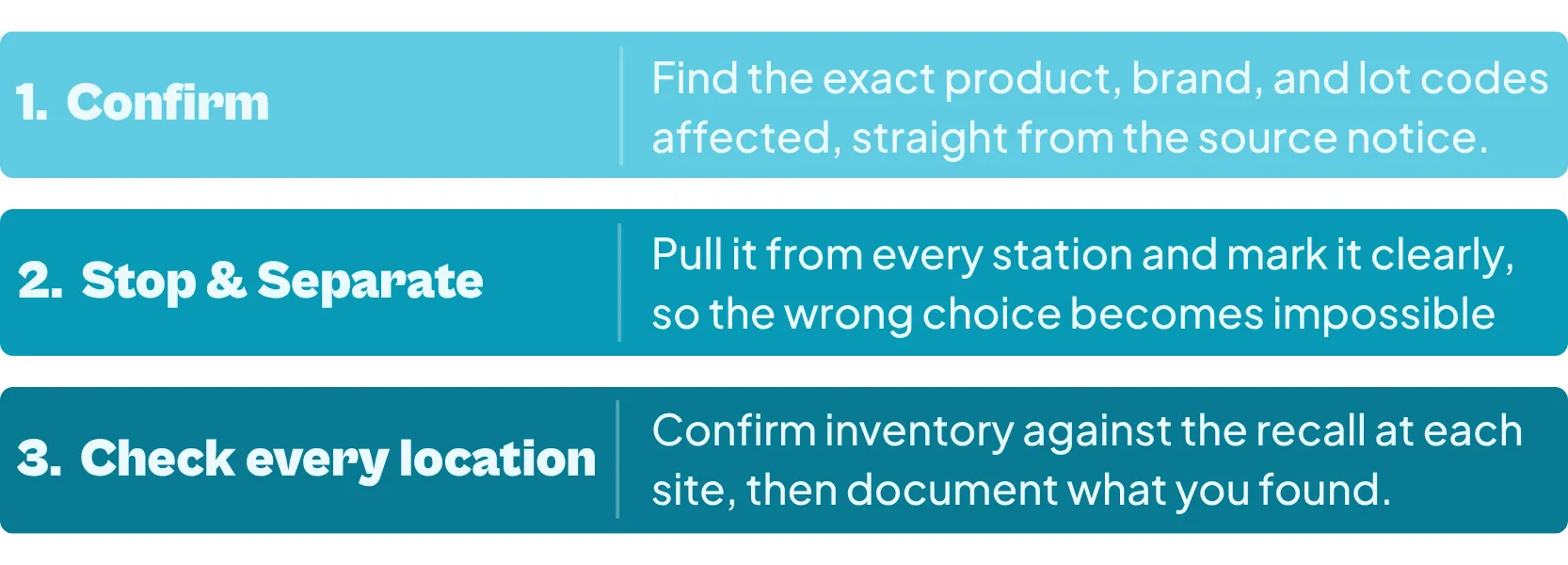
When a recall notice lands, you do not have time to read a manual. Here is the short version, and the rest of this guide expands each step.
1. Confirm the recall and find out exactly which product, brand, and lot codes are affected.
2. Stop using that product and physically separate it so no one grabs it by mistake.
3. Check every location's inventory against the recall, then document what you found and what you did.
Everything else, from communication to disposal to closing the loop, follows from those three.
Most recalls begin upstream, with a grower, a processor, or a distributor. By the time a notice reaches you, the product may already be prepped, plated, or sitting on a shelf across dozens of locations. That is the hard part. A supplier can pull a lot from one warehouse in a single action. You have to find it in walk-ins, prep tables, and speed racks across every kitchen, often during a shift, with a team that is already busy.
Handled well, a recall is a moment your operation can be proud of. Guests stay safe, records hold up, and the brand keeps its promise. Handled poorly, the same event turns into illness reports, a scramble for paperwork, and a story you do not get to control. The difference is rarely luck. It comes down to whether your response is a defined routine or an improvisation.
1. Confirm the recall and identify the affected product. Read the notice from the source, not a secondhand summary. For most foods, that means the FDA advisory or the company's own recall notice. For meat and poultry, it means the USDA's Food Safety and Inspection Service instead. Note the exact product name, brand, package size, and lot codes or best-if-used-by dates. A recall almost always targets specific lots, so a product that looks identical may be perfectly fine or may be affected. Match the details, not the label at a glance.
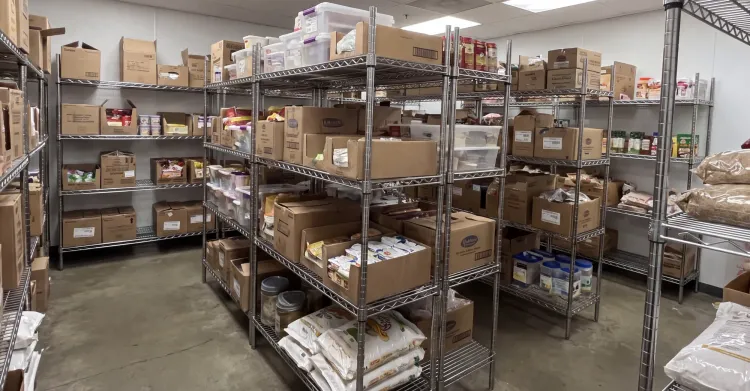
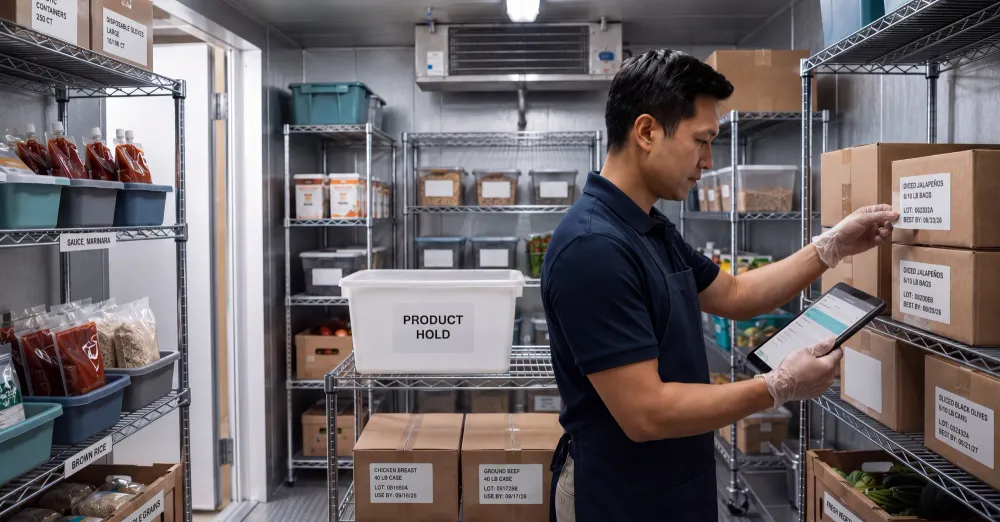
2. Stop using it and separate it. Pull the affected product from every station right away and move it somewhere it cannot be used by accident. Mark it clearly. A labeled hold bin or a taped-off shelf works. The goal is simple: make the wrong choice impossible for a team member who never saw the notice.
3. Check inventory across every location. This is where multi-unit operators feel the pressure. Each location has to check what it received, what is still on hand, and what already went into prepped items. If you track receiving and lot information, this is a quick lookup. If you rely on memory and paper, it is a hunt. Either way, do not assume a location is clear until someone has actually checked and confirmed it.
4. Trace it back and forward. Know where the product came from and where it went. Which supplier and distributor sent it, and did any of it become a sauce, a topping, or a grab-and-go item that also needs to be pulled? Recalls often expand as downstream products are identified. This one already has: the same jalapeños also reached federally inspected meat and poultry plants, which is why USDA FSIS issued its own public health alert for products made with them, on top of the FDA's produce recall. Anything made with the recalled ingredient has to be traced too.
5. Document everything as you go. Write down what you found, when, and what you did about it. Quantities pulled, locations checked, disposal or return details, and who confirmed each step. This record protects your guests and your operation. It is what lets you show a regulator, a franchisor, or your own leadership that the response was complete rather than assumed.
6. Communicate clearly. Tell the people who need to know, in the right order. Your team needs to stop using the product now. Headquarters and, in a franchise system, affected franchisees need a clear status. If guests may have been served the product, follow your brand's guidance and, where appropriate, public health direction on notification. Say what you know, avoid guessing, and keep a record of what was communicated.
7. Dispose of or return the product correctly. Follow the recall notice. Some recalls ask you to destroy the product, others to return it for a refund or credit. Document the disposal or return so the affected product is fully accounted for.
8. Close the loop. Once every location confirms it is clear, record the close-out. Then take a short look back. Did your receiving records make the check fast or slow? Did every location respond? A recall is the most honest audit of your traceability you will ever get for free, so use what it showed you.
You cannot prevent a supplier's contamination. You can decide how fast and how completely you respond. The operators who stay calm through a recall tend to share a few habits.
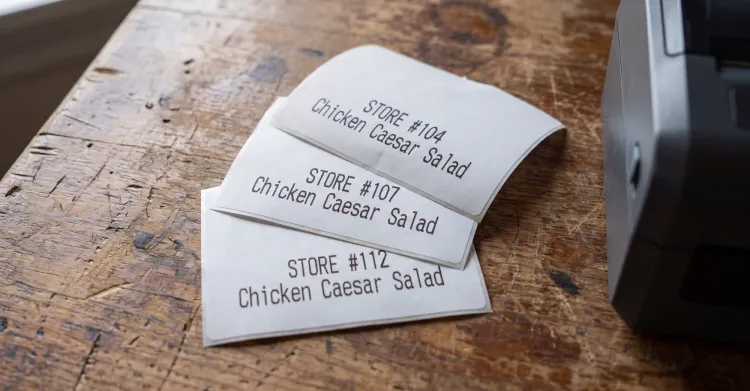
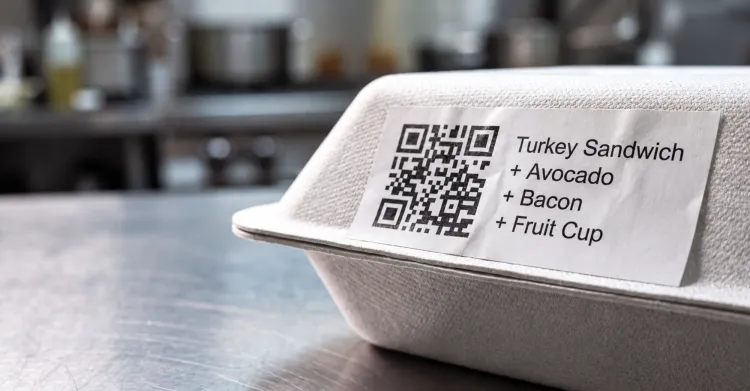
They capture receiving and lot information consistently, so a recall check is a search rather than a guess. They standardize labeling and date coding, so a prepped item can be traced to its source. They keep supplier and distributor records current, so they always know who sent what. And they run these as digital routines instead of paper scattered across locations, so headquarters can see status in one place instead of calling every store.
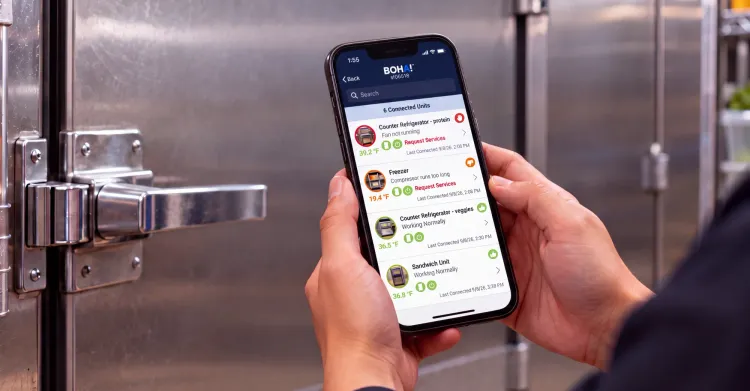
This is where a connected back-of-house platform helps. BOHA! can support receiving, labeling, and task workflows so that lot and supplier information is captured in the flow of work. That same information is what powers food traceability software, and it connects directly to food safety compliance more broadly. Instead of a phone tree and a stack of paper, a recall check can be coordinated and documented across every location from one view.
The value is practical. When a recall lands, the information you need is already where you can find it.
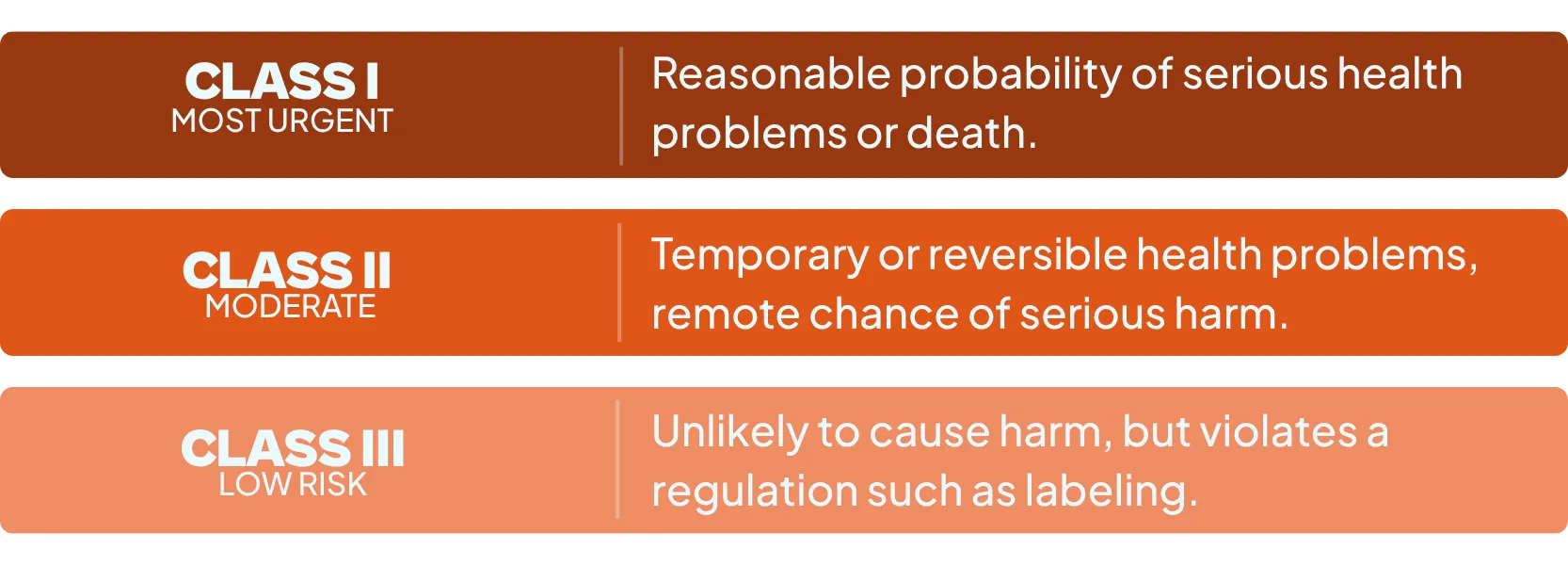
Class I recall: a reasonable probability that using the product will cause serious health problems or death. Treat these with the most urgency.
Class II recall: the product may cause temporary or reversible health problems, with only a remote chance of serious harm.
Class III recall: the product is unlikely to cause harm but violates a regulation, such as a labeling or allergen issue.
Traceback: the investigation that works backward from reported illnesses to find the contaminated source.
Lot code: the identifier that ties a specific batch of product to its production and distribution, which is what makes a recall targetable rather than blanket.
The FDA's Food Traceability Rule, known as FSMA 204, exists to make exactly this kind of response faster. It standardizes the records that follow high-risk foods through the supply chain, so a trace that used to take days can take hours.
Its enforcement date now sits at July 20, 2028, following an FDA extension, which gives operators time to build strong food traceability habits now instead of scrambling later.
Confirm the exact product and lot codes from the official notice, stop using that product, and separate it so it cannot be served by mistake. Then check inventory across locations and document each step.
Confirm the affected product and lot codes, remove and separate it immediately, and check every location's inventory against the notice. Document what was found and what was done at each step. That sequence holds regardless of whether the recall touches one location or two hundred.
Companies issue most recalls voluntarily. For FDA-regulated foods, the FDA oversees the recall and the traceback investigation. For meat, poultry, and certain egg products, the USDA's Food Safety and Inspection Service does instead. The CDC plays a separate role: it investigates the illnesses to identify an outbreak and its likely source, and does not manage the recall itself.
A recall addresses a product that violates a safety or labeling law. A market withdrawal involves a minor issue that would not be subject to legal action, such as a company pulling product for a quality reason.
Yes. Recalls frequently grow as investigators identify additional products made with the recalled ingredient, so keep checking for updates until the outbreak or recall is closed.
Get the latest industry insights delivered straight to your inbox
Browse