Stay in the loop!
Get the latest industry insights delivered straight to your inbox
Foodservice now drives 28.5% of in-store sales at convenience stores. Here is how operators are catching back-of-house problems, drifting coolers, stale coffee, before they cost money.
TransAct Technologies
Right now, somewhere in a convenience store that closed hours ago, a walk-in cooler is quietly drifting out of range and nobody is there to notice. Somewhere else, a pot of coffee that brewed fresh at 6 a.m. is still sitting on the warmer at 11, technically fine, actually stale, about to get poured out because nobody wrote down when it was made.
Neither of those is a fuel-stop problem anymore. Foodservice drives 28.5% of in-store sales and 38.9% of in-store gross profit at U.S. convenience stores, up from under 12% two decades ago, according to NACS. The channel did not just add sandwiches to the shelf. It built a second business inside the first one, complete with its own kitchen, its own back office, and its own way of losing money quietly.
A recent Convenience Store News feature on how c-store operators are tackling their toughest pain points makes the pattern clear. From Circle K's data-driven store monitoring to Chestnut Market's bean-to-cup coffee program, the throughline is the same: manual, reactive processes are getting replaced by systems that catch a problem before it costs money.
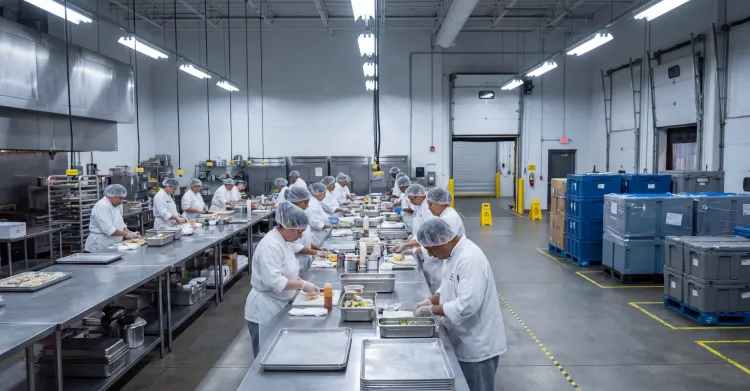
Most of the operators in that piece were solving front-of-store problems: license tracking, loyalty system uptime, checkout complexity. The instinct behind those fixes, catching an issue automatically instead of waiting for someone to notice, applies just as directly on the other side of the counter, to food safety, prep and labeling, and waste.
Midwest Petroleum Co. operates 60 convenience stores across Missouri and Illinois and was one of the operators featured in the CS News piece. It faced a familiar pair of problems: gaps in license management, and a loyalty system that could go offline without anyone noticing until customers complained. Midwest Petroleum's answer was to build monitoring and notification intelligence directly into its own systems.
"It is working well for us and has stakeholder visibility built into the design. So far, we love it". – Kristina Anderson, Chief Service Officer, Midwest Petroleum Co.
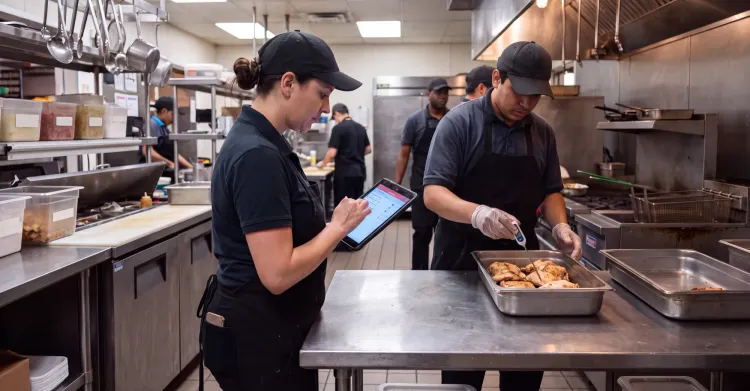
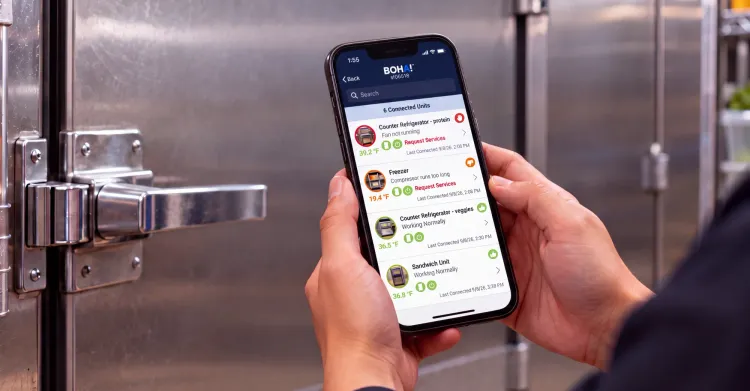
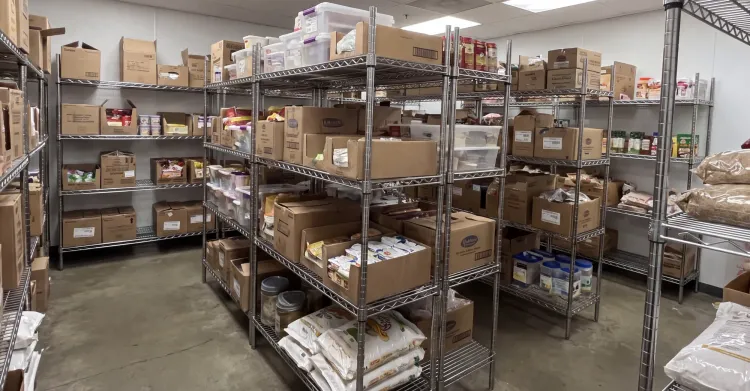
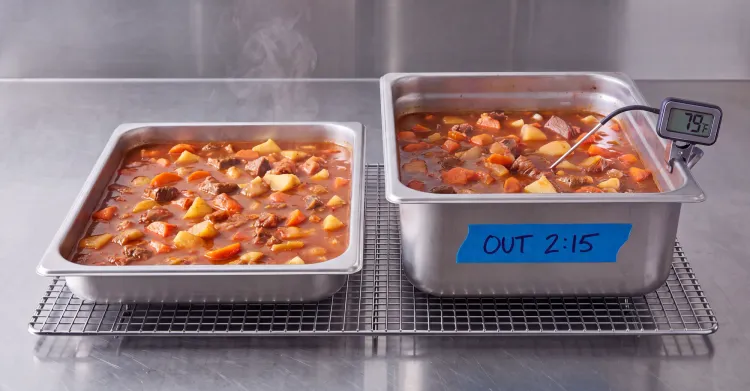
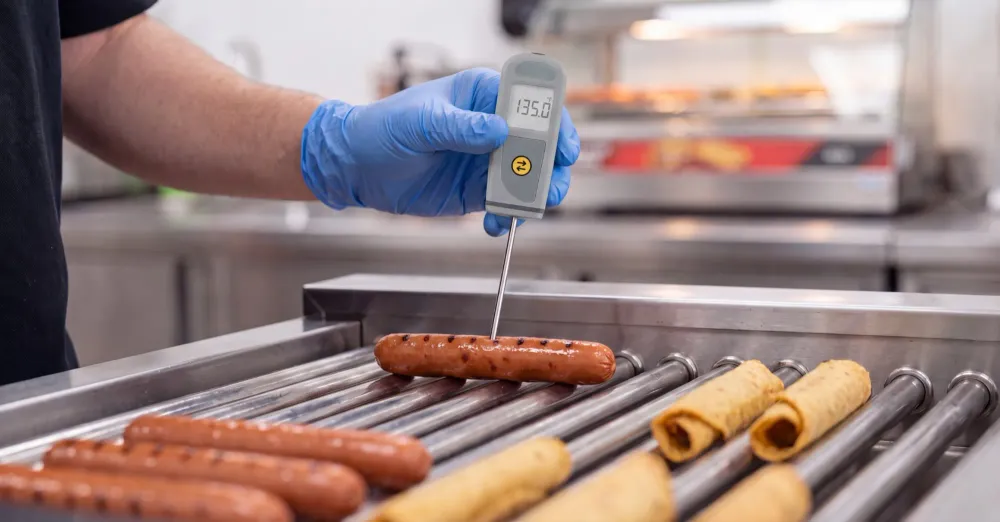
That's the same principle the BOHA! SaaS platform applies to food safety and equipment monitoring. BOHA! Sense passively tracks equipment temperature and humidity around the clock and flags anything out of range, feeding directly into BOHA! Temp's corrective action workflow, so a walk-in cooler drifting overnight gets caught and logged in the digital HACCP record instead of discovered the next morning by whoever opens the store.
Traditional drip coffee turned out to be one of the more labor-intensive parts of running a convenience store kitchen. Farris Jamal, director of merchandising at Chestnut Market, told CS News that brewing on a schedule, monitoring hold times, and discarding expired pots pulled staff away from customers during busy periods and produced unnecessary waste during slow ones. Chestnut Market's fix was bean-to-cup equipment that brews each cup to order, eliminating the holding period and the guesswork entirely.
The same time-based waste shows up across prepared and packaged food, and it is one of the most preventable costs in c-store foodservice. Food costs already represent 28% to 35% of sales industry-wide, according to the National Restaurant Association, and every dollar invested in waste reduction returns roughly $8 in savings.
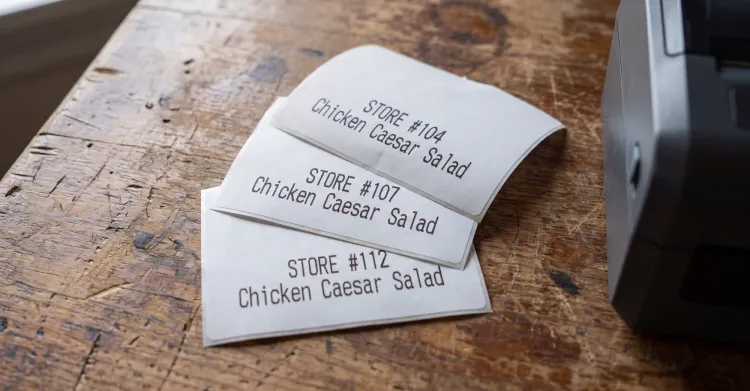
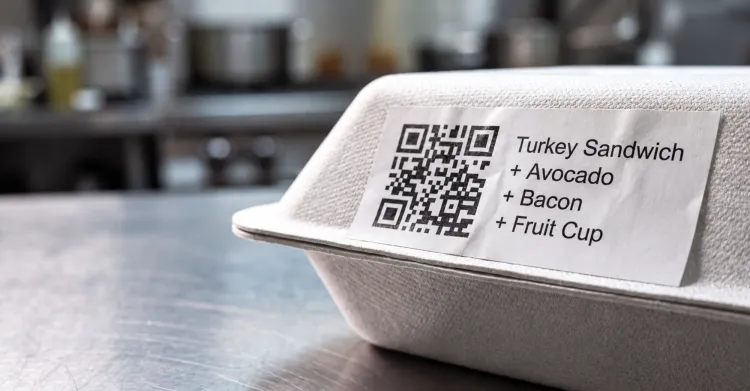
BOHA! Labeling applies the bean-to-cup logic to prep and hold labels. Instead of staff hand-writing or eyeballing a discard time, labels print at the point of prep with the hold time, storage instructions, and discard date already calculated, so product gets pulled because it is actually expired, not because a guess says it might be.
The moment that label prints, BOHA! Timer starts the hold countdown on its own, so the discard time on the label and the actual clock never drift apart the way a handwritten guess can.
Diebold Nixdorf, the retail technology firm quoted in the CS News piece, named staff shortages, shrink, and checkout complexity as the three pain points its retail customers raise most often. Swap “checkout” for “cooler” and the list reads almost the same for c-store kitchens: not enough labor to keep up with manual temp checks and paper logs, shrink from waste and spoilage, and back-of-house systems that do not talk to each other.
Here is how that translates into specific back-of-house tasks:
| Common C-Store Foodservice Pain Point | Manual Process Today | BOHA! Capability |
|---|---|---|
| Missed or late temperature checks | Paper logs, wall clipboards | BOHA! Temp digital HACCP records with guided checks and corrective-action alerts |
| Prep and hold labels written by hand | Marker and tape, inconsistent discard times | BOHA! Labeling: auto-calculated, point-of-prep labels |
| Equipment left out of range overnight | No visibility until a manager physically checks | BOHA! Sense passive equipment monitoring, feeding directly into Temp |
| Inconsistent task completion across shifts | Verbal handoffs, paper checklists | BOHA! Checklist standardized digital workflows |
| No visibility across locations | Manager calls, spreadsheets rolled up manually | BOHA! Control Center multi-location reporting |
The checklist row is worth pausing on. BOHA! Checklist is the difference between a shift handoff that lives in someone's memory and one that lives in a record a regional manager can actually open and check.
BOHA! by TransAct runs on the same thinking Midwest Petroleum applied to its license and loyalty systems. Rather than stitching together separate tools, checklist workflows, hold-time tracking, temperature and HACCP compliance, and equipment monitoring live on one connected platform, with visibility rolled up across every location in BOHA! Control Center. It runs on the BOHA! Terminal or Workstation with integrated label printers and Bluetooth temperature sensors built to work with it out of the box.
For a channel that can mean operating 60 stores or 600, that connection matters more than any single feature.
See how BOHA! brings that same kind of visibility to the food safety side of your kitchen and convenience store operations. Get a demo or use the ROI Calculator to estimate what cutting manual back-of-house work could be worth across your stores.
What is back-of-house technology for convenience stores?
It is the set of systems c-store operators use to run food safety, labeling, prep, and equipment monitoring behind the scenes, separate from point-of-sale and loyalty tools. That typically means digital checklists, temperature logging and HACCP records, prep and hold labeling, and equipment monitoring, usually connected on one platform so managers and regional teams can see compliance and task completion across every location without a site visit.
How does digital labeling reduce food waste in c-store foodservice?
Digital labeling calculates and prints the correct hold time, storage instructions, and discard date at the moment food is prepped, replacing hand-written or estimated labels. That removes the guesswork that leads staff to discard food early out of caution, or hold it too long by mistake, and gives managers a consistent, auditable record of when each item should be pulled.
Can convenience stores digitize HACCP recordkeeping?
Yes. Platforms like BOHA! Temp turn temperature checks, cooling logs, and other food safety steps into a digital HACCP record instead of a paper log, with guided steps for staff and corrective-action workflows when a reading falls out of range.
Does BOHA! work across multiple convenience store locations?
Yes. BOHA! Control Center rolls up task completion, temperature data, and HACCP records across every location into a single view, built for multi-unit and multi-state c-store operators managing consistency at scale.
Get the latest industry insights delivered straight to your inbox
Browse