Stay in the loop!
Get the latest industry insights delivered straight to your inbox
New food labeling regulations are reaching past the grocery shelf and into food prepared on-site. Here is what New York's new allergen law, California's date label rules, and the wider state trend mean for multi-location foodservice operators.
TransAct
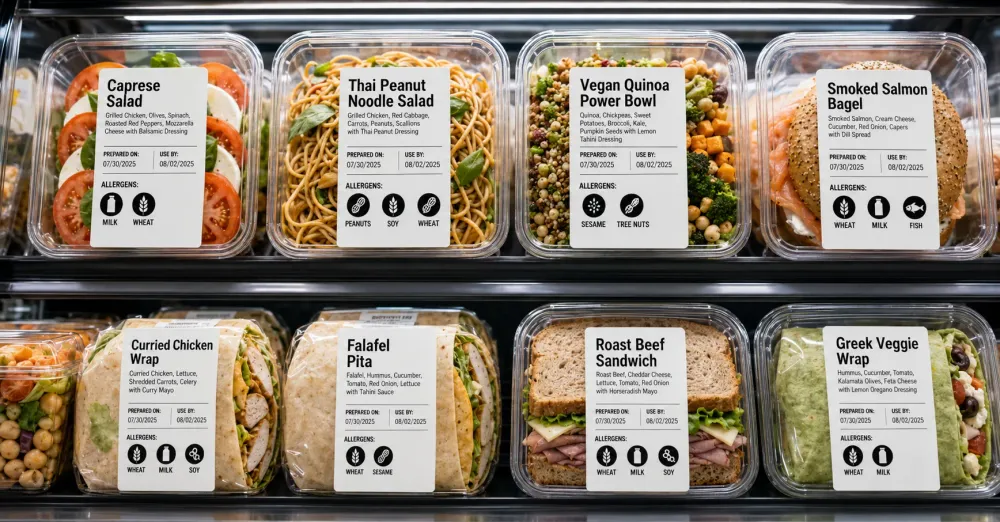
For most of the last few decades, a food label was something you printed and forgot. Someone keyed in a prep date, ran off a sticker for the pan of chicken salad, and moved on. The label mattered, but only in the way a light switch matters. You noticed it when it was wrong, not when it worked.
That version of labeling is quietly ending. Across the country, states are writing rules that reach past the packaged goods on grocery shelves and into the food that restaurants, delis, and convenience stores prepare and pack in their own back rooms. New York just passed the clearest example yet, and California, Illinois, Maryland, and Missouri are moving in similar directions.
For anyone running more than a handful of locations, this is bigger than one more line on an inspection form. Food labeling regulations are turning labels into something a brand uses to prove its food is safe, consistent, and honestly described. The operators who start treating labels as connected operational information will adapt to the next rule far more easily than the ones still managing templates one store at a time.
A few figures explain why lawmakers and customers are paying closer attention.

Several pressures are landing at the same time, and together they move labeling from a housekeeping task toward a compliance priority.
Food allergies are more common and better understood. Millions of Americans manage food allergies, and for some of them a trace of the wrong ingredient is a medical emergency. Whether the purchase is a packaged snack, a deli sandwich, or a grab-and-go salad, customers now expect the allergen information to be right, and the consequences of getting it wrong have grown. A missing allergen declaration is no longer a small labeling slip. It can become a safety incident, a lawsuit, and a story that follows the brand.
Customers want to see what is in their food. Shoppers have grown used to reading ingredients, allergens, and freshness dates on the grocery aisle, and they carry that habit to the prepared case at a cafe or convenience store. Transparency has become part of the experience rather than a nice extra, and it quietly shapes whether people trust a brand enough to come back.
Grab-and-go keeps expanding. Quick-service chains sell refrigerated meals, convenience stores have built serious fresh programs, and grocers compete with restaurants on sandwiches and salads. Unlike a plate served the moment it is cooked, these products sit packaged in a case for hours. That makes an accurate food label — showing freshness, ingredients, and allergens — the main thing standing between the kitchen and the customer.
Fresh programs add moving parts. As operators lean into fresh, minimally processed food, they also add production runs, more frequent labeling, and tighter rotation. Every new item is another chance for a label to drift out of step with the recipe if the process is not standardized.
The legal and brand exposure is real. A recall or an allergen mistake rarely stops at a fine. It can mean lost trust, wasted product, and higher insurance costs. As the rules tighten, regulators increasingly want to see a consistent process, not just a quick correction after something goes wrong.
Turnover makes manual steps riskier. Foodservice turnover stays high, so a lot of labeling falls to people who are still learning the templates, the dates, and the recipes. When the process depends on memory, an employee can grab the wrong template, mis-key a date, or miss an allergen. The more manual decisions a shift requires, the more room there is for one of them to go sideways.
New York has become the first state to require written allergen notification on food that is prepared and packaged on-site for direct sale. Governor Hochul signed the measure on November 12, 2025, and food establishments have until November 2026 to comply. The approach echoes the United Kingdom's Natasha's Law, which set a similar standard for prepacked-for-direct-sale food after a fatal allergic reaction.
Federal rules already cover most manufactured packaged goods. What New York adds is coverage for food that establishments make and pack themselves — a gap that had left bakery cases, deli grab-and-go, and prepared meals without the same protection.
The law reaches a broad set of businesses, including restaurants, delis, and bakeries, along with grocery stores, convenience stores, cafeterias, and food trucks. And unlike California's menu law, it applies regardless of company size — a single cafe and a thousand-location chain face the same requirement. Labels have to flag any of the nine major allergens recognized under federal law: milk, eggs, and fish, plus crustacean shellfish, tree nuts, peanuts, wheat, soy, and sesame. Sesame became the ninth after the federal FASTER Act, which is why you now see it called out alongside the original eight.
One important limit: the law covers food prepackaged before a customer orders — the sandwich already made and sitting in the case — not an item packed to order after someone asks for it. That line matters when you are deciding which workflows need to change.
"New York is the first state to require allergen labels on food prepared and packaged on-site – and it applies to every operator, regardless of size."
California is worth watching because it shows that states are not copying one template. Two separate California laws are in play. The first, SB 68 (the Allergen Disclosure for Dining Experiences Act), took effect on July 1, 2026, and focuses on menus — requiring large restaurant chains, those with 20 or more locations, to disclose allergens for menu items rather than labeling grab-and-go packages.
The second, AB 660, also took effect on July 1, 2026, and tackles date labeling. It bans consumer-facing "sell by" dates — while still allowing coded inventory dates staff can read for rotation — and standardizes the language around two phrases: "use by" for safety and "best if used by" for quality. The goal is to cut the confusion that leads people to toss food that is still fine, a habit that drives a large share of household food waste.
| Requirement | What it targets | Who it affects | Effective |
|---|---|---|---|
| NY allergen labeling (S5381A / A6558A) | Allergen notification on food packaged on-site | Restaurants, delis, bakeries, grocery, c-stores — all sizes | Nov 2026 |
| CA SB 68 (ADDE Act) | Allergen disclosure on menus | Large restaurant chains (20+ locations) | Jul 1, 2026 |
| CA AB 660 | Standardized date labels; bans consumer-facing "sell by" | Packaged food sold in California | Jul 1, 2026 |
| Phrase | What it signals | Status |
|---|---|---|
| Use by | Safety date | Standard under CA AB 660 |
| Best if used by | Quality date | Standard under CA AB 660 |
| Sell by | Retailer Stock rotation | Banned consumer-facing in CA |
Keeping all of this straight across states and store formats is its own job. We built a one-page reference that lays each requirement side by side — what it covers, who it applies to, the effective date, and the nine major allergens to flag. Download the Multi-State Allergen & Date-Labeling Compliance Map →
New York and California are early, not final. Federal labeling rules mainly govern manufactured packaged food, which leaves prepared items assembled in restaurants, delis, and c-stores under a patchwork of state frameworks. States are stepping into that gap, and several already have measures in motion. Maryland, Illinois, and Missouri have introduced bills aimed at allergen disclosure, and a wider group of states already require some mix of menu notices, staff training, and allergy-awareness posters. Massachusetts was the first to enact a restaurant allergen-awareness law back in 2009; what is new is the move toward labeling food packed on-site. Food safety tends to draw bipartisan support, so proposals that improve transparency without heavy cost often move.
Managing labels in a single restaurant is manageable. Managing them across hundreds or thousands of locations is a different job, and a few forces pull against consistency.
Rules vary by state, so corporate teams have to know which requirement applies where. Templates multiply across products, brands, and jurisdictions until no one is sure which version is current. Individual stores develop their own workarounds, managers build local templates, and older versions keep circulating. Meanwhile recipes, suppliers, and allergen profiles change on their own schedule, and without central control an organization can run several versions of the same label at once.
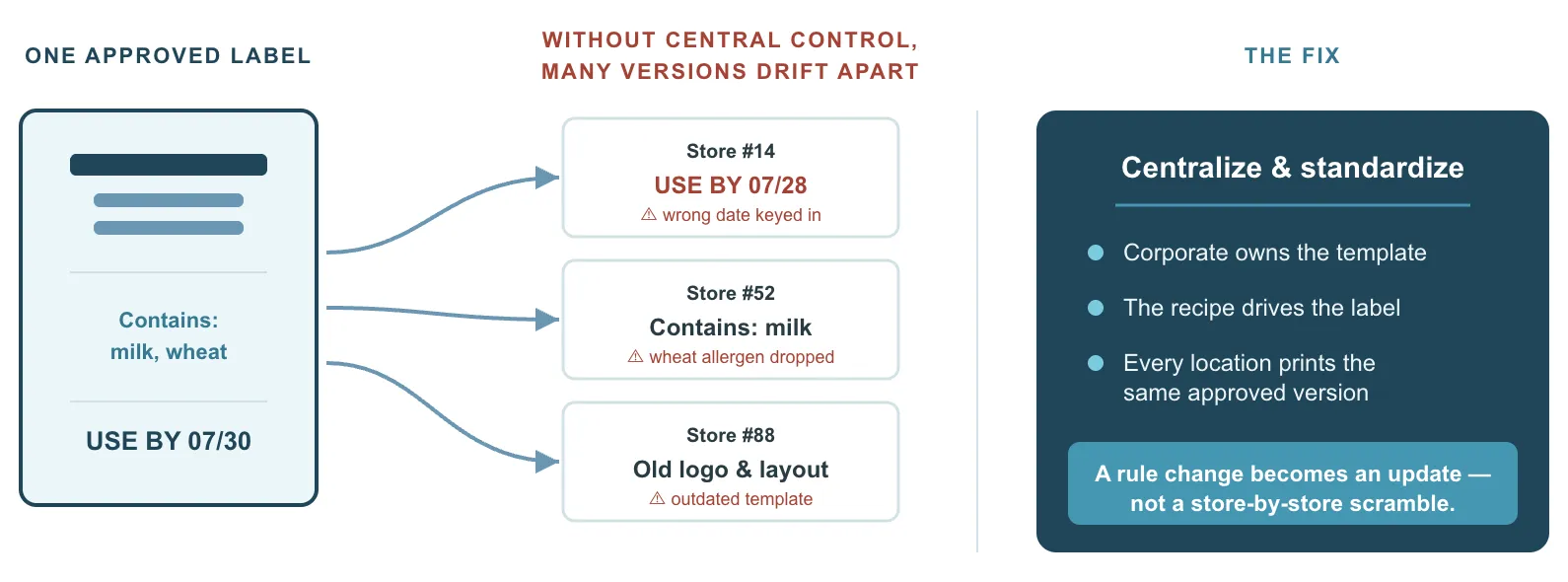
None of that shows up as a crisis. It shows up as slow drift, and manual processes make the drift almost inevitable at scale.
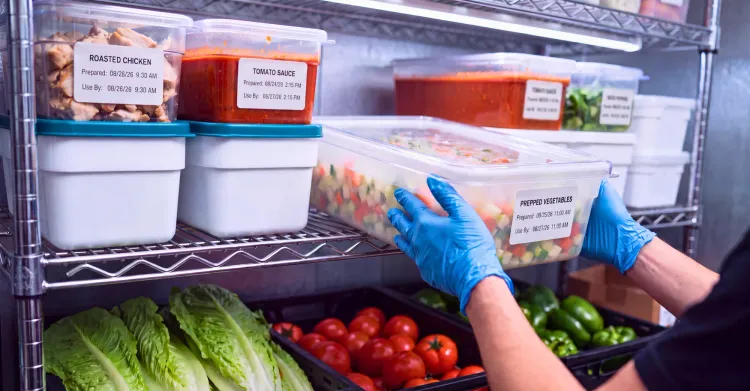
The deeper shift is that a label is no longer just a sticker. It is a small record that ties together several parts of the operation. It should reflect the approved recipe rather than a local edit. It should stay in sync as ingredients and suppliers change. Its prep dates and holding instructions feed food safety, and its history supports traceability and audits.
When labeling connects to food prep, digital checklists, temperature monitoring, and reporting, each label becomes another source of operational information instead of a dead end. That is the quiet reason the regulatory conversation matters to operators who care about efficiency, not only compliance.
Waiting for a deadline is rarely the cheapest path. The work that pays off is strengthening the foundation underneath labeling.
Food labeling is moving from an operational necessity toward a strategic part of food safety, compliance, and customer trust. The changes in New York and California are early markers of a broader push toward transparency and accountability, and more states will likely follow. For multi-location operators, the advantage will go less to whoever reacts fastest to each rule and more to whoever has built the capacity to adapt without a fire drill every time.
In the next article in this series launching on August 4th, we'll look at what happens when that capacity is missing, and why manual food labeling quietly costs multi-location restaurants far more than the price of paper and adhesive.
What are food labeling regulations for prepared foods?
They are the rules that govern what information must appear on food an establishment prepares and packages for sale, such as allergens, dates, and ingredients. Federal law covers most manufactured packaged goods, and states like New York are now extending similar requirements to food packaged on-site in restaurants, delis, and stores.
When does New York's allergen labeling law take effect?
It was signed in November 2025 and gives food establishments until November 2026 to comply. It requires written allergen notification on food prepared and packaged on the premises for direct sale, and it applies to establishments of every size.
What is the difference between "use by" and "best if used by"?
"Use by" communicates a safety date, the point after which a product's safety may be compromised. "Best if used by" communicates a quality date, after which the food may not be at its peak but is generally still safe. California's AB 660 standardizes these two phrases and bans consumer-facing "sell by" dates.
How should multi-location operators prepare for changing food labeling regulations?
Centralize label management, drive labels from approved recipes, standardize across locations, and pick a system flexible enough to absorb new requirements. That foundation makes each new rule an update rather than a project.
Get the latest industry insights delivered straight to your inbox
Browse