Stay in the loop!
Get the latest industry insights delivered straight to your inbox
Scraping labels off reusable containers adds hidden labor and sanitation risk across shifts; dissolvable labels remove that drag from the workflow.
Tony Janega
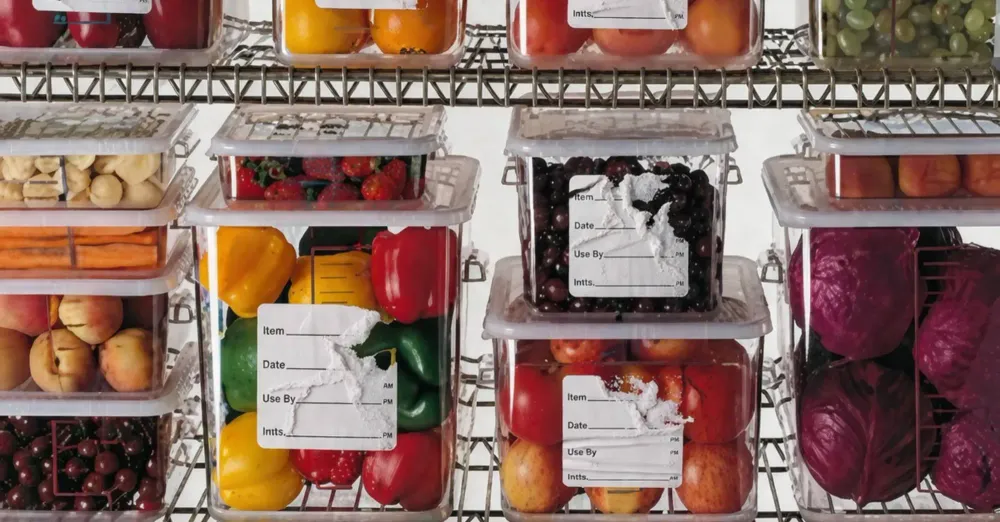
Dissolvable labels are rarely the first thing operators think about when they look for efficiency gains. In high-volume kitchens, though, label removal can quietly shape how work actually gets done. Scraping labels off containers is not usually written into SOPs or built into training, but it still happens every day, across shifts and locations, until it becomes part of the workflow.
It usually shows up at the end of a task. A container needs to be reused, the label does not peel cleanly, and someone ends up running it under hot water or reaching for a scraper. Sometimes it takes a few seconds. Other times it takes longer. Either way, the task interrupts the flow of work.
In the moment, it rarely feels like a meaningful issue. It is simply part of the job, something teams absorb without much thought. But like many small, repeated tasks in foodservice, it does not happen once. It happens across prep stations, shifts, and locations. Over time, a task that feels minor can start carrying operational weight.
When operators think about labeling, the focus is usually readability, accuracy, and food safety compliance. Those are critical parts of any food labeling system for restaurants, especially in high-volume environments where consistency and speed affect daily performance.
What tends to get overlooked is what happens after the label has already done its job. In most kitchens, labels are not simply removed. They are worked off. Adhesive sticks, corners tear, and residue builds up, turning a simple container turnover step into extra cleaning effort before the container can be reused.
On its own, that interruption does not seem significant, but it rarely occurs in isolation. Across the day, it can look like a few seconds spent working off residue, a container set aside because it is not worth slowing down the line, or a team member adjusting around what is available in the moment. These are not formal process decisions. They are small adaptations that keep work moving.
It repeats across the day: seconds here, another minute there. Someone pauses mid-task to deal with a label that will not come off cleanly. Another team member sets a container aside because it is not worth slowing down the line. These are not formal process decisions. They are small adaptations that keep work moving.
None of this shows up neatly in reporting or performance metrics. That is how labeling can get treated as a simple supply decision, even when it is affecting labor, cleaning, container turnover, and the broader food prep labeling workflow. Those hidden cost patterns are easy to miss because they build through small, repeated moments rather than one obvious expense.
This issue often goes unaddressed because it does not show up as one obvious problem. It shows up as time lost during container turnover, extra cleaning effort, hesitation during service, or certain containers being avoided because teams know they take more work to clean. None of those choices is usually treated as a formal process decision, but over time those real-time adjustments can become part of the workflow.
In high-volume environments, that creates operational drag that is difficult to isolate because it is spread across so many small moments. Each instance feels insignificant on its own, but together they begin to shape how work moves through the kitchen.
Container turnover is a good example because it touches more than one part of the shift. A container moves from prep to storage, from storage to cleaning, and then back into use. When old labels leave residue behind, the issue follows that container through the cycle. The team may spend more time cleaning it, avoid using it during a rush, or set it aside until someone has time to deal with it properly. None of those choices looks like a major breakdown, but each one adds friction to a process that should move quickly and predictably.
Operational inefficiencies often become embedded through repeated behaviors that gradually redefine the process. Eventually, informal workarounds can become the system teams actually follow.
Adhesive does more than create extra work. It can introduce variability into sanitation processes that are meant to be consistent.
When labels do not come off cleanly, residue builds up on containers and lids over time. Every container should be thoroughly cleaned before reuse, but kitchens operate under time constraints, and not every surface receives the same level of attention during every cycle.
A quick rinse can replace a full clean, and residue can be missed simply because it is not immediately visible. Sometimes containers that appear clean at a glance still carry buildup that affects long-term sanitation. The issue is not that teams do not care about cleaning. It is that residue adds one more thing for them to catch manually while they are already moving through a high-volume routine. The more a cleaning step depends on individual judgment, the more room there is for variation between employees, shifts, and locations.
That creates a subtle but important challenge for food safety compliance, especially in environments where teams need to maintain consistently clean food-contact surfaces under guidance like the FDA Food Code.
Sanitation depends on consistency. When adhesive interferes with that consistency, it adds another variable for teams to manage manually. At one location, that may be manageable. Across multiple locations, the same issue becomes harder to keep consistent as volume increases.
There is also a physical cost to this process, even if it is rarely tied back to labeling. Containers that are scraped repeatedly do not last as long. Surfaces become worn, which can make them harder to clean over time, and adhesive may begin to stick more aggressively with each cycle. The issue starts as a few extra seconds of removal, but over time it can affect how long containers stay usable and how easily they move back into rotation.
Eventually, containers may need to be replaced more frequently. No one logs “label adhesive” as the cause. It simply appears as part of the normal cost of doing business. Viewed more broadly, labeling is influencing more than what is written on a container. It is shaping how that container is handled, maintained, cleaned, and cycled back into use.
Small operational decisions often influence cost this way: through patterns that are not immediately visible, but become measurable over time as operational costs build gradually across daily workflows.
At a single location, teams usually find ways to manage these issues. They move faster, adjust the workflow, and develop informal habits that keep the kitchen moving. One team may spend more time cleaning residue. Another may prioritize speed and set difficult containers aside. Another may replace worn containers more often because that is easier than fighting the same problem every shift.
Those choices may make sense locally, but they do not create a consistent process across locations. Over time, each site starts handling the same issue a little differently, even though the workflow is supposed to operate from the same playbook.
That variability makes predictable execution harder to maintain as volume and complexity increase. A small, repetitive issue at the unit level can become a larger operational challenge at scale, not because the task is complicated, but because the response to it becomes inconsistent across teams and locations.
Dissolvable labels do not change the purpose of labeling. They still communicate the same information and support the same compliance and operational requirements. What they change is what happens after the label has done its job.
Instead of requiring manual removal, the label dissolves completely under running water within seconds, leaving no adhesive behind. This eliminates the need for scraping, reduces cleaning effort, and removes a step from the workflow entirely.
There is no second removal process to manage, no extra decision about whether a container is clean enough, and less interruption between tasks. The container can move through cleaning and back into use with less delay. The operational value is not only that the label disappears. It is that the container returns to the normal workflow without creating a side task. In a busy kitchen, side tasks are easy to absorb until there are too many of them. Removing one recurring point of friction helps the process stay closer to how it was supposed to work in the first place.
A useful way to evaluate this is to look at what happens after the label is no longer needed. In a strong workflow, the container should move cleanly into the wash cycle and back into use without requiring extra attention. When residue slows that process or changes how the work gets handled during a rush, label removal is no longer just a cleanup detail. It becomes part of how the workflow performs.
Dissolvable labels are effective because they remove a recurring interruption from a task that happens constantly. Container turnover becomes more consistent. Teams no longer have to pause to deal with residue or adjust their workflow based on how difficult a label is to remove. The process becomes predictable, regardless of who is performing the task or where it is happening.
That predictability is what drives efficiency. When a task is repeated hundreds of times a day, even small improvements can reshape how consistently work moves across the operation.
When operators think about improving operational efficiency, the focus often goes to larger changes. New equipment, updated systems, and redesigned processes can all matter, but not every efficiency gain comes from a major operational change. Some come from removing the small points of friction that teams have learned to work around without questioning.
Label removal fits into that category because it sits inside work that is already happening. Containers still need to be cleaned, turned over, and returned to use. When adhesive residue adds extra effort to that cycle, the delay does not stay isolated. It affects how quickly containers return to rotation, how much attention cleaning requires, and how smoothly the team can move through the next task.
Removing that friction does not make the operation look dramatically different from the outside. The value is more practical than that. The process becomes smoother because one recurring interruption is no longer competing for time and attention during the shift.
In environments where repetition defines performance, that kind of improvement can matter more than it first appears. It is not about one large time-saving moment. It is about removing a small delay from a task that keeps happening.
For many operators, dissolvable labels are part of a broader shift in how labeling is viewed. Labeling is not just a fixed requirement. It is part of the workflow, which means it can be improved like any other repeated process.
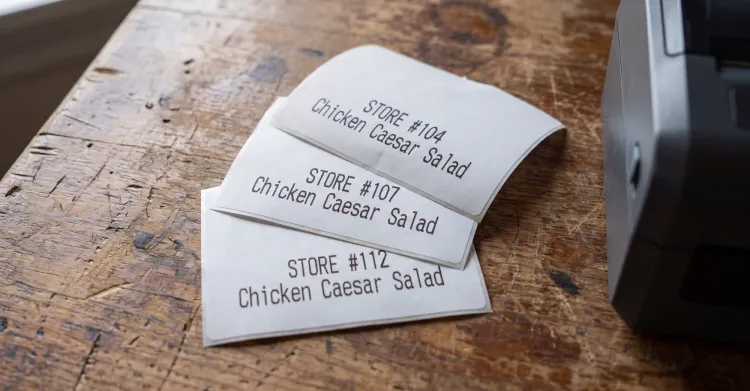
That includes the information on the label, the way labels are produced, and what happens when the label has to come off. Each part affects how smoothly the task fits into daily execution. When labeling is connected to a broader foodservice technology platform, operators can standardize what appears on the label and how the process fits into daily execution.
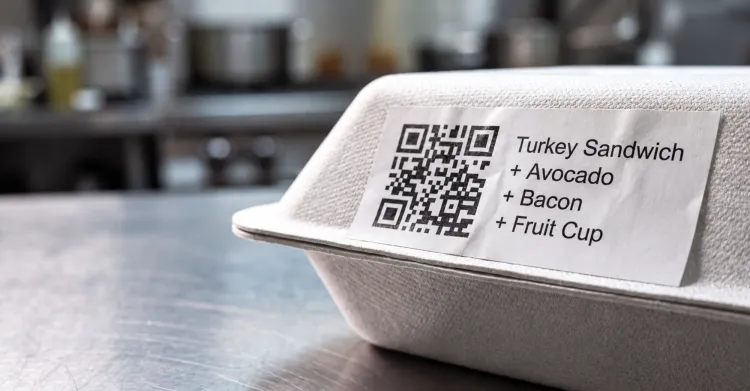
In daily kitchen work, the label does not disappear from the operation once it is printed. It stays attached to the container through storage, use, cleaning, and reuse. If any part of that cycle creates extra manual effort, the team absorbs it somewhere in the shift. Looking at the full labeling workflow helps operators see where the process is supporting the team and where it is quietly asking them to compensate.
Standardized labeling workflows make execution more consistent and less dependent on manual adjustments or individual workarounds. Labeling starts to move from a standalone task into part of how the operation runs day to day.
For most operators, improving efficiency does not have to begin with a full system overhaul. It can start with identifying where time and effort are being lost in the flow of work, especially in places that feel too small to matter.
Label removal is one of those areas. It is rarely tracked, rarely questioned, and often underestimated. Across a full shift, and then across multiple locations, it can consume more time and effort than expected. More importantly, it is attached to a process teams have to repeat constantly as containers are used, cleaned, and returned back into service.
That makes it a practical place to start. Not because it is the largest operational issue, but because it is one of the most repeatable. When a friction point appears again and again in the normal flow of work, removing it does more than save a few seconds. It gives the process one less place to slow down, vary by employee, or depend on a workaround.
This is also why small workflow improvements can be easier to adopt than larger operational changes. They fit into work teams are already doing. There is no new behavior to teach, no new step to remember, and no extra decision to add into the shift. The process simply moves with less resistance than it did before.
Dissolvable labels are one example. They do not transform an operation overnight, but they remove a task that exists across every shift and every location. Over time, eliminating that task allows teams to move through their work with fewer interruptions and more consistency.
The value is not one time-saving moment. It is the steadier workflow that comes from making a repeated task easier across shifts, teams, and locations. A container moves from use to cleaning to reuse with fewer pauses. The team spends less time deciding whether to scrape, soak, set containers aside, or work around residue, and managers have fewer local variations to account for across locations.
That is where the operational value becomes larger than the label itself. Dissolvable labels reduce one small source of variation inside a workflow that depends on repetition. For a single shift, that may feel minor. Across a larger operation, fewer small variations can mean a cleaner, more predictable process.
At scale, performance depends on how reliably the operation supports everyday execution. Small changes matter when they remove friction from work that has to happen again and again.
Below are a few common questions about dissolvable labels, food prep labeling, and how small labeling changes can improve daily kitchen workflow.
What are dissolvable labels used for in foodservice?
Dissolvable labels are used to label food containers during prep, storage, and rotation. Unlike traditional adhesive labels, they dissolve during washing so teams do not have to scrape, peel, or remove leftover residue before containers are reused.
How do dissolvable labels improve kitchen workflow?
Dissolvable labels help containers move more smoothly from use to washing and back into service. By removing the need to scrape adhesive or manage leftover residue, they reduce a recurring interruption in daily kitchen workflow.
Why can traditional food prep labels create hidden labor costs?
Traditional food prep labels can leave adhesive behind, tear during removal, or require extra cleaning before containers can be reused. Those small interruptions may not be tracked as labor, but they can add up across shifts, prep stations, and locations.
Are dissolvable labels helpful for food safety compliance?
Dissolvable labels can support food safety compliance by reducing adhesive residue that may interfere with consistent sanitation routines. They do not replace proper cleaning procedures, but they can remove one recurring source of manual cleanup from the container turnover process.
Why do dissolvable labels matter more at scale?
At one location, teams may be able to work around label residue manually. Across multiple locations, those workarounds can create inconsistency in how containers are cleaned, reused, and managed. Dissolvable labels help make that part of the workflow more predictable across teams and locations.
Get the latest industry insights delivered straight to your inbox
Browse