Stay in the loop!
Get the latest industry insights delivered straight to your inbox
86% of visitors judge your whole business by the restroom. New Bradley Company data shows clean restrooms drive repeat visits, requiring the same discipline that passes health audits. Here is how multi-unit operators turn regular cleaning into a verifiable point of pride.
Dana Loof
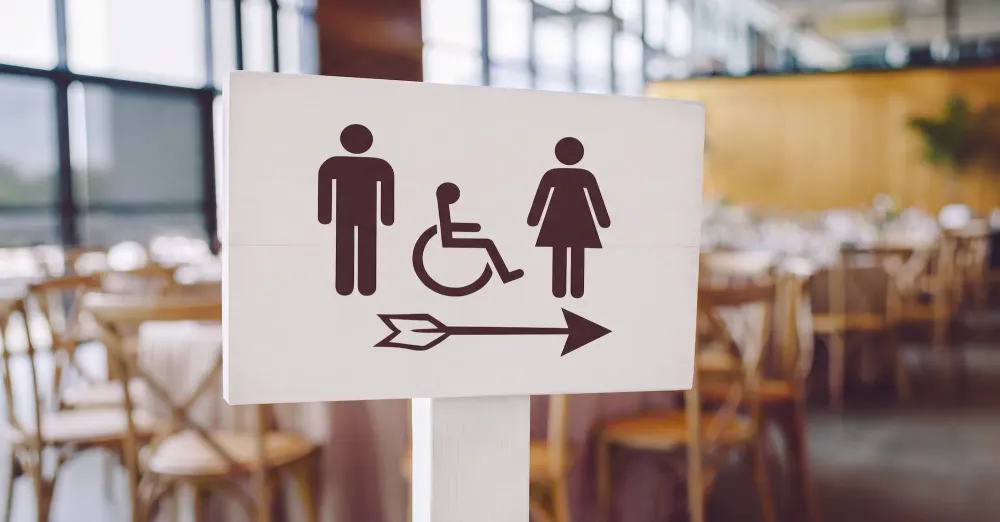
Nobody walks into your store dreaming about spending time in the restroom — but it’s a main reason to step inside and 86% of visitors will judge your whole business by it, and will remember when it was a mess. New Bradley Company data shows a clean restroom is a strong lever for more repeat visits, and the fix is the same discipline that gets a location through a health and food safety audit. Here's how multi-unit operators make "we clean it regularly" a point of pride they can actually prove.
Ask a district manager what drives repeat business at a convenience store and you'll expect to hear about coffee, fuel price, and speed of checkout. You probably won't expect to hear "the bathroom." But your customers are thinking about it, and they're quietly using it to grade everything else you do — including the food.
The latest numbers make that hard to ignore. In Bradley Company's 2026 Healthy Handwashing Survey, 86% of U.S. adults said they expect the quality of a business's restrooms to reflect the quality of its goods and services. Read that again: nearly nine out of ten people are grading your coffee, your food quality, and your general competence based on the one room where you would expect them to spend the least amount of time in. Around 40% said they check the restroom before deciding whether to do business at a location at all — so it's often forming the first impression, not the last.

The flip side is the part that reaches the P&L. The same survey found 68% of Americans are more likely to return to, and spend more at, a business with a clean, well-maintained restroom, while 85% come away with a negative impression of a dirty one and 73% think twice about coming back. That's not a soft "nice to have." For a c-store or multi-unit restaurant that competes on repeat traffic, it's a retention lever hiding in the one room nobody wanted to talk about — bringing awareness for or against your establishment, regardless of whether it's in the marketing budget or not.
Here's the trap most operators fall into. Ask any store manager whether the restroom gets cleaned regularly, and the answer is always yes. Ask them to prove it was serviced at 2:15 on a Tuesday, and things get a little quieter.
For decades, the industry ran on the honor system: a laminated sheet taped inside the door, initialed once a shift (if someone remembered). That sheet was never built to survive hour six of a double, when the person responsible is juggling a fuel-pump call, a line at the register, and a fountain machine that picked this exact moment to run dry. The result is a gap between how often you intend to service the restroom and how often it actually happens — and customers notice that gap long before you do. They don't care that the policy says "check every hour." They care what the soap dispenser looks like at minute 58, how much water is on the floor and whether there's a single paper towel left to their name.
That same gap is what turns a health inspection into a bad day. When an auditor or a corporate field rep asks for cleaning records, "we do it regularly" isn't an answer. A stack of half-initialed paper isn't much better. Audit readiness and customer experience are the same discipline viewed from two angles: can you prove the work happened, correctly, on schedule, at every location, without a manager standing over it?
According to Bradley's own field expert, consistency is the whole game. As Jon Dommisse, Vice President of Business Development and Strategy at Bradley Company, put it: "Maintaining clean, functional, and well-stocked restrooms is not just about upkeep — it's about protecting brand perception and supporting customer confidence at every touchpoint."
"Maintaining clean, functional, and well-stocked restrooms is not just about upkeep – it's about protecting brand perception and supporting customer confidence at every touchpoint." – Jon Dommisse, VP of Business Development & Strategy, Bradley Company.
There's a reason this problem is so persistent. Talk to people who run restaurants and convenience stores and restroom upkeep — the mopping, the restocking, the checks nobody volunteers for — comes up again and again as one of the hardest daily tasks to execute consistently. It's not that it's hard to do. It's that it's relentless: it has to happen on a cadence, all day, at every location, and it always seems to come due for whoever is least free at that exact moment.
And when it slips, it slips in the most visible way possible. Bradley's data points straight at the operational cause: among the top reasons people skip washing their hands are empty soap or paper towel dispensers and sinks that are dirty or out of order. That's not a customer-behavior problem you can train away. It's a restocking-and-service problem — an operations failure that plays out in front of the customer, in the exact moment they're forming an opinion about your brand.
Put those two facts together and the picture is clear: the single most damaging restroom failure (an empty dispenser) is also the single most preventable one. It comes down to whether someone is reliably prompted to check, and whether anyone can see when they didn't.
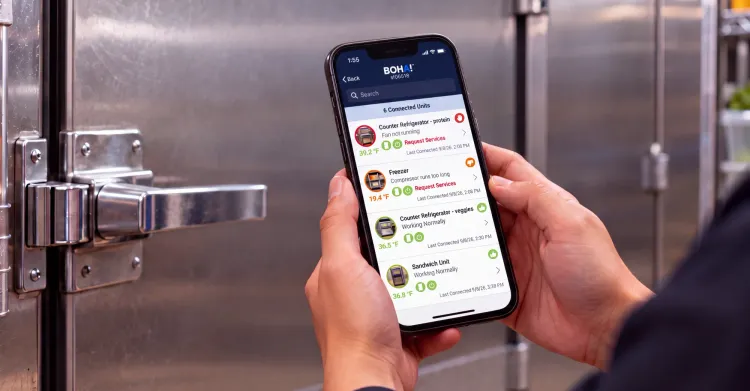
This is where the back-of-house tools most operators already use for food safety earn their keep in the restroom. BOHA! by TransAct — Back Of House Automation — is built to make routine work provable instead of promised, and restroom maintenance is one of its most immediately visible use cases. The strength isn't any single app. It's how they come together to support a cohesive, staff-driven operational routine.
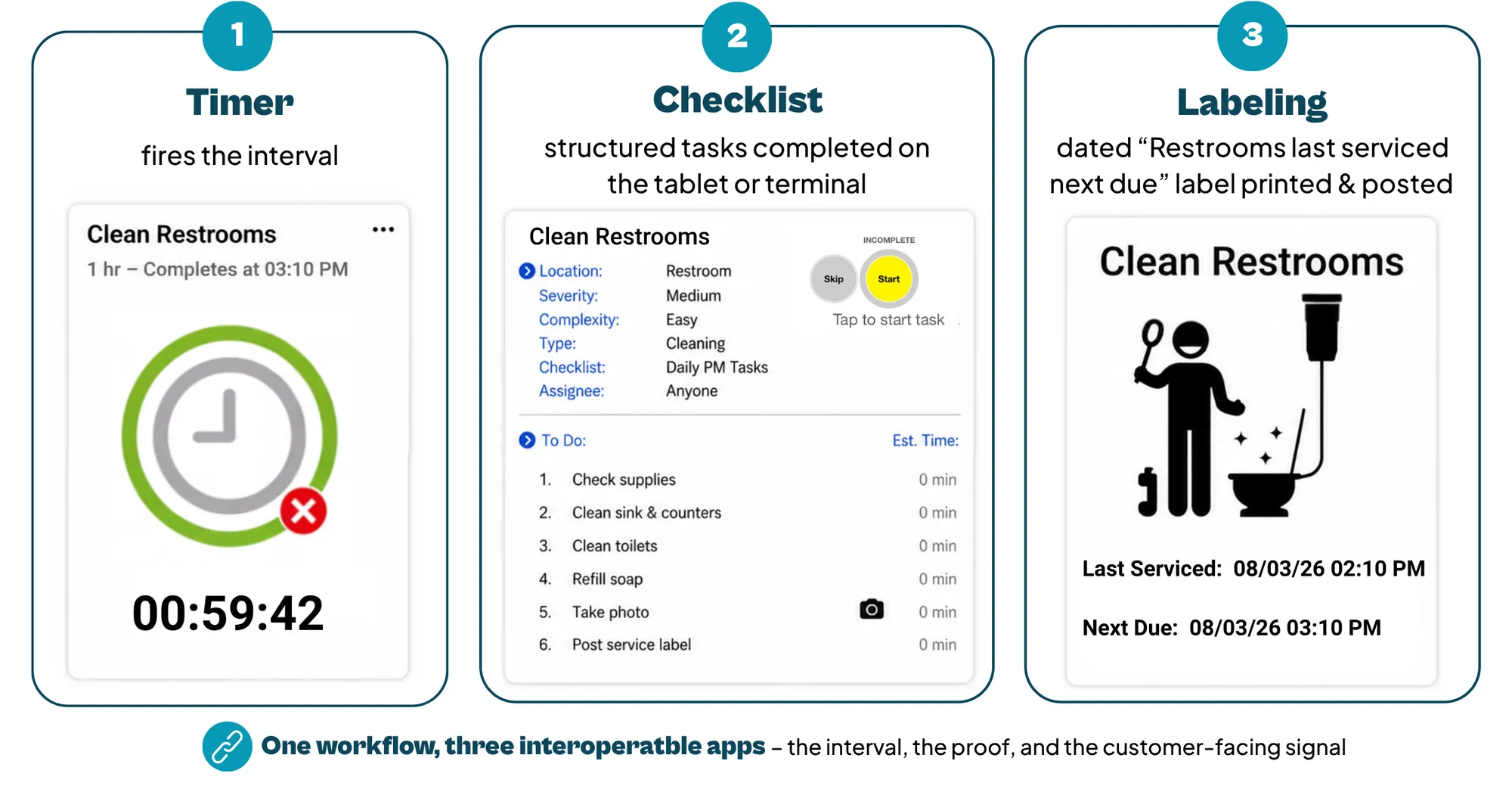
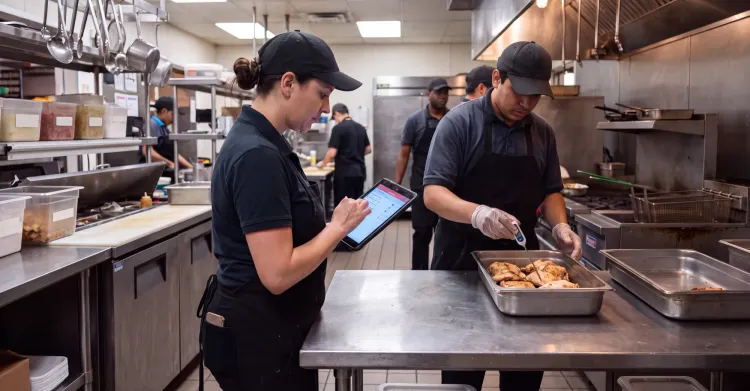
Staff empowerment starts with clear, step-by-step digital guidance. BOHA! Checklist provides a structured list right on the tablet or terminal: check the soap, restock paper towels (yes, even next to the hand dryer – Bradley’s respondents want both), mop the floor, empty the bin, wipe the fixtures, flag anything that needs a maintenance ticket. By manually checking off each item in real time through the app, employees establish active accountability instead of reconstructing details from memory at shift’s end. The task that most often gets skipped – restocking – doesn’t quietly fall off the list, because it’s built directly into a verifiable, standardized routine.
"More frequent cleaning and restocking" is the improvement customers ask for most in Bradley's research — but "more frequent" means nothing without a detailed time to do it right. As part of their routine, BOHA! Timer lets an operator set a hard interval for employees — every 60 or 90 minutes, tighter during a summer travel rush — and actively prompts whoever's on duty when a check is due. It replaces someone's internal clock, which runs slow during a lunch rush and fast on a dead afternoon, with a cadence that doesn't drift. Starting a timer for the restroom sanitation step enforces a precise duration for the task, replacing someone’s internal clock with a rigorous, staff-guided cadence that ensures every restroom check gets the exact time it requires.
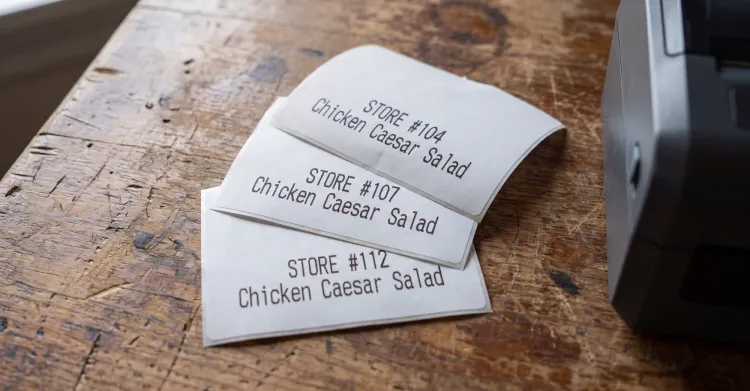
Here's the piece that ties operations to customer experience. The moment a staff member initiatives the timer for the restroom check, BOHA! Labeling immediately prints a dated, timestamped service tag for the posted log. This proactive time capture ensures physical tracking and accountability right at the station from minute one. For multi-step timers, all labels, noting all steps are printed at the start of the timer. The customer sees a current timestamp proving the team is actively on top of the facility’s upkeep, instead of a curled sheet from last week. The auditor sees a clear, clean record of operational control. And because it's the same connected platform, none of it is a separate system to buy or a new device to learn, and its standards can be set and monitored at the headquarter level.
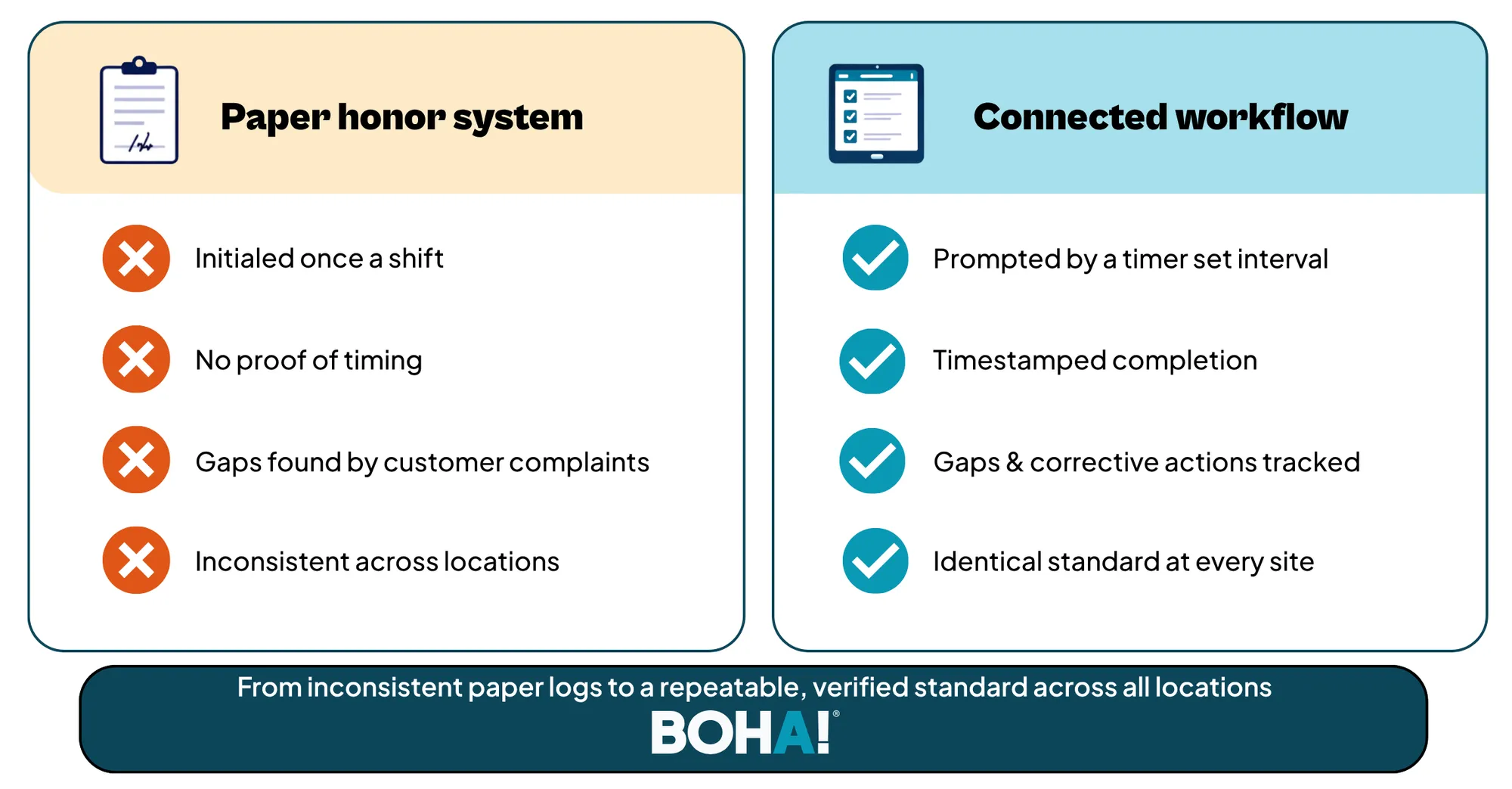
The reason this approach pays off twice is that one dataset does two jobs.
For the customer, it means experiencing the exact same standard of cleanliness and stock at 11 p.m. as they would during the morning rush, because a structured service cadence prevents standards from slipping when foot traffic spikes. That reliable consistency is what converts a one-time fuel stop into a regular visitor – the repeat-visit behavior Bradley’s 68% figure measures.
For the operator, the same completion logs become audit evidence and a diagnostic. When a health inspector or corporate field rep asks for records, you have time-stamped proof instead of an honor-system sheet. Over time, the data shows patterns you couldn't see before: maybe the 4 p.m. check consistently slips because that's when the after-school rush hits, or a highway-adjacent store needs tighter 45-minute intervals in July instead of 90. You can only manage what you can see, and a clipboard headed for the recycling bin shows you nothing.
For a multi-unit operator, that visibility is the difference between hoping every location holds the standard and knowing it. You stop relying on one unusually conscientious manager to be the only person who cares, because the standard travels with the system, not the individual.
Nobody puts "immaculate restroom" on a billboard, and that's exactly the point — it's a background expectation that only gets noticed when it fails. Bradley's 2026 data is specific and consistent: most customers judge your entire business by a room you'd rather they overlooked, and most will reward getting it right with repeat visits and higher spend. The failure that costs you most — an empty dispenser or water on the floor at the wrong moment — is also about the cheapest one to prevent.
The operators who win here aren't the ones who spend the most on fixtures. They're the ones who make the routine provable — on a set cadence, logged at every location, ready for the customer and the auditor alike. So the next time someone asks whether restroom checklist technology is worth it, the honest answer is: ask your customers. They already have an opinion, Bradley just published the receipts, and it shows up either as a five-star review or as a car pulling into the lot across the street — hands unwashed, and not coming back.
How do clean restrooms affect customer retention?
In Bradley Company's 2026 Healthy Handwashing Survey, 68% of Americans said they're more likely to return to and spend more at a business with a clean, well-maintained restroom, while 73% said a dirty one makes them reconsider returning. About 40% check the restroom before deciding whether to do business at a location, so it often shapes the first impression, not just the last.
What's the most common restroom failure customers notice?
Empty soap and paper towel dispensers. Bradley's research identifies empty dispensers and out-of-order sinks as top reasons people skip handwashing — an operational restocking failure, not a customer-behavior one, which makes it preventable with a reliable service cadence.
How does a digital checklist help with health-inspection readiness?
It replaces honor-system paper logs with time-stamped completion records. When an inspector or corporate auditor asks for proof that restrooms were serviced on schedule, a digital checklist provides a verifiable record instead of a half-initialed sheet, and flags missed checks in near real time.
How do BOHA! Timer, Checklist, and Labeling apps work together for restroom maintenance?
BOHA!’s Timer and Labeling apps are directly integrated – the moment an employee starts or restarts a service timer, the Labeling app can automatically print a dated, timestamped tag for physical posting at the station depending on desired configuration settings. During the maintenance window, staff use the Checklist app on their tablet or workstation to complete and log required tasks. Because all three tools run on one connected platform, operators get automated timestamped proof and an enforced, audit-ready routine without managing disconnected systems.
Get the latest industry insights delivered straight to your inbox
Browse