Stay in the loop!
Get the latest industry insights delivered straight to your inbox
Any one kitchen can prevent cross-contamination with a good manager and a color-coded cutting board. The hard part is making the 200th kitchen do it exactly like the first. How multi-location operators enforce it.
TransAct Technologies
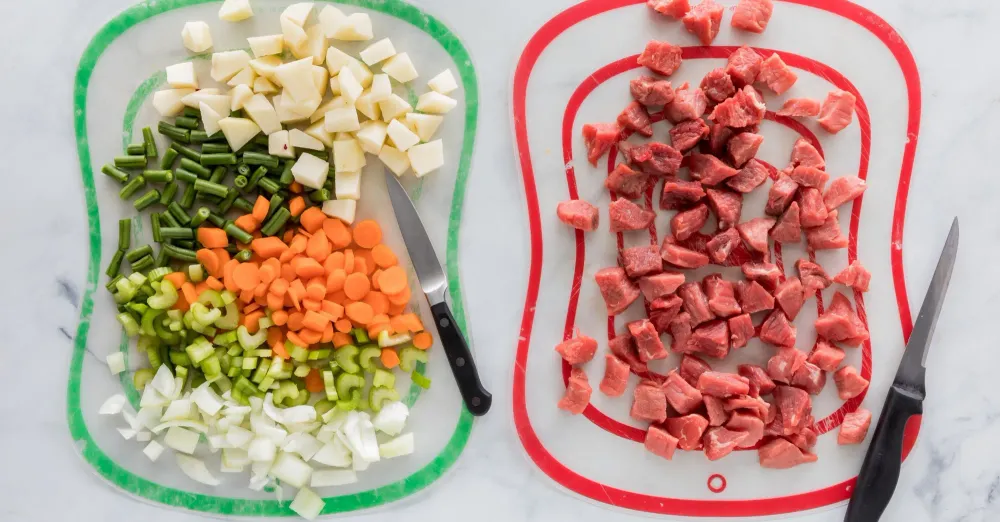
Every operator knows the cross-contamination rules by heart. Keep raw and ready-to-eat apart, per the FDA Food Code, the model states adopt for separating raw and ready-to-eat product. Color-code the boards, and wash, rinse, and sanitize between tasks instead of waiting for the end of a shift. Store raw chicken on the bottom shelf so it can't drip onto the salad greens below. Ask any certified manager and they'll recite it back like a pledge, and most of the time, in most kitchens, it works.
→ Download the free Cross-Contamination Prevention wall card – a printable back-of-house reference with the storage order, color-code legend, and wash-rinse-sanitize steps above, plus an allergen cross-contact checklist to help keep your lines compliant.
So why does it still show up on inspection reports, and worse, in outbreak investigations linked to the CDC's foodborne illness burden data? Because knowing the rule and enforcing across back-of-house operations, shift after shift, location after location, with every new hire who's never worked a line before, turn out to be two different jobs. Training teaches the rule. Making sure it holds everywhere, every shift, is the system that keeps regional directors up at night.
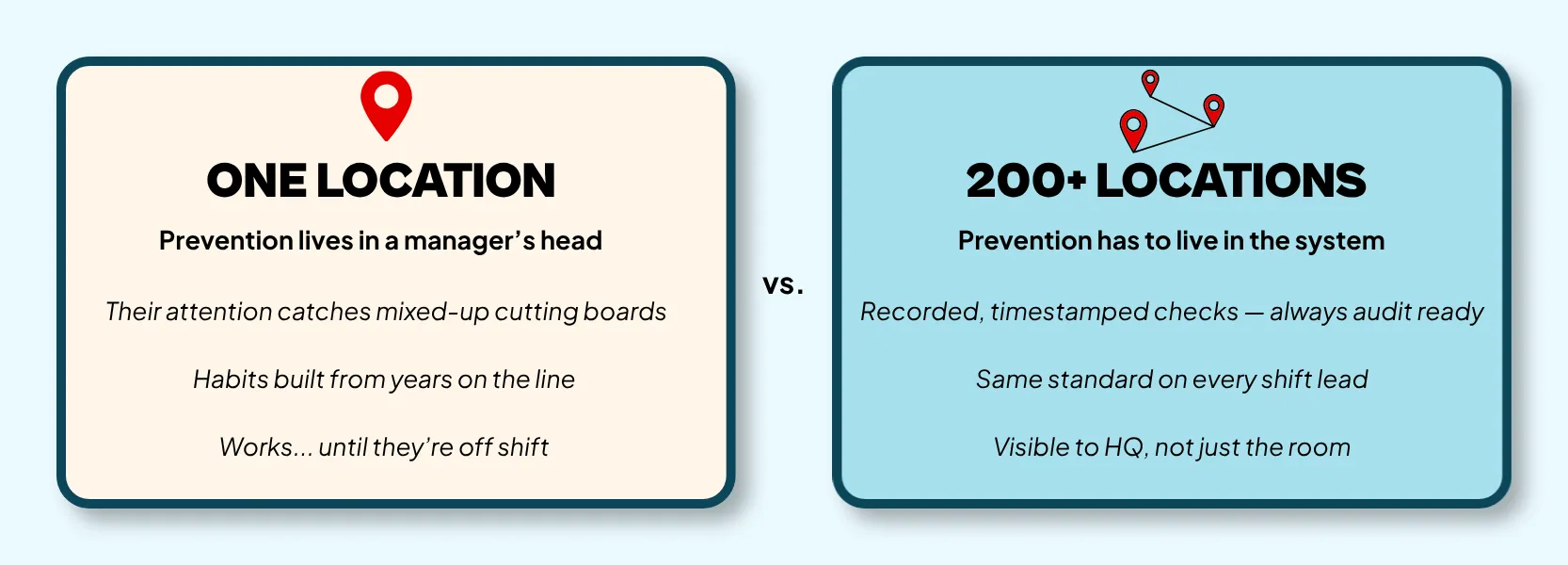
In a single restaurant, cross-contamination prevention runs on a strong manager. They knows where the raw chicken goes, notice when the boards get mixed up, and corrects it before it becomes a problem, often without even thinking about it as a formal control. The system is their attention, and in one building their attention is usually enough.
Now give them ninety-nine siblings across ninety-nine other buildings, each with their own shift leads, their own turnover, and their own version of "the way we have always done it." The rule has not changed. The odds have. Somewhere in that hundred, on some Tuesday, the raw and the ready-to-eat are going to end up on the same board, or a shared slicer is going to go from deli meat to produce without a real sanitize step between, and the only question is whether you find out from your own system or from a health inspector, or worse, from a customer.
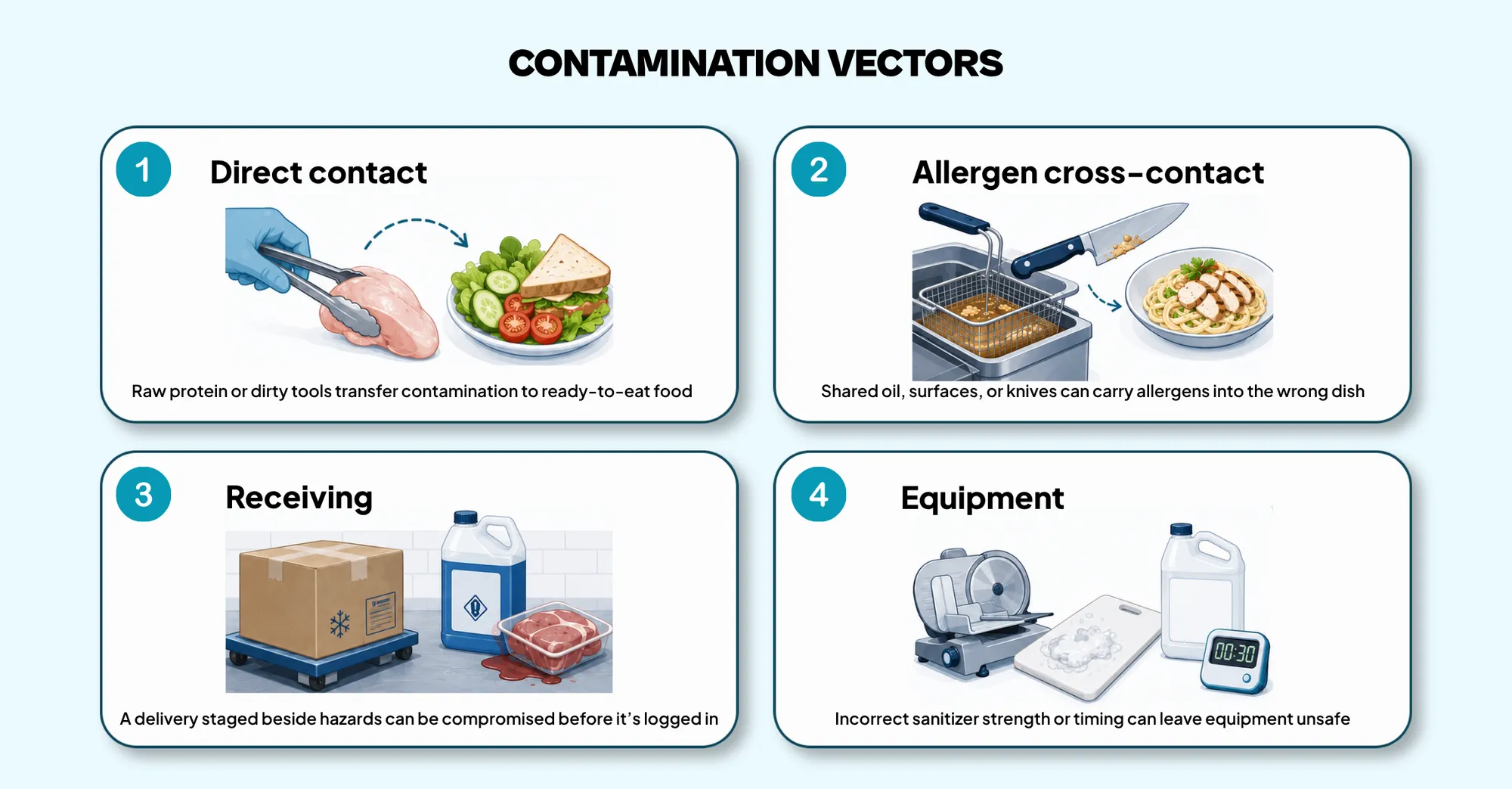
Cross-contamination is broader than the cutting-board story most training decks lead with. At scale, it's worth naming the full list, because each vector fails differently and needs its own recorded check rather than one generic "avoid cross-contamination" line item nobody can actually verify happened.
The way you scale prevention is to stop treating it as a value everyone is supposed to hold and start treating it as a task someone has to complete and record, broken out by the specific vector it addresses.
A digital checklist turns "keep raw separate from ready-to-eat" into an actual opening and closing step, verified and timestamped, on every shift: the cooler organization check, the board sanitation check, and a sanitizer concentration check at the three-compartment sink, with an allergen-cross contact check for days a shared fryer or grill runs both proteins and produce. Each one becomes a thing that either got done or did not, visible in the record, rather than an assumption you are making about a building four states away run by a shift lead you have never met.
That shift, from rule to recorded task, is what makes prevention auditable. And auditable is the only version of prevention that scales, because it's the version headquarters can actually see, and the one that leaves a corrective-action trail when something does go wrong. If a location fails a check, the record shows what failed, who caught it, and what was done about it, which is exactly what a health department wants to see during a follow-up visit and exactly what protects the brand if a claim ever comes in.
Cross-contamination is not only a cutting-board and prep-surface story. A walk-in that drifts warm turns a storage question into a growth question, and raw product held too long or too warm becomes a contamination risk to everything stored near it, including product that was perfectly safe when it went in.
This is where continuous temperature monitoring earns its place in the prevention conversation. A connected sensor watching a walk-in around the clock catches the unit drifting out of range before the product in it becomes a problem, which means the cold side of your prevention program is being watched even on the overnight shifts when nobody is physically checking it. Prevention that only works when someone remembers to check runs on luck, not a system, and luck doesn't stretch across two hundred buildings.
For a food safety director running a large footprint, the goal is not to catch the one location that slipped after the fact. The goal is to see the pattern before it becomes an outbreak, a recall, or a lawsuit, and patterns only show up when the underlying checks are actually being recorded somewhere headquarters can query.
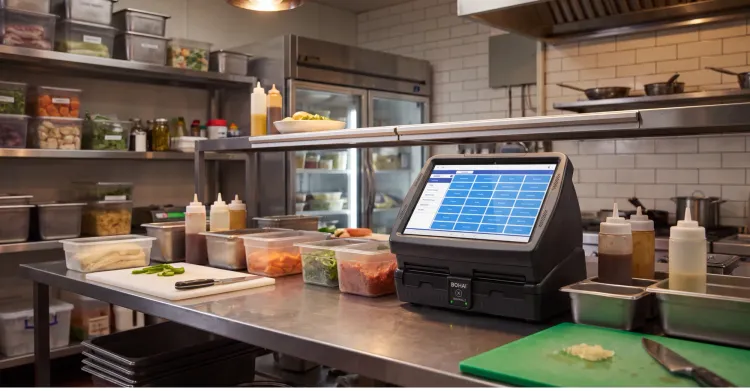
When prevention tasks and temperature data roll up through one platform, the BOHA! Control Center shows which locations are completing their food safety checks and which are quietly falling behind, region by region, shift by shift. A region that stops logging its cooler checks shows up as a number on a screen, not as a surprise six weeks later when a customer gets sick and the corporate office finds out from a news story instead of an internal alert. That visibility is what lets a director spend their limited attention on the locations that actually need it, instead of driving to all two hundred hoping to catch a problem in the act.
The operators who handle cross-contamination well across a large footprint are not the ones with the strictest rules on paper. Everyone has strict rules on paper. They are the ones who broke prevention down into its specific vectors, turned each one into a recorded step, and backed the cold side with a sensor that never clocks out. That combination is what gives headquarters a live view of who's actually doing the work, at every location, on every shift.
Do that, and prevention stops being a thing you hope is happening in two hundred kitchens and becomes a thing you can see, correct, and prove. That's the difference between a food safety program you can prove and one that's just a poster in the break room.
How do you prevent cross-contamination in a commercial kitchen?
Separate raw from ready-to-eat, color-code equipment, follow wash-rinse-sanitize between tasks, control allergen cross-contact on shared equipment, and store raw proteins below ready-to-eat foods. At scale, these are enforced as recorded checklist steps rather than assumed habits.
What are the main vectors of cross-contamination in foodservice?
Direct contact between raw and ready-to-eat product, allergen cross-contact on shared surfaces or fryer oil, contamination at receiving and delivery staging, and equipment that is not properly sanitized between uses.
Why is cross-contamination harder to control across multiple locations?
Because single-unit prevention relies on one manager's attention, which cannot be copied to every site. Multi-location operators enforce prevention through recorded tasks and centralized visibility instead.
How does temperature monitoring relate to cross-contamination?
A walk-in that drifts warm lets raw product become a growth and contamination risk to everything stored near it. Continuous monitoring catches the drift before the product nearby is compromised.
Get the latest industry insights delivered straight to your inbox
Browse