Stay in the loop!
Get the latest industry insights delivered straight to your inbox
Caesars Palace turns 60. So we're looking back at how slots went from an afterthought to the industry's biggest revenue engine, and how the ticket printer helped make it happen.
Tracey Winslow
Ask anyone who's spent a night working a Vegas floor what a great shift feels like, and they won't start with the tables. They'll talk about the noise. The lights syncing up with the machines. Thousands of little wins landing all at once, all over the room.
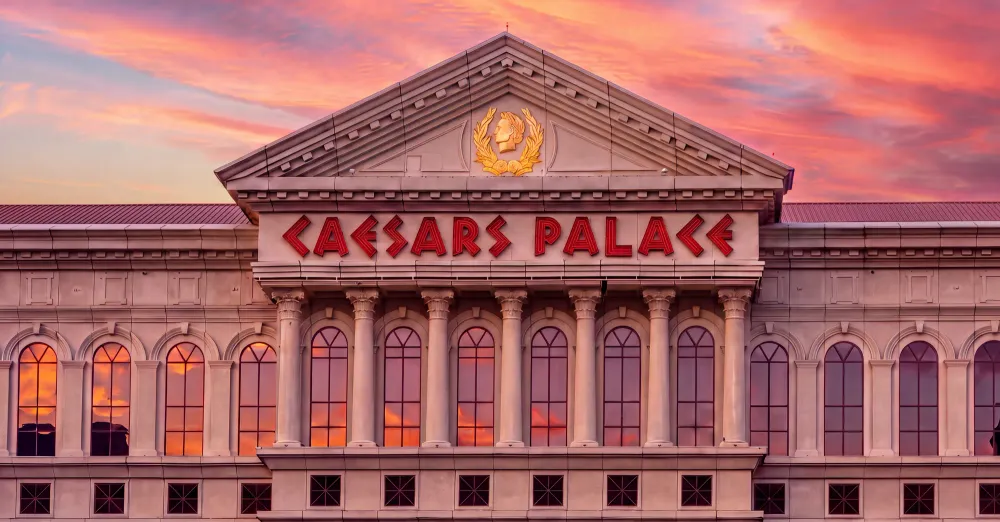
Sixty years ago this month — August 5, 1966 — one property decided to build that feeling right into the walls. Caesars Palace opened its doors, and the business of Las Vegas hasn't been the same since.
That's not an anniversary we wanted to let slide by with a quick mention. It's a good excuse to look back at how one resort helped invent the modern casino experience — and at a quieter shift that happened right alongside it: how the slot floor turned into the engine that funds almost everything else in the building.
Caesars Palace was the brainchild of developer Jay Sarno, who wanted guests to feel like they'd checked into a fantasy, not a hotel room. UNLV history professor Michael Green put it to the Las Vegas Review-Journal for its anniversary coverage: Caesars was really the first luxury-themed resort on the Strip. Sarno was betting that spectacle would sell rooms — and he was right.
That one bet reshaped the Strip for decades. Caesars either invented or popularized things that are everywhere now: the Forum Shops, celebrity-chef dining, even the modern superstar residency (yes, we can thank Caesars for eventually giving us Celine Dion on the Strip). Gaming historian David Schwartz, former director of UNLV's Center for Gaming Research, put it better than we could:
"Caesars really being the first casino that became a brand rather than just a location." — David Schwartz, gaming historian, former director, UNLV Center for Gaming Research
Evel Knievel jumped the fountains there. Sinatra played the showroom. Movies from Rain Man to The Hangover carried the Caesars name to people who'd never set foot in Nevada. Not bad for a 60-year-old building.
Here's the part most anniversary write-ups skip right over. When Caesars opened in 1966, slot machines weren't exactly the main event — they were more of a babysitter, something to keep a spouse busy while the "real" gambling happened at the tables. UNLV's oral history of the industry gives a lot of credit to people like William "Si" Redd, whose company would later become IGT, for dragging slots out of that back seat and turning them into one of the biggest financial engines gaming has ever seen.
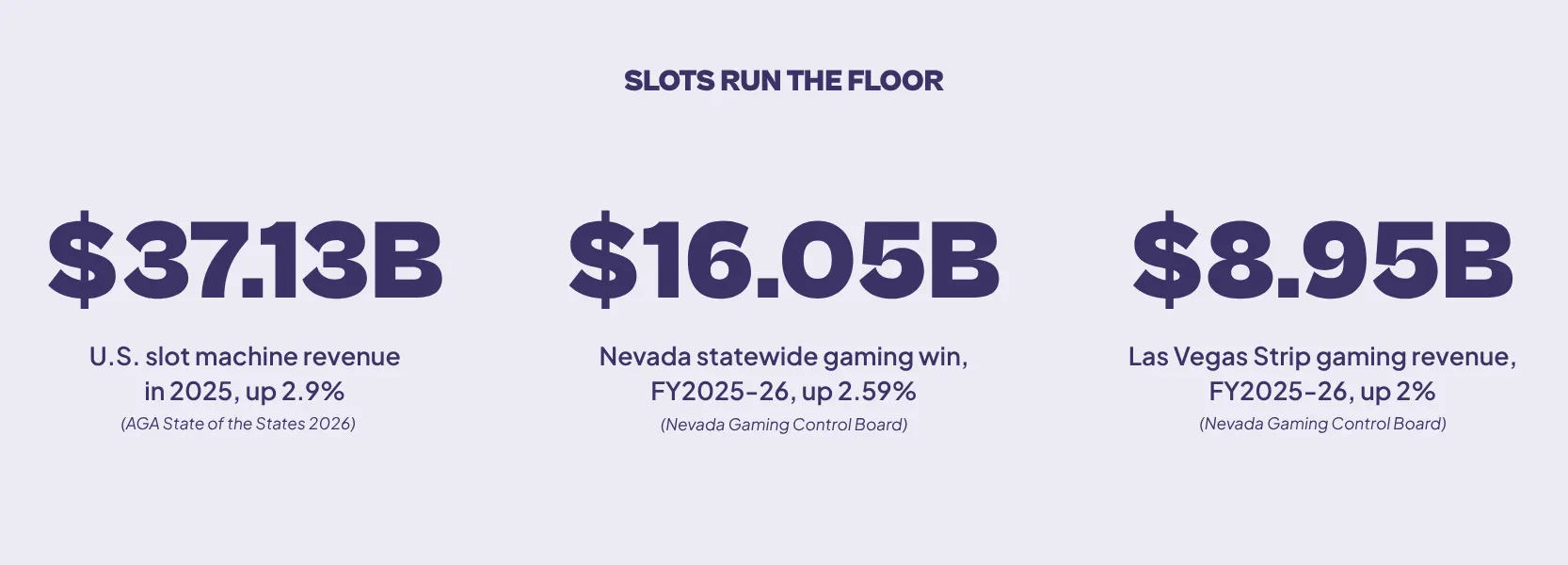
If you're running a floor today, you already feel how completely that shift took hold. But the numbers are still worth putting in front of you. The American Gaming Association's 2026 State of the States report puts 2025 U.S. slot revenue at $37.13 billion against $10.05 billion from table games — and slots were the only one of the two still growing. Nevada tells the same story on a smaller scale: the state just closed its 2025-26 fiscal year at $16.05 billion in statewide gaming win, up 2.59%, with the Las Vegas Strip alone responsible for $8.95 billion of that.
Why? The math isn't complicated. Slots cost less labor per dollar of win, they scale in ways a pit game never will, and they keep quietly earning long after the tables have gone dark for the night. The machine on the floor stopped being a sideshow and became the main event — and it hasn't given that spot back since.
The next big leap changed how all that revenue actually moved through the building. For decades, a slot win meant coins clattering into a tray, then lugging a bucket to the cage. That started to change in 2000, when IGT's EZ Pay voucher system got the green light from Nevada regulators after a Las Vegas field trial. Ticket-in, ticket-out — TITO to anyone who's worked a floor — swapped the coin hopper for a barcoded thermal ticket, and it caught on fast. IGT reported shipping more than 20,000 EZ Pay machines within a year of Nevada's approval.
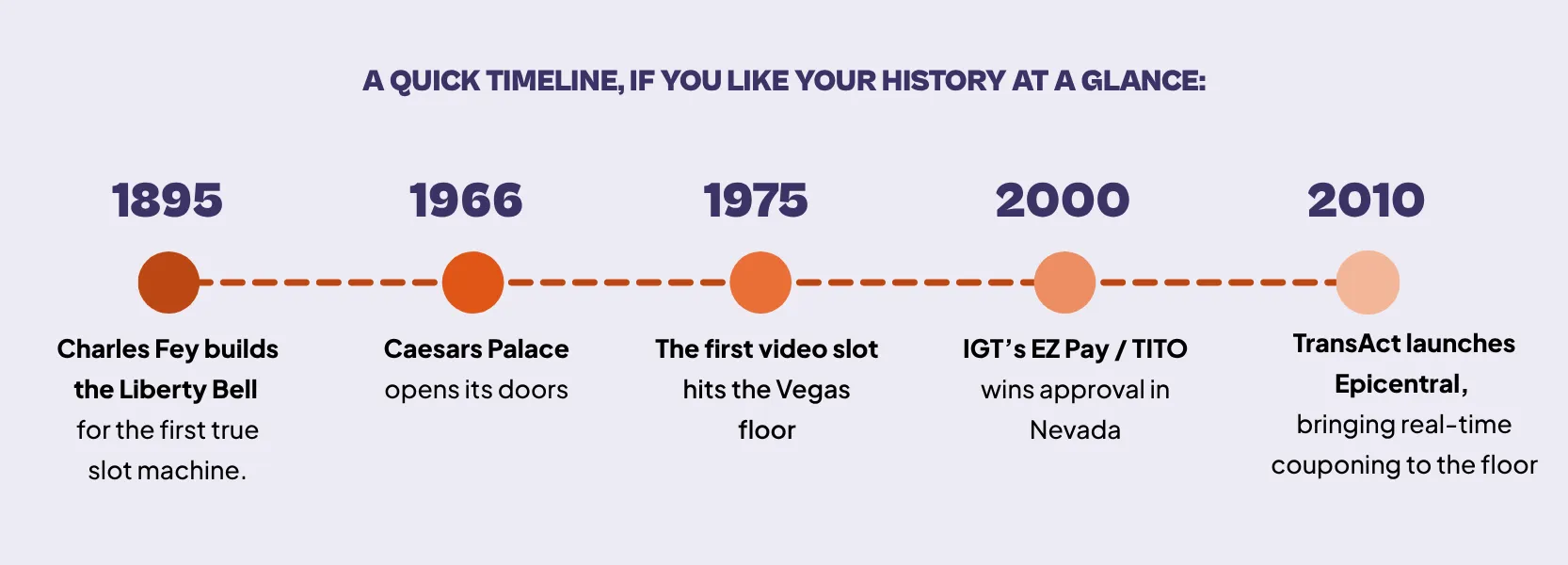
For operators, TITO wasn't just a nice convenience upgrade — it changed the job. Hopper fills went away. Machines stayed in play longer between service calls. Cash handling got simpler and a lot safer. It also opened the door to lower denominations and multi-denomination games, which is a big reason the penny slot became such a floor staple. And once a machine could print a ticket, it could print something else, too. A coupon. A bonus offer. A drawing entry — handed to the guest while they're still sitting in the seat.
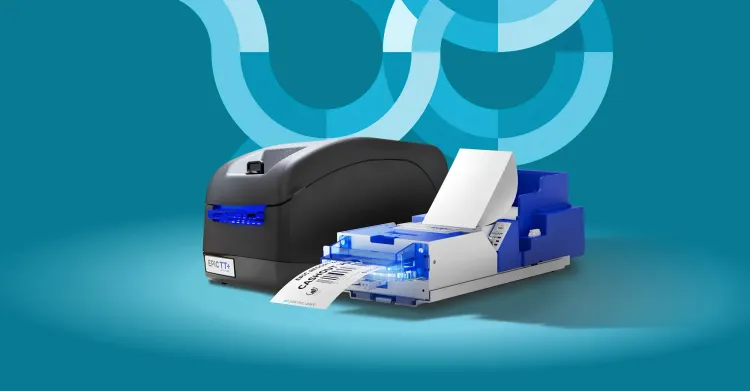
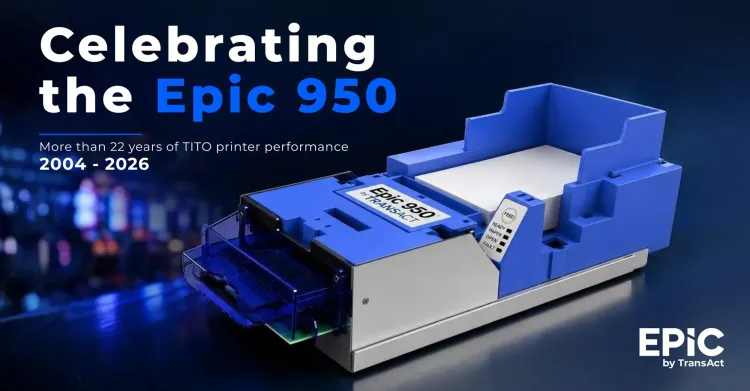
By the mid-2000s, the printer had quietly stopped being an accessory bolted onto the side of the machine and started being part of the machine itself. In December 2004, IGT and TransAct signed a supply, sales, and license agreement that made TransAct's Epic 950 a standard option across IGT's slot platforms. Most histories of the Strip won't even give this a footnote, but it's genuinely the moment the ticket printer went from plumbing to product design.
That same print head kept evolving from there. A ticket wasn't just a ticket anymore — it could be a coupon, a bonus offer, a drawing entry, delivered in real time while the guest was still playing. That idea became Epicentral, the real-time promotional system TransAct rolled out in 2010, which reaches both carded and un-carded players right at the machine, mid-session.
None of this replaces what Jay Sarno understood back in 1966. Guests still come for the experience first, full stop. The technology behind the floor is just there to make that experience feel effortless — and honestly, the best of it is the kind nobody ever notices.
Caesars Palace has outlasted plenty of Strip icons that got imploded and rebuilt, mostly because it never stopped changing. The slot floor's story runs in parallel — mechanical reels to server-based gaming, coin buckets to barcoded tickets to real-time offers delivered mid-session. Both stories teach the same lesson heading into the next sixty years: protect what gets people through the door, and keep investing in what keeps them playing once they're inside.
Happy anniversary, Caesars. The house that reset the Strip is still teaching the rest of the industry how it's done.
See how TransAct's Epic gaming printers and Epicentral promotional software help operators get more out of every interaction on the floor.
Get the latest industry insights delivered straight to your inbox
Browse